

The Subaru Legacy Outback has disappeared from the Japanese market. But the Outback itself is far from dead. In North America, Subaru unveiled a new seventh-generation model in 2025, and it has moved even further away from its station-wagon roots toward the look and proportions of a conventional SUV.
Against that backdrop, the September 26, 2026 issue of Japanese automotive magazine Best Car published an intriguing prediction: the next-generation Levorg Layback could grow in size and take over much of the role once filled by the Outback in Japan. The magazine predicts a debut around 2028 and also discusses the possibility of both turbocharged and S:HEV powertrains.
None of that is an official announcement from SUBARU. It remains magazine speculation. Yet when the confirmed pieces are placed side by side, the idea that the Outback name may stay gone from Japan while its role migrates to the Layback starts to make a surprising amount of sense.
The Outback ended in Japan — but it did not end globally
First, it helps to separate the Japanese market from the rest of the world.
Orders for the Japanese-spec Legacy Outback ended at the end of March 2025. In North America, however, SUBARU unveiled an all-new Outback in April 2025, moving the model into its seventh generation.
And the new Outback looks more SUV-like than ever.
Major U.S.-market versions measure approximately 191.7 inches long, 74.0 inches wide and 67.5 inches tall — about 4,869 × 1,880 × 1,715 mm. The wheelbase is roughly 108.1 inches, or 2,746 mm, while ground clearance is about 8.7 inches, or 221 mm.
Those dimensions are perfectly understandable in the North American midsize-SUV market. In Japan, however, vehicle width can matter much more. Narrow residential streets, older parking structures and mechanical parking systems can turn a few extra centimeters into a genuine ownership issue.
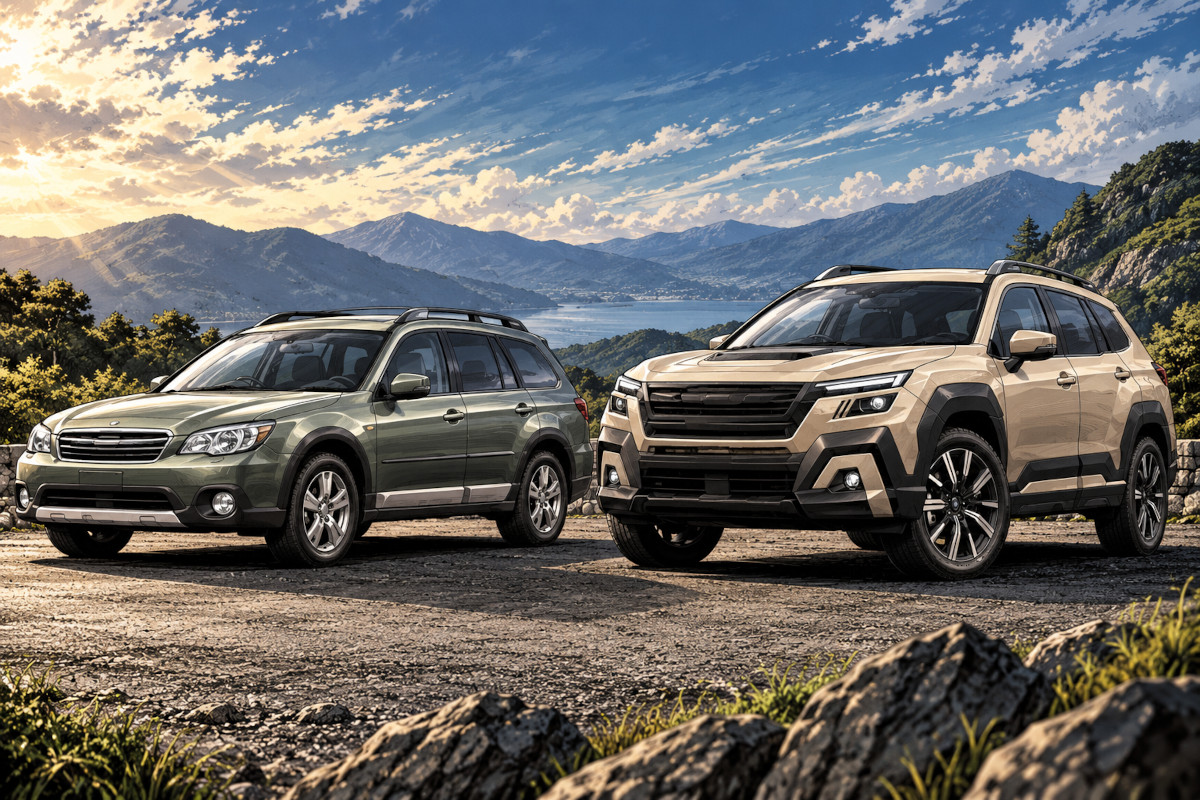 AI-generated conceptual illustration showing the general change in direction from the previous Outback to the newer, more SUV-oriented model. It is not an exact reproduction of either production vehicle.
The previous Japanese Outback was hardly small, but bringing the new North American model back to Japan unchanged would mean selling a vehicle roughly 1,880 mm wide.
That raises a simple question: if the larger Outback already works well for North America, does SUBARU really need to force exactly the same vehicle back into Japan?
Japan already has the Levorg Layback
The Levorg Layback arrived in 2023. SUBARU described it as a model that combines the Levorg’s advanced safety technology, sporty character and wagon practicality with greater SUV versatility and a more premium feel.
More importantly, the Layback was developed specifically with the Japanese market in mind.
That makes it different from global SUV models such as the Forester and Crosstrek. Its dimensions, driving environment and positioning were conceived around Japanese customers from the beginning.
Then, in July 2026, SUBARU added an S:HEV strong-hybrid version combining a 2.5-liter horizontally opposed engine with two electric motors.
The S:HEV Layback measures approximately 4,735 × 1,820 × 1,550 mm. That makes it around 60 mm narrower than the new North American Outback while still offering the elevated driving position and crossover-style practicality that separate it from an ordinary wagon.
Japan therefore already has something close to a smaller, locally optimized long-distance crossover wagon. Its name is Layback.
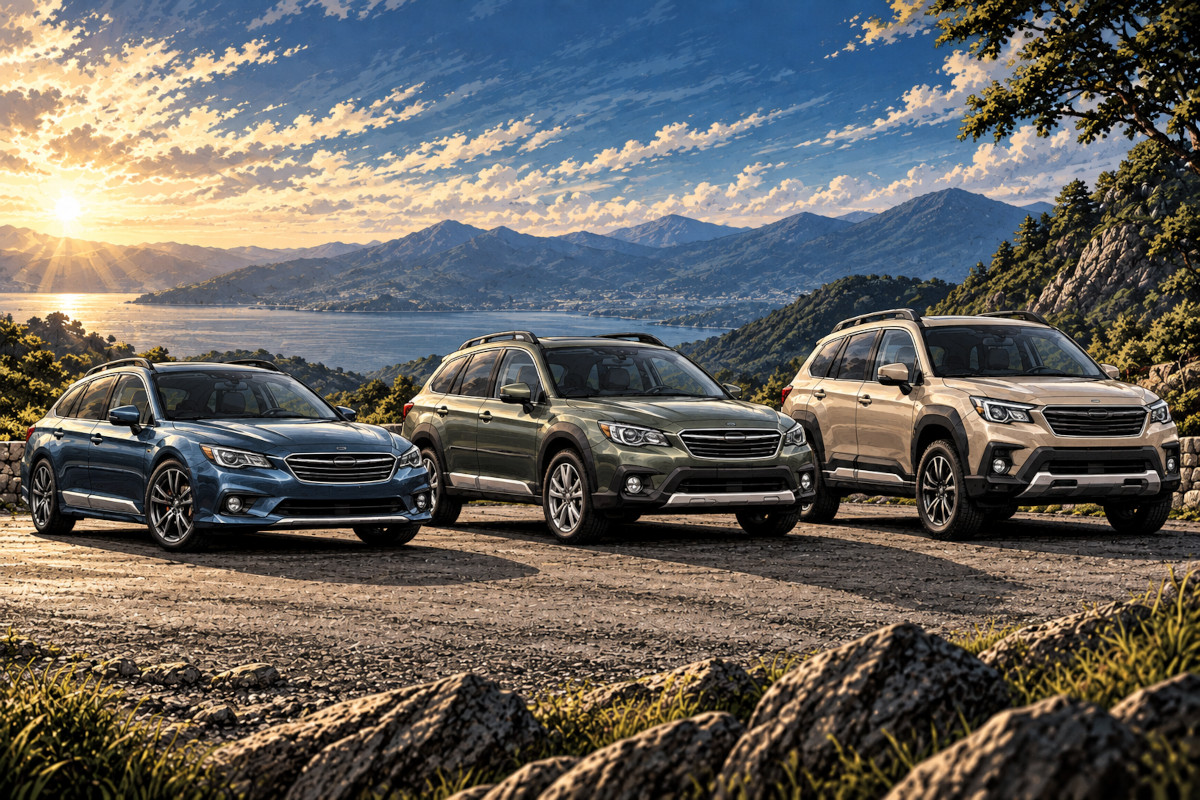 AI-generated illustration visualizing the different roles of the Levorg, Layback and Outback. It is not a direct photographic or dimensional comparison of actual production vehicles.
SUBARU may be repeating an idea from 30 years ago
This is where the story becomes much more interesting.
The Outback did not originally begin as a clean-sheet SUV.
In Japan, the concept appeared in 1995 as the Legacy Grand Wagon, based on the Legacy Touring Wagon. Overseas, the same basic idea became known as the Outback. The Japanese model was later renamed Lancaster before adopting the globally familiar Outback name in 2003.
Simplified to its basic product philosophy, SUBARU did something like this in the 1990s:
Take a Legacy wagon, raise the ride height, add greater all-road capability and give it a more rugged crossover identity.
Now look at the Levorg Layback.
Take a Levorg wagon, increase ground clearance, add greater crossover versatility and give it a softer, more premium SUV-oriented character.
The recipe is remarkably similar.
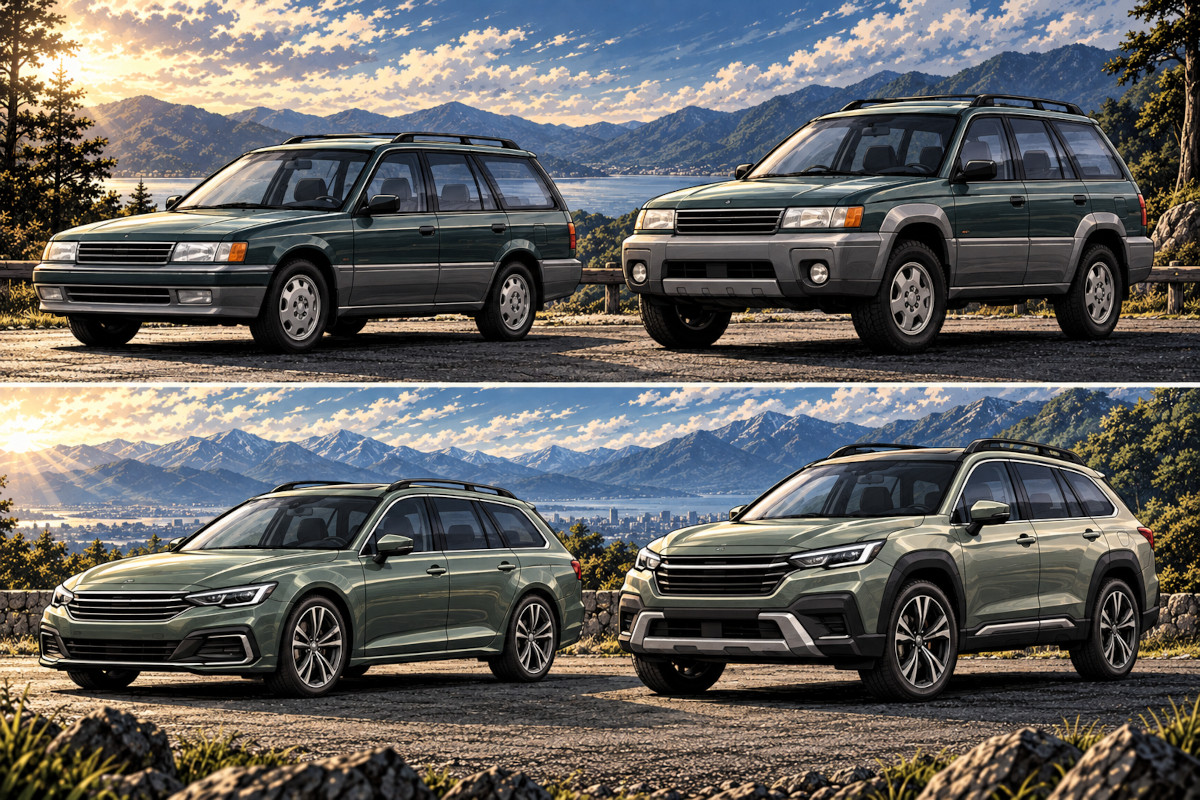 AI-generated illustration comparing the recurring SUBARU idea of turning a station wagon into a crossover, first with the Legacy-based Grand Wagon and later with the Levorg-based Layback. It does not accurately reproduce specific model years.
Could SUBARU rebuild the Japanese Outback from the Levorg?
Seen from that historical perspective, Best Car‘s prediction that the next Layback could become larger starts to look less like a random rumor.
The important idea is not simply that “the Layback will get bigger.”
The more interesting possibility is that the Layback is gradually moving into the space once occupied by the Japanese Outback — and that its next generation could absorb much of that role entirely.
The Legacy Touring Wagon disappeared from Japan in 2014. The Legacy B4 sedan followed in 2020. Finally, the Outback, the last model in Japan still carrying the Legacy name, ended domestic sales in 2025.
Today, there is no Legacy-branded model in SUBARU’s Japanese lineup.
That means SUBARU does not necessarily need to revive the name “Legacy Outback” simply to fill the gap.
Instead, it could continue developing the Japan-focused Layback and give it more of the characteristics that defined the Outback: long-distance comfort, cargo capacity, all-wheel-drive confidence, a premium interior and crossover versatility.
Levorg as the sporty wagon, Layback as the more premium crossover.
That two-model relationship would also fit neatly into SUBARU’s current Japanese product range.
The arrival of S:HEV may be more important than it first appears
Another clue is the addition of S:HEV to the current Layback in 2026.
SUBARU’s strong-hybrid system combines a 2.5-liter horizontally opposed gasoline engine with separate drive and generator motors in a series-parallel arrangement.
The system had already expanded to the Crosstrek and Forester before reaching the Layback as its third application.
It is entirely possible that this is simply a normal update designed to strengthen the current model. But if a next-generation Layback really does appear around 2028, introducing S:HEV now would also give SUBARU useful experience with an electrified Layback before the next model cycle.
That would make it easier for the next generation to place electrification at the center of its powertrain strategy.
Best Car predicts both S:HEV and turbocharged versions for the future model. Again, that part should be treated strictly as a forecast. SUBARU has not officially announced those specifications.
A 2.4-liter turbo would push the Layback into true Outback territory
The new North American Outback is offered with both a naturally aspirated 2.5-liter engine and a 2.4-liter direct-injection turbo producing 260 hp.
The idea of a 2.4-liter turbo is not technically foreign to SUBARU’s Japanese lineup either. An engine from the same FA24 turbo family is already used in the Japanese-market WRX S4.
That does not mean a 2.4-liter turbo Layback has been confirmed.
Price, fuel economy, expected sales volume and overlap with the Forester and WRX S4 would all have to be considered. For Japan, a 2.5-liter S:HEV may ultimately make more commercial sense.
But if a future Layback were offered with a 2.4-liter turbo as well, its positioning would change significantly.
At that point, describing it simply as “an SUV-style Levorg” would no longer tell the whole story. It would be moving directly into the premium crossover position left vacant by the Japanese Outback.
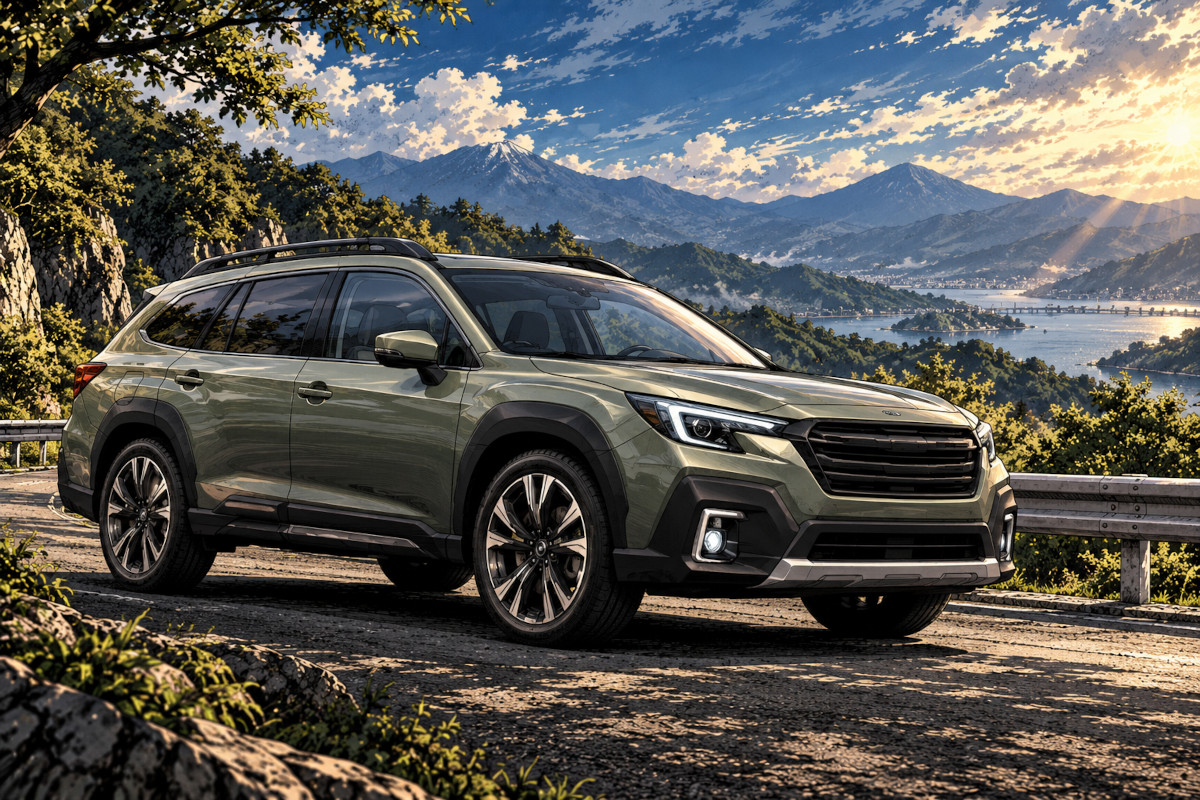 AI-generated concept based on the scenario discussed in this article. It is not an official SUBARU design, prototype, leaked image or manufacturer-approved preview of the next Levorg Layback.
The Outback name may disappear while the Outback idea survives
Perhaps the most interesting part of this story is that the Outback itself was born from the idea of moving an existing wagon into another category.
In the 1990s, SUBARU raised a Legacy Touring Wagon and created the Grand Wagon concept that eventually evolved into the Outback.
Roughly 30 years later, SUBARU raised and softened the character of the Levorg to create the Layback.
Meanwhile, the North American Outback has continued moving toward the size and visual identity of a conventional midsize SUV, gradually making it less naturally suited to some Japanese driving and parking environments.
The Japan-focused Layback, on the other hand, has gained S:HEV and is becoming more capable as a comfortable long-distance crossover.
If the next Layback really does grow, it may be more accurate to describe the strategy not as “bringing the Outback back to Japan,” but as “creating a new Japanese Outback from the Levorg platform all over again.”
A 2028 launch, larger dimensions and a turbocharged option remain unconfirmed predictions. Those details may change — or may never happen at all.
But the broader trend is already visible: the Layback is occupying more of the territory that once belonged to the Japanese Outback.
So perhaps “Outback is back” is the wrong way to look at it.
The name may not return. The philosophy that created the Outback, however, may already be living inside the Layback.
Editor’s Note
My first reaction was simple: if Japanese buyers still want an Outback, why not just sell the Outback in Japan again? Then I looked at the new North American model. It is big. The old image of an Outback as little more than a Legacy wagon with extra ground clearance is fading fast.
For Japan, slowly developing the Layback may actually make more sense. And there is something wonderfully familiar about the whole idea. Thirty years ago, SUBARU took the Legacy wagon, raised it and created the Grand Wagon that eventually became the Outback. Now it has taken the Levorg, raised it and created the Layback. It almost feels as if SUBARU is cooking the same dish again with different ingredients. If the next Layback really does become “almost an Outback,” I think that continuity matters more than whatever badge is attached to the tailgate.
References
- SUBARU Corporation — Legacy Outback “30th Anniversary” Special Edition Announced (October 24, 2024) — Confirms that orders for the Japanese-market Legacy Outback were scheduled to end by the end of March 2025.
- SUBARU Corporation — All-New Outback Makes World Premiere (April 18, 2025) — Official announcement of the seventh-generation U.S.-market Outback.
- SUBARU of America — 2026 Subaru Outback Specs & Trim Options — U.S.-market dimensions, ground clearance, 2.5-liter engine and 2.4-liter turbo specifications.
- SUBARU Corporation — New Levorg Layback SUV Announced (October 25, 2023) — Official description of the Japan-focused model and its product concept.
- SUBARU Corporation — Levorg Layback Strong Hybrid Model Announced (July 2, 2026) — Official information on the 2.5-liter S:HEV powertrain, dimensions and major specifications.
- Fuji Heavy Industries — Subaru Legacy Outback Launched (October 22, 2003) — Historical background covering the 1995 Grand Wagon, subsequent Lancaster and adoption of the Outback name in Japan.
- Best Car, September 26, 2026 issue — “Outback IS BACK (?) Next Layback to Become ‘Almost an Outback’ Around 2028!!” — Magazine forecast discussing a larger next-generation Layback, a possible Outback-successor role and potential future powertrains. This is editorial speculation, not an official SUBARU announcement.