

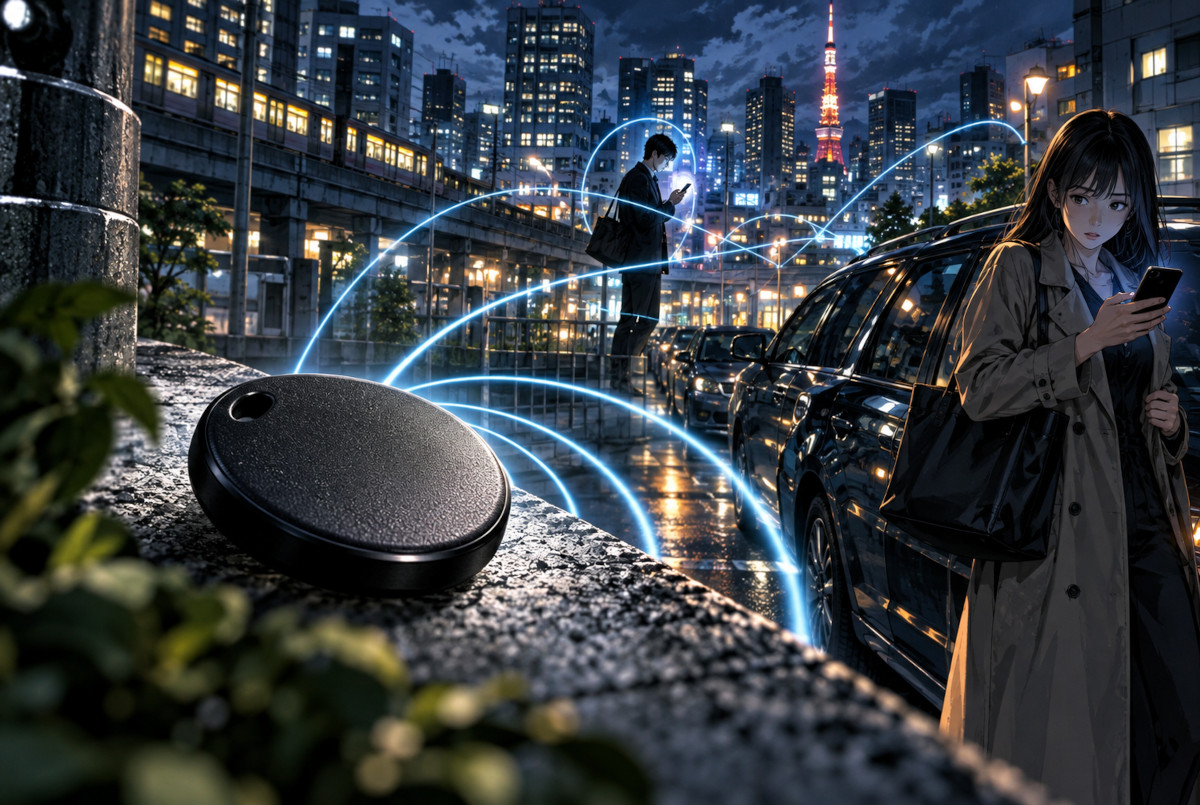
“`html
Apple’s AirTag is designed to help people find lost keys, bags, and other belongings. But the same type of technology has also raised concerns when tracking devices are secretly placed in someone else’s belongings or vehicle.
That leads to an obvious question: if a tiny tag can reveal its location from far away, doesn’t it need GPS, a cellular modem, a SIM card, and some kind of monthly data plan?
Surprisingly, AirTag does not use a cellular connection at all, and it does not work like a conventional GPS tracker. At the same time, online marketplaces now sell small trackers claiming compatibility with Apple’s Find My network for only a few dollars in some cases.
The tracker itself does not need to report its own location
According to Apple’s technical specifications, AirTag uses technologies such as Bluetooth, Ultra Wideband (UWB), and NFC. It does not operate like a smartphone or a conventional GPS-plus-cellular tracking unit that sends its own location directly through a mobile network.
The important part is that it can use nearby Apple devices as part of the Find My network. The tag broadcasts a Bluetooth signal. Nearby Apple devices can detect that signal, and the location information can then be relayed through the Find My network to the tag’s owner.
In extremely simple terms, the tag is not shouting its coordinates across the country. It is merely saying, “I’m here.” A nearby device notices it and becomes part of the relay system. Apple says the Find My network consists of more than one billion Apple devices worldwide.
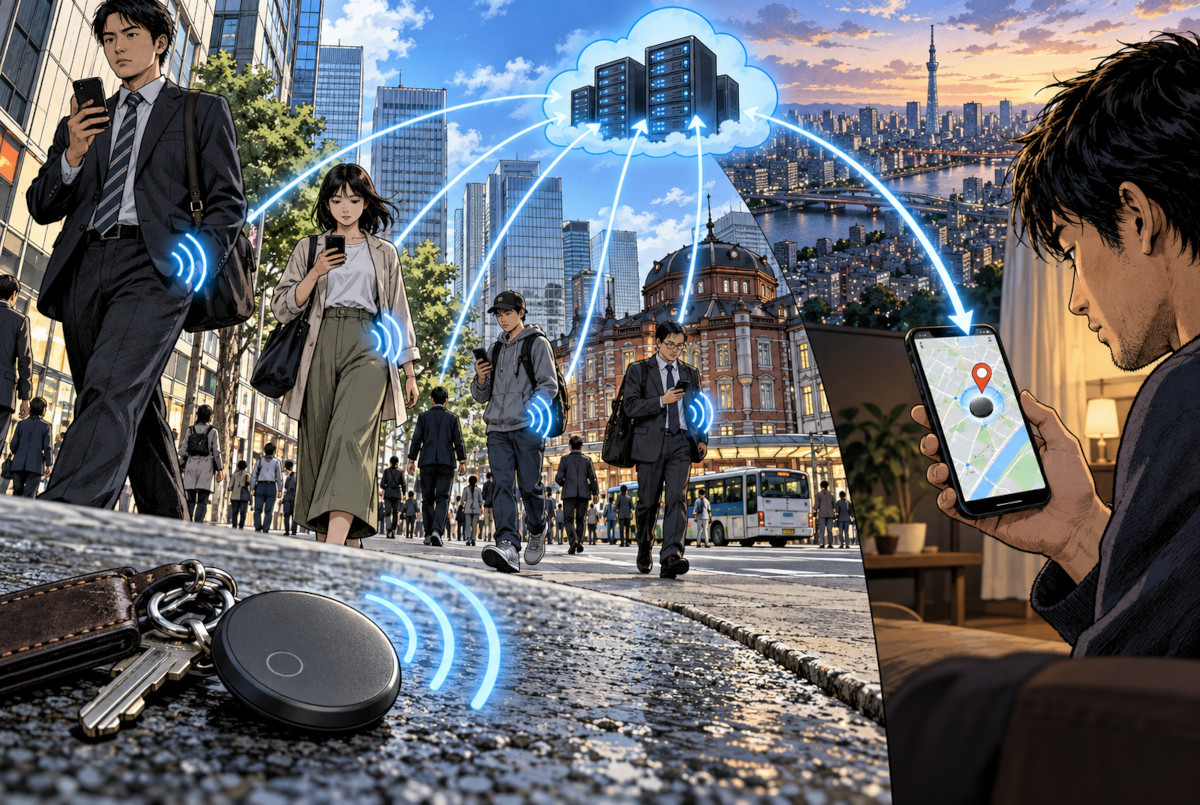 Conceptual illustration of the Find My network. In practice, location data is relayed using privacy-focused, encrypted mechanisms rather than the simplified visual flow shown here.
A cheap Chinese-made tracker is not automatically a fake AirTag
This was one of the more surprising findings. Apple does not reserve the Find My network exclusively for Apple-branded products. Through its MFi program, third-party manufacturers can build accessories that work with the Find My network.
That means a low-cost tracker made by a Chinese manufacturer is not automatically a counterfeit AirTag. The market includes officially compatible third-party products, devices with unclear certification status, simple Bluetooth trackers that use their own apps, and products that merely imitate the appearance or marketing language of AirTag.
German technology magazine c’t tested one low-cost tracker purchased from AliExpress for €2.84. With a fresh CR2032 battery installed, the device could be added to Apple’s Find My system and basic remote location tracking worked. However, the magazine also found questionable claims and quality issues involving the supplied battery and water resistance.
| Feature | Apple AirTag | Low-cost Find My-compatible trackers |
|---|---|---|
| Cellular subscription | Not required | Usually not required |
| GPS receiver | Does not rely on GPS tracking | Many models do not include GPS |
| Remote location | Find My network | Possible on compatible products |
| Precise nearby finding | UWB supported | Often unavailable |
| Build quality, water resistance, battery | Consistent specification | Varies widely by product |
Another source of confusion is the phrase “GPS Tracker” in online product listings. A seller may use that wording simply because the product helps users find a location. It does not necessarily mean the device contains an actual GPS receiver.
“It shows a location” and “it contains GPS” are not the same thing.
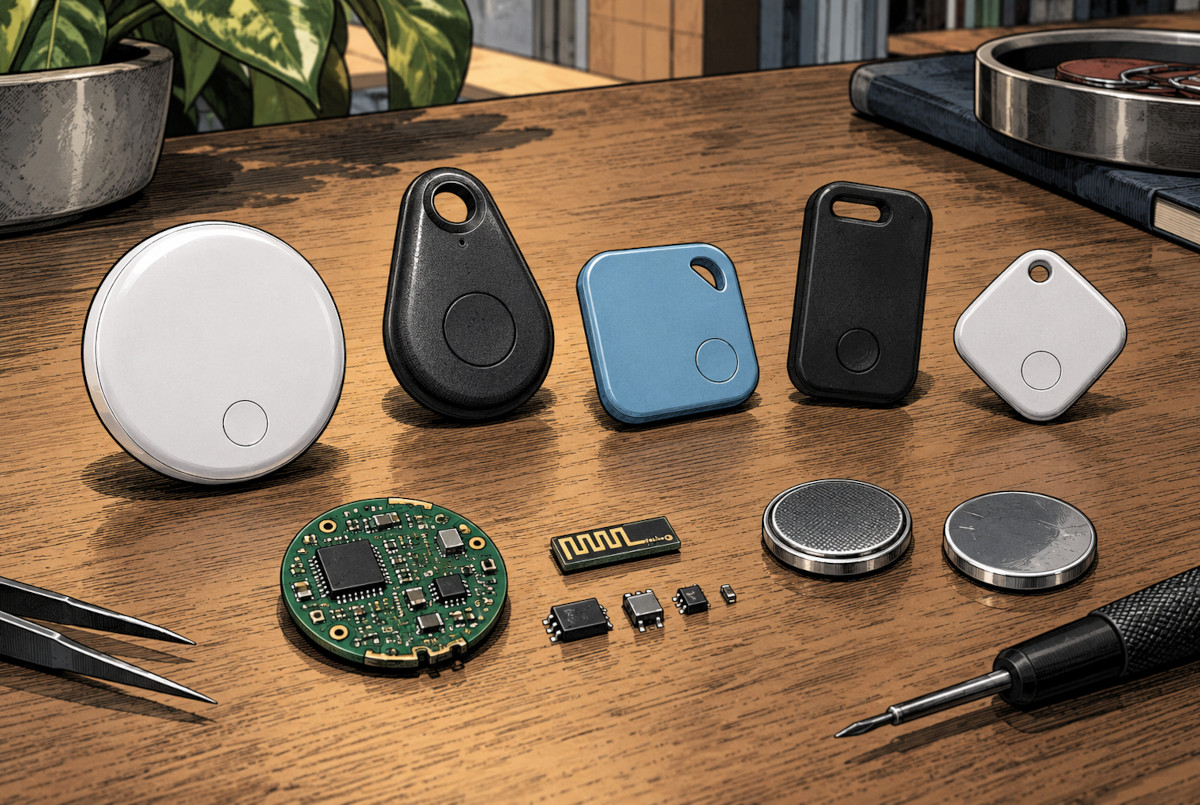 AI-generated technical concept image. This is not a photograph of any specific AirTag or third-party tracker being disassembled.
The bigger issue is not the $5 gadget—it is the network behind it
Used as intended, this system is extremely useful for recovering lost belongings. But if a tracker is secretly placed in someone else’s property without consent, the same technical capability takes on a very different meaning.
Japan’s National Police Agency reported only three stalking-related consultations or cases involving loss-prevention tags in 2021. The number rose to 113 in 2022, 196 in 2023, 370 in 2024, and 679 in 2025.
In response to the growing problem, amendments to Japan’s anti-stalking law took effect on December 30, 2025. Under specified legal conditions, obtaining another person’s location without consent through a loss-prevention tag can fall within the scope of regulated stalking behavior.
For international readers, one point is important: Japan’s stalking law does not automatically classify every unauthorized tracker placement as “stalking.” The law contains specific requirements involving motives such as romantic interest, affection, or resentment arising when those feelings are not reciprocated. Other laws may also become relevant depending on the circumstances.
The important point is that this problem did not emerge because sophisticated spy equipment suddenly became widely available. It emerged because an ordinary consumer product designed to find lost belongings could also be misused for tracking people.
But secretly attaching a tag does not mean unlimited tracking
Apple and Google have both introduced protections against unwanted tracking. If a compatible Bluetooth tracker that is separated from its owner appears to be moving with another person for a period of time, iPhone or Android devices can display an unwanted-tracker alert. Some supported trackers can also be made to play a sound to help locate them.
However, this does not mean an alert always appears the moment a tracker is nearby. Detection systems consider multiple factors, including whether an unknown tracker has been traveling with someone over time.
Find My-style trackers also depend on nearby devices to relay their presence. If no participating device comes close enough to detect the tracker, its location may not update. That is fundamentally different from a dedicated GPS-plus-cellular tracker that can transmit its own location through a mobile network.
If your phone displays an unfamiliar tracker warning, check your own belongings and vehicle, follow the device manufacturer’s safety instructions, and preserve any relevant location history or screenshots. If you believe you may be in danger, contact local law enforcement or an appropriate support service.
 Safety illustration showing the concept of an unwanted-tracker alert. The phone screen does not reproduce an actual iOS or Android warning interface.
Anti-theft tracking and anti-stalking protection pull in opposite directions
There is an interesting contradiction built into this technology. From a purely anti-theft perspective, a tracker is more useful when it is small, discreet, and difficult for a thief to notice.
Anti-stalking protection requires almost the opposite behavior. If an unknown tracker is traveling with someone, the person being tracked needs to be warned that it exists.
Loss prevention, theft recovery, privacy, and anti-stalking protection cannot all be maximized at the same time.
And as compatible Bluetooth trackers become cheaper, the issue is no longer limited to expensive specialist GPS equipment. Behind a tiny tracker sits a network of more than one billion Apple devices capable of helping determine where that tracker was detected.
The real power is not necessarily inside the inexpensive piece of plastic. It is in the enormous network surrounding it.
Editor’s Note
At first, I assumed the story was simple: Chinese marketplaces were probably selling cheap little GPS transmitters. After digging into it, I realized I had the wrong mental picture entirely.
What impressed me was not the tiny tracker itself. The remarkable part is the infrastructure behind it—more than a billion devices owned by ordinary people quietly forming a gigantic location-finding network.
Then some manufacturers look at that system and seem to say, “If this is the only function people really need, how cheaply can we build the hardware?” The price-cutting ability of Chinese electronics manufacturers still amazes me.
But the more interesting—and more uncomfortable—part is what happens after the technology becomes cheap and ordinary. A system built to help someone recover a lost set of keys can also become a tool for following another person. The hardware did not suddenly become evil. The meaning changed depending on who was using it and why.
That may be the most important thing about this technology: the same feature can look brilliant from one side and frightening from the other.
References
- Apple: Find My
- Apple Developer: Find My Network
- Apple Support: AirTag (2nd Generation) Technical Specifications
- Apple Platform Security: Locating Lost Apple Devices with Find My
- Apple Support: Unwanted Tracking Alerts and What to Do If You Find an AirTag or Other Find My Accessory
- Google Android Help: Find Unknown Trackers
- National Police Agency of Japan: Amendments to the Anti-Stalking Law
- National Police Agency of Japan: Stalking Cases and Police Responses in 2025
- National Police Agency of Japan: Guidance on the Interpretation and Application of the Anti-Stalking Law
- c’t: AirTag Alternative at a Bargain Price — Testing a Low-Cost AliExpress Find My Tracker
“`