
In Part 2, we followed the A70 as it changed not only its engine but effectively its bloodline, moving from the 7M to the 1JZ and setting the stage for what came next. In 1993, that next chapter arrived: the A80 Supra.
But there is something odd about the A80. Most cars are most visible while they are still on sale, then gradually become memories after production ends. The A80 did almost the opposite. Even after production ended in 2002, its presence kept growing through tuning culture, motorsport, video games and movies. By the time the Supra returned in 2019, Toyota had gone 17 years without producing a new one. So how did the Supra become even more legendary during the 17 years when Toyota was not building it?
Toyota Supra — 3-Part Series
From the Toyota 2000GT and Celica XX roots to the A70’s shift from the M-series to the JZ era, and finally the A80 legend and the Supra’s long-awaited return, this three-part series traces how the Supra evolved across generations.
- Part 1: Toyota Supra: Why Japan’s First Supra Was Already the Third Generation
- Part 2: How the A70 Supra Changed Its Bloodline: Turbo A to 1JZ
- Final Part: Why the Toyota Supra Became a Legend During Its 17-Year Absence
The A80 Was Not Just a More Powerful A70
Launched in May 1993, the A80 came with Toyota’s 3.0-liter inline-six 2JZ-GE and twin-turbo 2JZ-GTE. In Japan, the 2JZ-GTE was officially rated at 280 PS, while the RZ introduced Toyota’s first six-speed manual transmission.
For readers more familiar with the U.S.-spec Mk IV, one distinction matters: the North American Turbo was rated at 320 hp. The figures used here are Japanese-market specifications unless otherwise noted.
But horsepower is not the most interesting part. Toyota developed the A80 around the idea of “Less is more” and reduced weight by more than 100 kg compared with the A70. An aluminum hood, plastic fuel tank and other lightweight components helped cut mass even while the car gained larger tires and additional safety equipment.
If the A70 evolved by making a grand tourer faster, the A80 went a step further: Toyota started removing weight to make the entire car more serious about performance. The name remained Supra, but its character had clearly shifted.
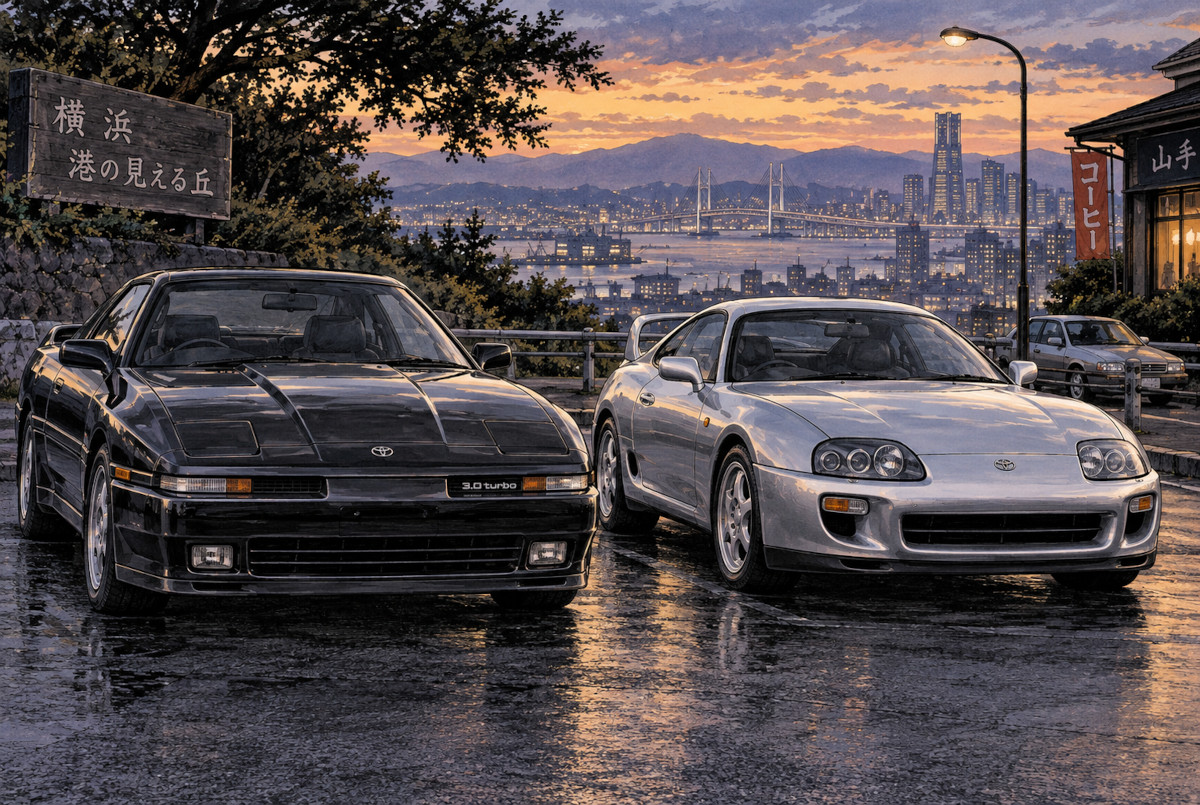 AI-generated illustration comparing the two Supra generations. It is not a period Toyota promotional photograph.
The A80 Is Famous for the 2JZ—But Its Winning JGTC Car Did Not Use One
Today, the A80 and the 2JZ are almost inseparable in enthusiast culture. Dig into its racing history, however, and things get rather stranger.
The Castrol TOM’S Supra that won the 1997 JGTC titles did not use the road car’s 3.0-liter inline-six 2JZ. Instead, it ran a heavily developed 1,998cc turbocharged four-cylinder 3S-GT, officially listed at more than 480 PS. JGTC—the All-Japan Grand Touring Car Championship—was Japan’s premier GT series and later became today’s SUPER GT.
And the engine story kept changing. By 2005, the Supra competing in the GT500 class was using a 4.5-liter V8 based on the 3UZ-FE.
That leads to a distinction that often disappears when the history gets compressed into a few lines. The legend of the 2JZ and the legend of the Supra winning in Japanese GT racing were two different legends attached to the same basic A80 shape. Saying simply that “the Supra dominated racing with the 2JZ” misses a rather important detail.
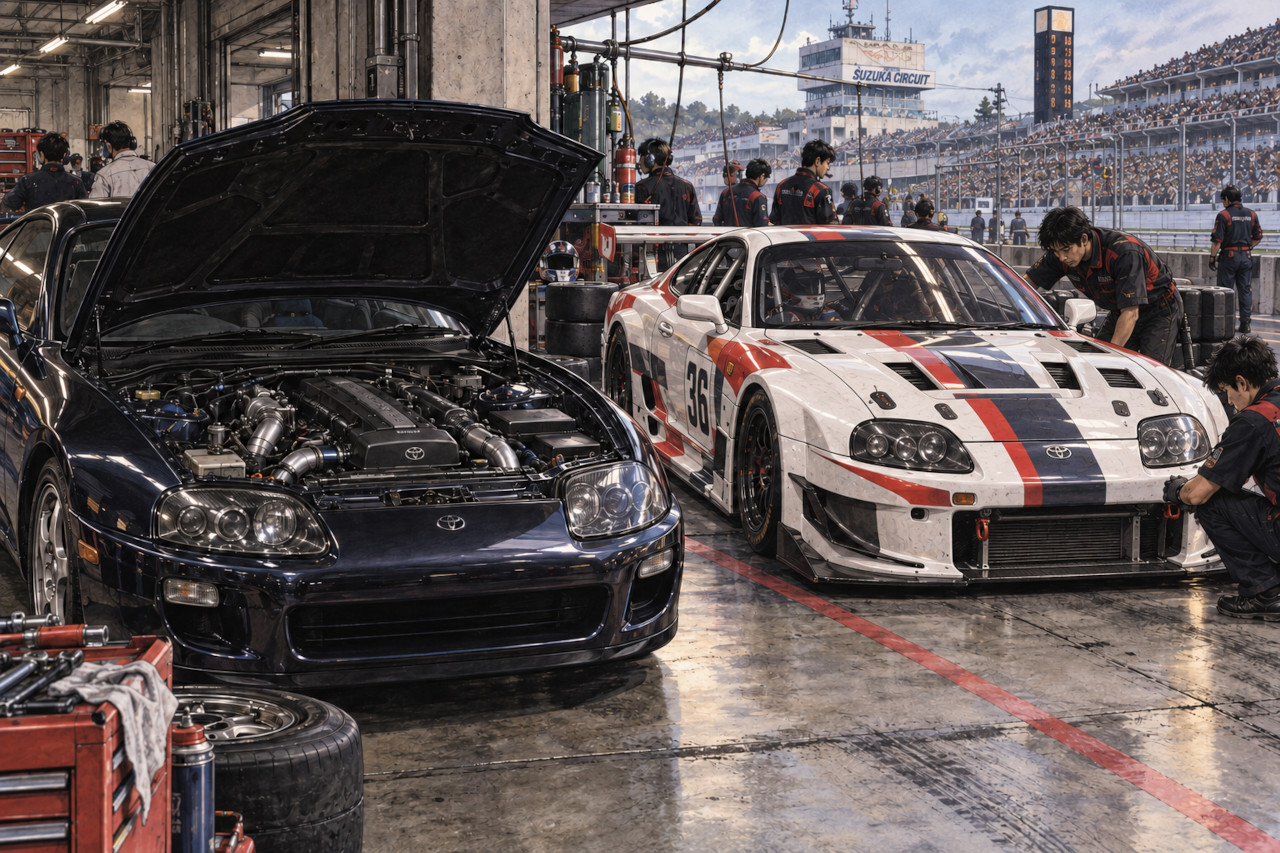 AI-generated explanatory illustration. It does not faithfully reproduce the actual No. 36 car or the Suzuka pit area from the 1997 JGTC season.
The Supra Became a Global Pop-Culture Star Just as Production Was Ending
The A80’s later reputation cannot be explained by engineering alone. Toyota itself has pointed to the Gran Turismo video game series and the car’s appearance in the first The Fast and the Furious film as major reasons the Supra remained visible to new generations of enthusiasts.
The timing is almost backwards. The first The Fast and the Furious arrived in 2001. Production of the A80 in Japan ended in July 2002. In other words, just as the Supra was turning into an international pop-culture icon, the actual new car was disappearing.
For older cars, the normal pattern had been simple: the model vanished from showrooms, gradually disappeared from the street, and younger drivers stopped having much contact with it. The A80 escaped that process. People who had never seen one sitting new in a Toyota showroom could still drive one on a television screen, see one in a movie, read about modified examples and eventually go looking for used cars.
 AI-generated illustration. The game screen does not reproduce an actual Gran Turismo title or a scene from The Fast and the Furious.
There Was No New Supra for 17 Years—Yet the Name Refused to Disappear
Toyota stopped producing the A80 in Japan in 2002, and the fifth-generation Supra did not arrive until 2019: a 17-year production gap. U.S. readers had actually been without a new Supra even longer, because the Mk IV left Toyota’s American lineup after the 1998 model year.
Yet tuning culture, motorsport, games and movies kept reproducing the A80 in different forms. It was a used car that somehow refused to become merely an “old car.” New fans kept arriving after production had already ended.
That may be one reason the A80 acquired such an unusual status. Normally, a replacement arrives and pushes the previous model one step deeper into history. The A80 had no replacement for 17 years. For all that time, it remained the last Supra. The clock effectively stopped, leaving plenty of room for the reputation to grow larger than the original production car itself.
After 17 Years, the Supra Came Back—With BMW
The first clear sign of a return was the FT-1 concept shown in 2014. The GR Supra Racing Concept followed in 2018, and in 2019 the production GR Supra finally arrived.
But the reborn Supra was not developed the old way. The fifth-generation car grew out of Toyota’s collaboration with BMW on sports-car architecture and components, and it shares key engineering with the BMW Z4. Toyota describes the GR Supra as the first product to emerge from its comprehensive collaboration with BMW. Production was also moved outside Toyota’s own factories to the Magna Steyr plant in Graz, Austria.
Calling it “not a real Supra because it has BMW underneath” is too easy. So is pretending nothing changed. The BMW connection is real. At the same time, the familiar Supra fundamentals of an inline-six engine and rear-wheel drive survived. The revival did not settle the question of what makes a Supra a Supra—it made that question interesting again.
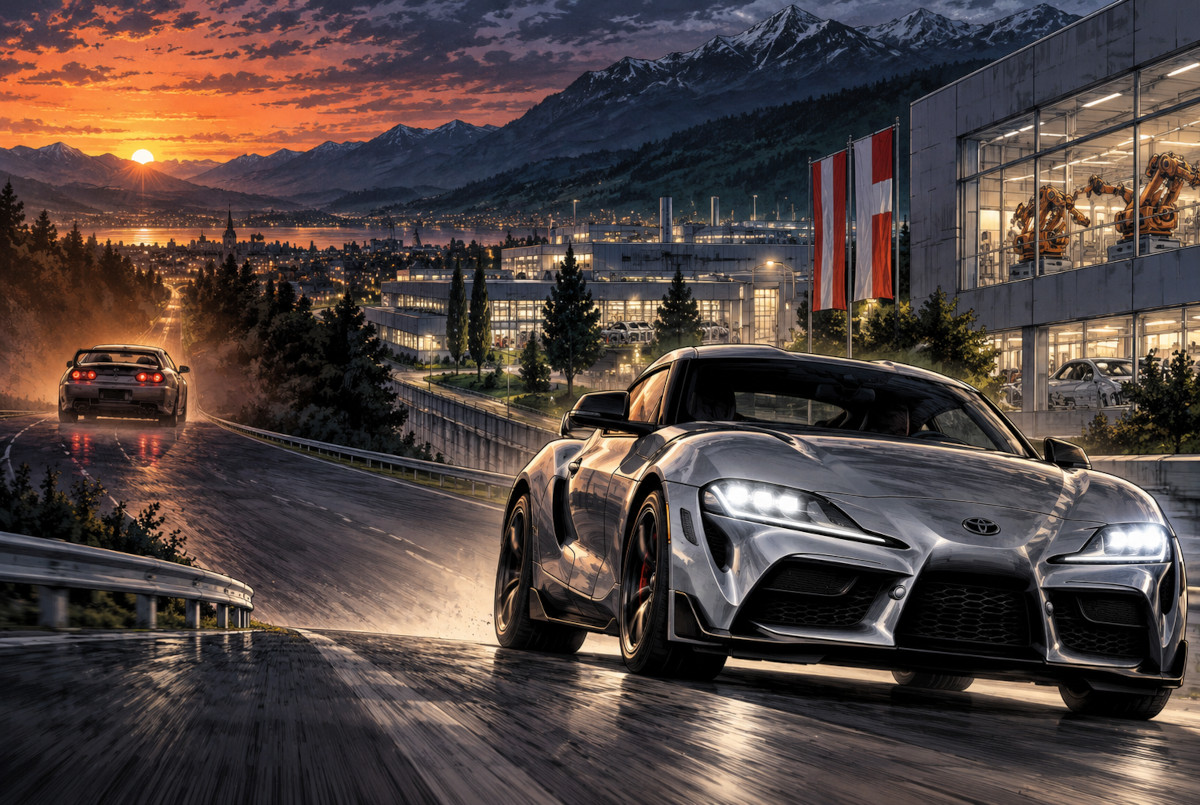 AI-generated conceptual illustration. The factory is not intended to reproduce the actual Magna Steyr plant in Graz.
And in 2026, the Reborn Supra Reached Another Turning Point
Toyota introduced the special A90 Final Edition in 2025, with 150 units allocated to Japan. Toyota USA had also announced that production of the fifth-generation GR Supra was scheduled to conclude in spring 2026.
The Supra disappeared once in 2002, returned 17 years later, and the fifth generation has now reached another turning point. But that does not justify declaring the Supra name permanently dead. Toyota has said it intends to continue developing the Supra through motorsport activities, while anything beyond that should be treated as speculation until Toyota confirms it.
Across these three articles, the Supra has changed more often than its reputation might suggest: from the spirit of the 2000GT to the Celica XX, from the M-series engine family to the JZ era, then to the A80 and finally to a new generation created through collaboration with BMW. Yet the idea of an inline-six, rear-wheel-drive GT keeps resurfacing. The history of the Supra may be less about preserving every detail and more about repeatedly deciding what must be kept—and what can be thrown away.
Editor’s Note
In the old days, once a car went out of production, it usually started its slow journey toward becoming “one of those cars we used to see.” The A80 somehow went the other way. While people my age were getting older, younger drivers who had never seen one new were learning the Supra name. The 2JZ alone cannot explain that. Games and movies kept feeding the legend while Toyota was not even selling the car. There are not many discontinued cars that manage to build their brand while they are absent.
References
- Toyota Motor Corporation: 1993 launch of the fourth-generation Supra (A80)
- TOYOTA MOTOR SPORTS: 1997 Castrol TOM’S Supra specifications
- TOYOTA MOTOR SPORTS: 2005 SUPER GT Supra and the 3UZ-FE V8
- Toyota Motor Corporation: The Legend Returns―Supra, motorsport, Gran Turismo and The Fast and the Furious
- GAZOO: A80 Supra model history and end of Japanese production in 2002 (Japanese)
- Toyota Motor Corporation: Akio Toyoda speech at the 2019 North American International Auto Show
- Toyota Motor Corporation: 2019 GR Supra launch, BMW collaboration and Magna Steyr production
- Toyota USA: A80 Supra history, U.S. sales, tuning culture and pop-culture impact
- Toyota Motor Corporation: A90 Final Edition launch and 150-unit Japanese allocation (Japanese)
- Toyota USA: GR Supra MkV Final Edition and fifth-generation production conclusion plan