

The third-generation Chevrolet Camaro and Pontiac Firebird were already unmistakably products of the 1980s: long noses, V8 engines, angular styling, and enough visual drama to make even an ordinary parking lot look like a music-video set.
Yet for one American company, apparently that still was not enough. In Omaha, Nebraska, Knudsen Automotive took GM’s F-body cars and transformed them into something far more exotic. The Camaro became the Carralo. The Firebird and Trans Am became the Tojan.
From a modern perspective, they can look like extravagant custom cars. But that description misses part of the story. These were not simply backyard body kits. They belonged to a much older American tradition in which independent coachbuilders and conversion companies took production cars and turned them into something the original manufacturer never offered.
Carralo: keeping the Camaro underneath while hiding almost all of it
The Carralo was based on the third-generation Chevrolet Camaro. IROC-Z-based examples are known to exist, and Knudsen replaced or reshaped much of the exterior with fiberglass bodywork, unique trim, wheels, and other changes.
Production figures are not perfectly consistent. One period-owner source gives a figure of 97 cars, while an auction-related source describes a run of 100. The safest conclusion is that Carralo production was around 100 cars, making it a genuinely rare conversion rather than a mass-market appearance package.
What matters is how far Knudsen went. This was not just a Camaro with a deeper front spoiler. The long, low nose, reshaped fenders, wide stance, and redesigned rear bodywork pushed the car toward the visual language of the exotic cars that dominated 1980s posters and magazines.
Underneath, the Camaro was still there. Visually, however, Knudsen was trying very hard to make you forget it.
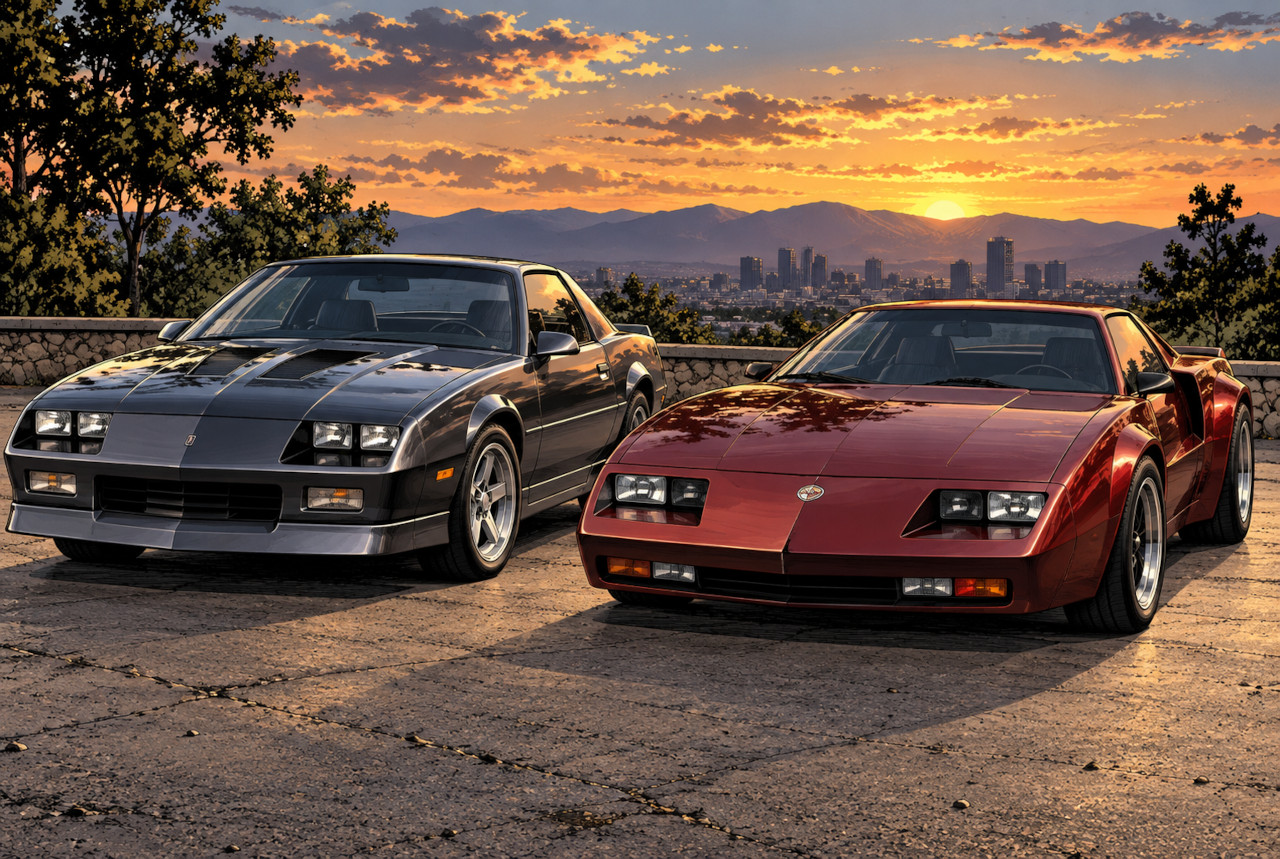
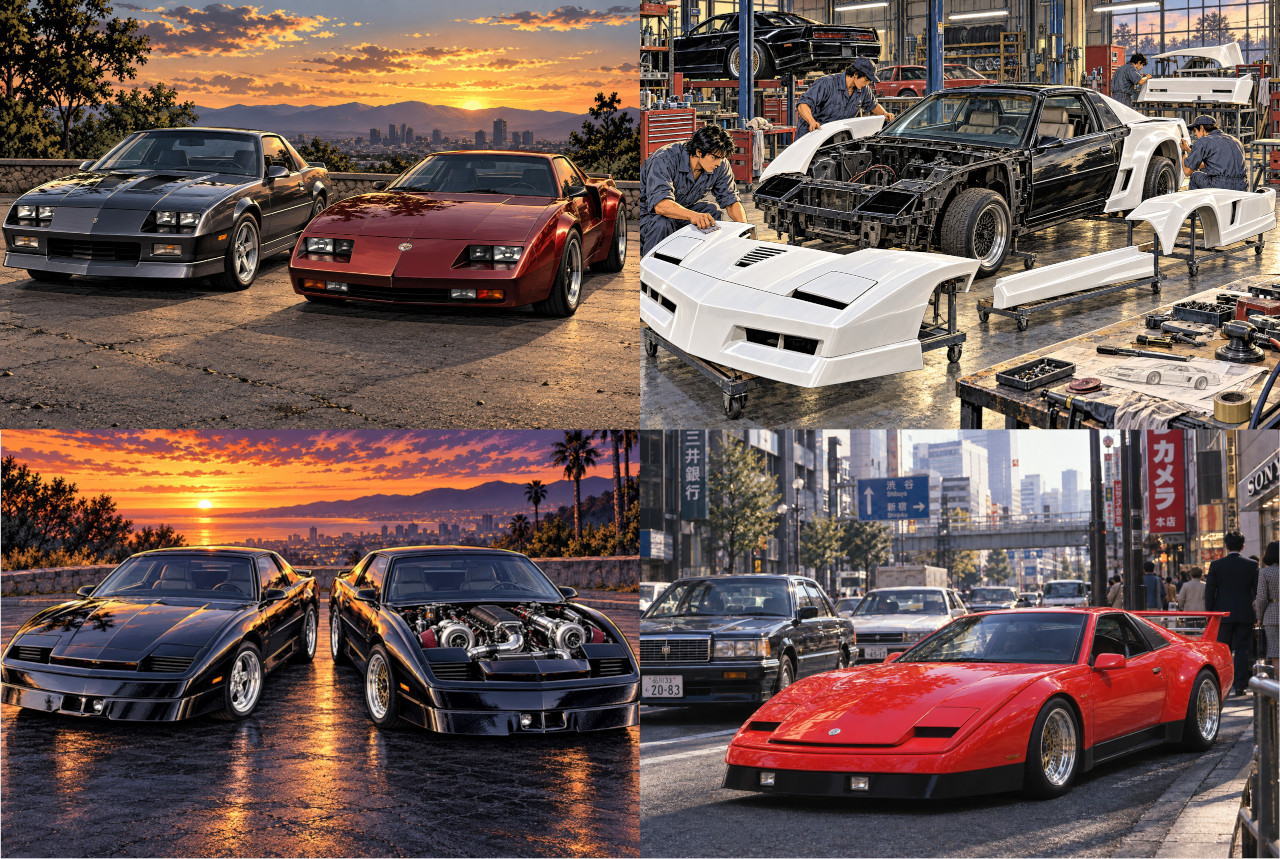
AI-generated comparison intended to show the visual transformation from a third-generation Camaro to a Carralo. It is not a photograph of an actual Carralo, and some body details are simplified.
Tojan took the idea much further
The better-known sibling was the Tojan, based on the third-generation Pontiac Firebird and Trans Am. Its styling was created by Harry Bentley Bradley, a former GM designer who was also involved in the early history of Hot Wheels.
Knudsen retained the structural center section and floor of the donor car while replacing or dramatically altering major exterior panels, including the nose, fenders, hood, and rear bodywork.
In other words, calling the Tojan “a Trans Am with a body kit” understates what Knudsen was doing. It was closer to using the Firebird as raw material for another car.
GM supported the project, and some Tojans were sold through Pontiac dealers, while many were sold directly by Knudsen. Individual cars could vary considerably. Options and modifications included large rear wings, Recaro seats, digital instrumentation, suspension changes, and different levels of engine tuning.
There is an important distinction here for enthusiasts: the Tojan was not a regular Pontiac factory trim level built on GM’s assembly line. It was a conversion produced by Knudsen Automotive from new GM F-body cars.
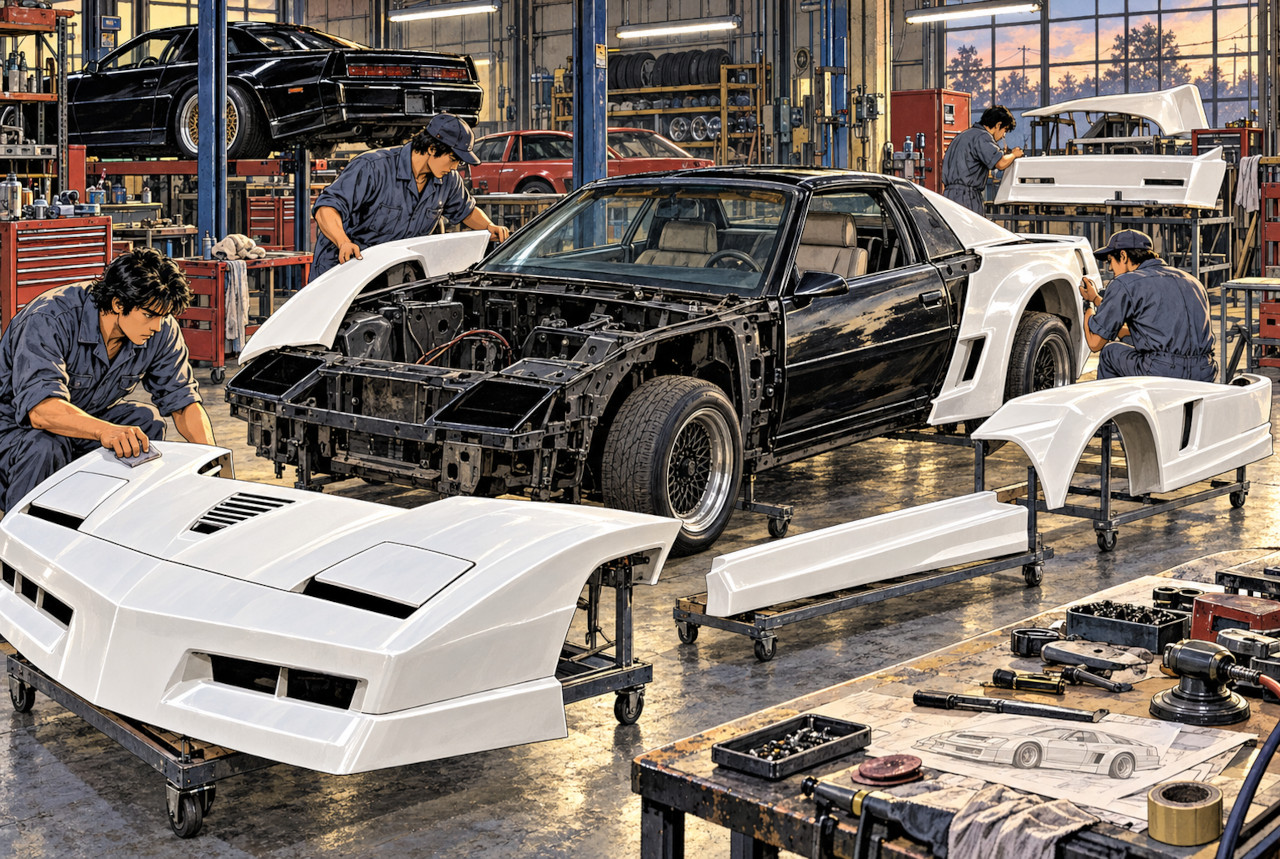
AI-generated illustration showing the general idea of a professional conversion process. It does not depict the actual Knudsen Automotive workshop or an exact historical assembly procedure.
The “206-mph Pontiac” was not every Tojan
This is where the story becomes complicated.
The Tojan is frequently described online as an American car that exceeded 200 mph before the Ferrari F40. There is a real story behind that claim, but it is often repeated without an important qualification.
An early prototype was fitted with a 5.7-liter twin-turbo V8 prepared by turbocharging specialist Gale Banks. Contemporary accounts put the engine at roughly 800 bhp on pump gasoline and around 900 bhp on higher-octane fuel. The car was later said to have reached 206 mph, or about 331 km/h.
But that figure should not be treated like a certified manufacturer speed record. The 206-mph run survives as an unofficial claim associated with the extreme prototype, rather than as a formally verified production-car record. Even Russ Knudsen was not personally present to verify that speed.
More importantly, ordinary Tojans were not all 800- or 900-horsepower monsters. Most production examples used more conventional GM 5.0-liter or 5.7-liter V8 engines. The figure generally cited for total Tojan production is about 136 cars.
So the popular shorthand — “a 200-mph Pontiac that beat Ferrari” — compresses two rather different things into one story: the highly modified prototype and the much more conventional cars actually sold to most customers.
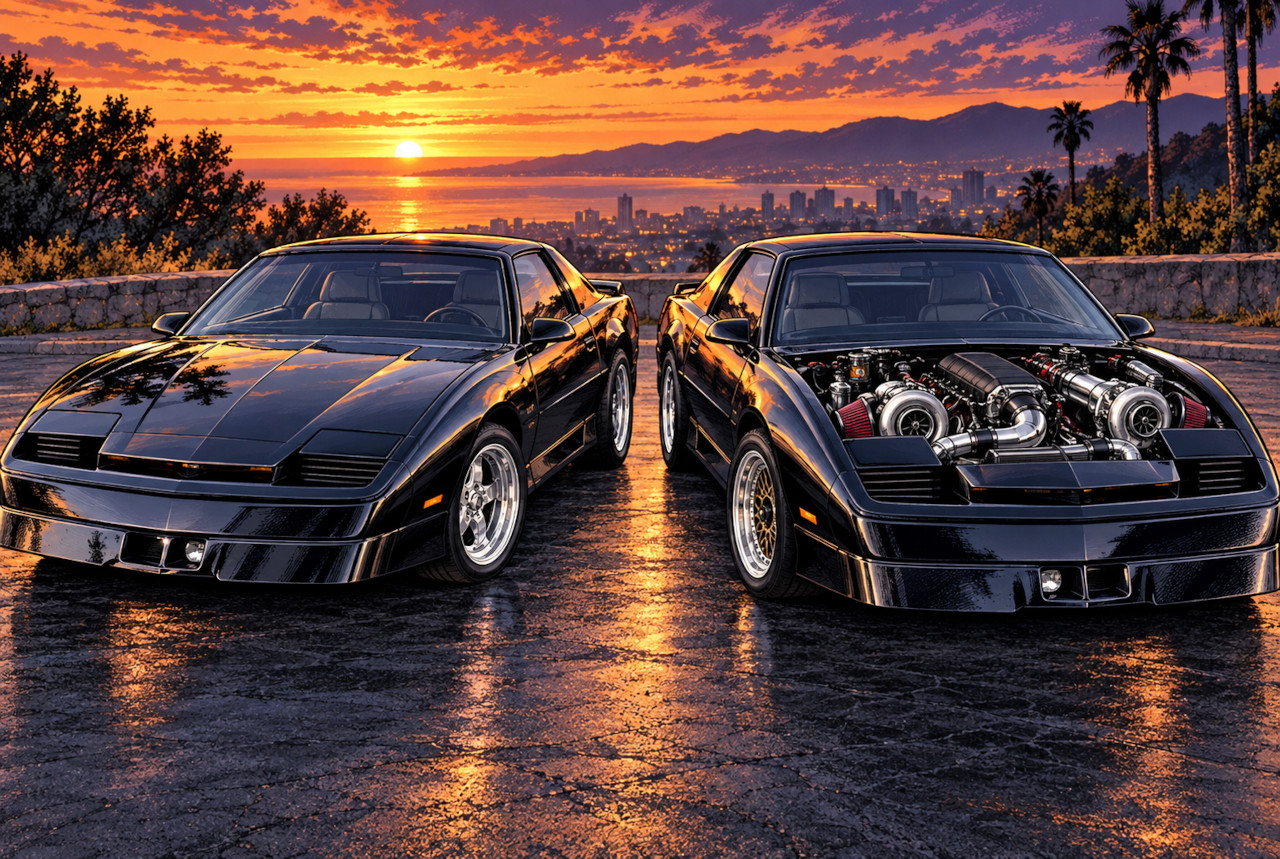
AI-generated conceptual comparison illustrating the difference between a conventional V8 specification and the famous twin-turbo prototype. The bodywork and engine installation are not exact technical reproductions.
Why could a company sell cars like this in the 1980s?
This is the part that makes Carralo and Tojan more interesting than a simple list of forgotten custom cars.
Knudsen had already been building the Baroque, a series of GM-based cars restyled to resemble luxury automobiles from the 1930s. In other words, the company did not suddenly wake up in the 1980s and decide to attack a Firebird with fiberglass. Its business was already based on taking a mass-produced automobile and converting it into something from a completely different category.
That made sense within a broader American conversion-car culture. Limousines, custom vans, aftermarket convertibles, neo-classic luxury cars, and other coachbuilt conversions were all part of the automotive landscape.
Then the visual mood changed.
By the 1980s, the fantasy car was no longer necessarily a giant 1930s-style hood with chrome everywhere. Posters, magazines, movies, and television were filled with low, wide exotic cars. Lamborghini, Ferrari, De Tomaso, and other European machines helped define what “future” and “expensive” looked like.
Knudsen simply redirected an existing American conversion-car business toward that new fantasy.
Carralo and Tojan were not bizarre exceptions created from nowhere. They were the 1980s version of an older American habit: take an ordinary production car and turn it into something the manufacturer never built.
Then a Tojan somehow ended up in Japan
For Japanese readers, this is where the story becomes unexpectedly familiar.
So far, I have not found reliable documentation proving that the Carralo was officially marketed as a new car in Japan. The Tojan, however, definitely appeared there.
A 1988 Pontiac Tojan GT can be identified in the 1990 Japanese television series Bishōjo Kamen Poitrine, a fantasy-comedy entry in Toei’s tokusatsu television lineup. A Tojan also appears in Tokkei Winspector, part of Toei’s Metal Hero franchise that aired in 1990–1991.
For readers outside Japan, these were live-action special-effects programs made primarily for family and younger audiences. Imported American cars often looked sufficiently futuristic on Japanese television without needing much additional explanation.
The surviving screen appearances establish one useful fact: a real Tojan was physically present in Japan during the bubble-era years.
What they do not establish is an official nationwide sales network. I have not found reliable documentation showing how many Tojans were imported, who imported the television car, or whether new Tojans were ever formally listed for sale in Japan.
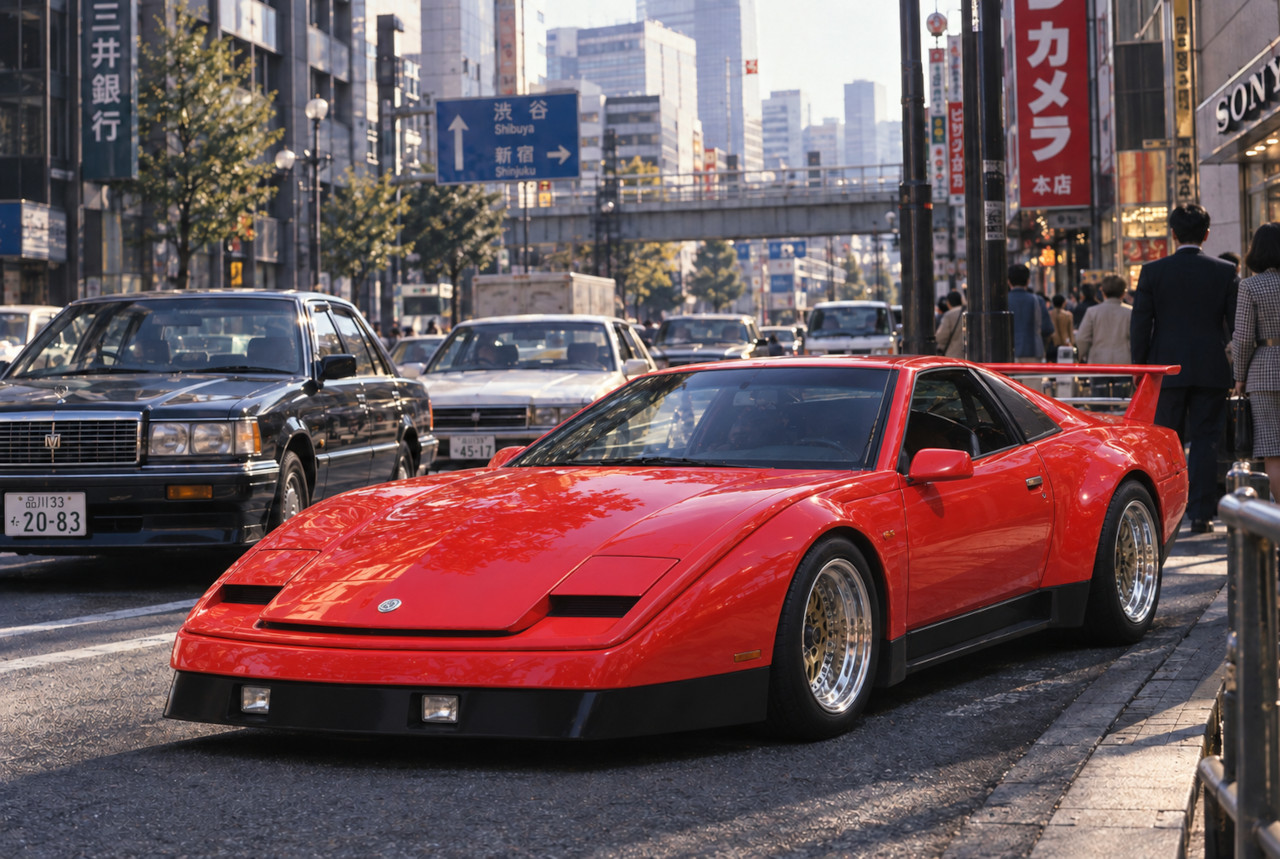
AI-generated illustration representing a Tojan in Japan around 1990. It does not recreate the actual television filming location or the exact screen-used vehicle.
How much would a Tojan have cost in Japan?
This is also where it becomes tempting to invent a neat number — and where it is better not to.
Tojan pricing varied enormously with specification. Period information places the basic car at roughly $22,000, while the most extreme versions, including the twin-turbo configuration, could reach about $62,000. At the upper end, that put the Tojan into price territory that invited comparison with cars such as the Ferrari 308 GTB.
For some perspective, a Chevrolet Camaro Z28 officially sold in Japan around 1990 was priced at ¥4.64 million.
A privately or independently imported Tojan would have involved much more than simply converting its American sticker price into yen. Shipping, compliance work, registration, importer costs, and the economics of handling an extremely low-volume specialty car would all have mattered.
What I have not found is a reliable Japanese period advertisement stating, “Tojan: ¥X million.” Without that evidence, claiming that the car cost ¥8 million, ¥10 million, or any other specific figure in Japan would only turn an interesting mystery into a fabricated fact.
The safer conclusion is simpler: the Tojan was already substantially more expensive than a normal F-body in the United States, and any example reaching Japan would have been an unusually costly and exotic import.
They look excessive now — which is exactly why they matter
If Carralo and Tojan are judged against a modern supercar purely on engineering sophistication, refinement, or development resources, they are obviously playing a different game. These were tiny-volume conversions created by a specialist company, not billion-dollar manufacturer programs.
But that is also the point.
The strange appeal of these cars lies in the idea that a Camaro or Trans Am was apparently not enough. Someone looked at an already dramatic American coupe and thought: what if we turn this into our own exotic car instead?
The answer produced roughly 100 Carralos and about 136 Tojans — cars that now sit somewhere off to the side of mainstream American automotive history.
Not quite factory cars. Not quite kit cars. Not European exotics. Not ordinary muscle cars either.
They are artifacts from an era when a small company could take Detroit hardware, fiberglass, turbochargers, and a lot of confidence, then sell the result as something almost entirely new.
Editor’s Note
Part of me looks at the Carralo and Tojan and thinks the obvious thing: the original Camaro and Trans Am were already good-looking cars. Why mess with them?
And yet that is exactly why I like these machines.
There is something wonderfully inefficient about taking a perfectly usable production coupe and spending enormous effort making it stranger, wider, rarer, and probably harder to explain at a gas station. Today, a project like this would likely pass through market research, branding meetings, risk analysis, and several layers of people asking whether anyone actually needs it.
Knudsen’s cars feel like products from a moment when “Wouldn’t this be interesting?” could still become a business plan. Whether Carralo and Tojan are beautiful or excessive is almost secondary. That unnecessary seriousness — the determination to build the thing anyway — may be the most 1980s part of the whole story.
References
- Classic & Sports Car — “Pontiac Tojan: when Nebraska beat Modena”
- Hagerty UK — “The 1984 Pontiac Tojan Is the Production Car That Beat the F40 to 200mph”
- Car and Driver — “1987 Pontiac Tojan, a Firebird Unlike Any You’ve Seen Before”
- Sports Car Market — “Rare Chevrolet Carralo to be Auctioned in Dallas”
- ThirdGen.org — “For Sale. Very Rare Camaro,” a source for the 97-car Carralo production figure
- IMCDb — 1988 Pontiac Tojan GT in Bishōjo Kamen Poitrine
- IMCDb — 1988 Pontiac Tojan GT in Tokkei Winspector
- GAZOO — Japanese-market Chevrolet Camaro Z28 specifications and new-car price