
On September 5, 2026, Japanese revolving-sushi chain Kura Sushi announced that it was ending its ongoing Chiikawa collaboration after an internal investigation found misconduct by an employee.
The campaign was scheduled to include limited-edition figures, acrylic magnets, badges, cups, sushi plates, special menu items and other promotional material.
Kura Sushi’s official announcement described the problem as employee misconduct. Japanese broadcaster TBS subsequently reported, citing the company, that promotional prizes had been misappropriated at one store and that police had been consulted. Kura Sushi later publicly confirmed that it was consulting police and cooperating with resale platform Mercari over listings suspected of involving improperly obtained merchandise.
The misconduct itself is, of course, the serious part of the story.
But it also raises a completely different question.
How did a group of tiny, round cartoon creatures become valuable enough that limited promotional goods could create this much excitement?
For someone outside Japan — or even for a Japanese person who simply does not understand the appeal — Chiikawa can be baffling.
The characters are visually simple. Small bodies. Round heads. Large eyes. Minimal detail.
Yet adults collect the merchandise, visit collaboration cafés and restaurants, follow new releases and sometimes pay substantial resale prices for limited items.
So is Chiikawa uniquely brilliant?
Or has modern life created exactly the kind of adult who was waiting for a character like Chiikawa?
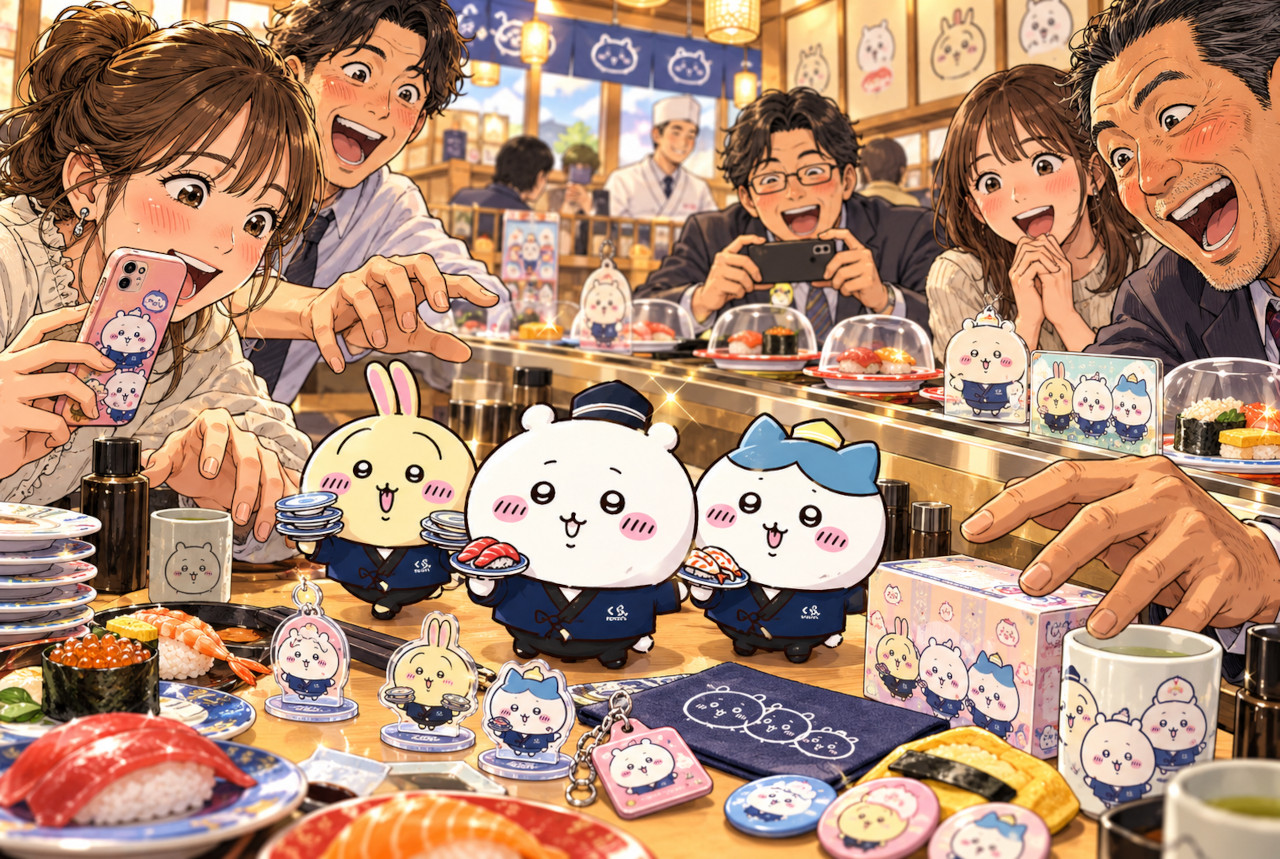 AI-generated conceptual illustration inspired by limited character collaborations. It does not reproduce official Chiikawa merchandise, an actual Kura Sushi restaurant or real resale prices.
First, what exactly is Chiikawa?
For international readers, some background helps.
Chiikawa is a manga created by Japanese illustrator Nagano. It originated through social media and later expanded into published manga, television animation, merchandise and an enormous range of commercial collaborations.
The full Japanese title, Chiikawa: Nanka Chiisakute Kawaii Yatsu, means roughly “something small and cute.”
That sounds almost aggressively harmless.
The actual world is stranger.
Chiikawa and friends eat delicious food, spend time together and enjoy small pleasures. But they also work for money, study for qualifications, fail exams, encounter dangerous creatures and perform jobs referred to as tōbatsu — essentially dangerous extermination or monster-fighting work.
Kodansha, the manga’s publisher, describes the characters as living through days that are fun and touching but also surprisingly hard.
That contrast is essential.
Chiikawa looks like a world designed for toddlers, but many of its problems are suspiciously familiar to working adults.
This is not simply a children’s character that adults happen to like
The scale of adult support is measurable.
In a 2026 survey by the Nippon Research Center, Japanese respondents aged 15 to 69 were asked to name their favorite characters.
Among all respondents who said they had a favorite character, Chiikawa ranked second overall, just behind Snoopy.
But the age breakdown is more revealing.
Among both men and women aged 30 to 49, Chiikawa ranked first.
That matters because these are not primarily children or teenagers.
They are adults in the middle of careers, families, bills, mortgages, workplace problems and all the other exciting attractions of adult life.
The stereotype that Chiikawa is simply “something young women like” therefore does not fit the data very well.
Its audience has spread much further.
The design is almost engineered to look vulnerable — but that is only part of the answer
There is an obvious psychological explanation for at least part of Chiikawa’s visual appeal.
Psychologists use the term baby schema, or Kindchenschema, for features such as relatively large eyes, a round face, a high forehead and small facial features that tend to make infant faces appear cute.
Experimental research has found that increasing these features in photographs of infants increases both perceived cuteness and adults’ reported motivation to care for them.
Chiikawa characters contain several visually similar ingredients: round forms, large faces relative to their bodies, large eyes and tiny limbs.
But there is an important limit to this comparison.
The baby-schema research was conducted on human infant faces, not on Chiikawa characters.
So psychology has not “proved why Chiikawa works.”
What it does show is that the visual vocabulary used by extremely cute characters overlaps with features humans already tend to respond to positively.
That may help open the door.
It does not explain why people stay.
Cuteness alone cannot explain this level of popularity
Japan is not exactly suffering from a shortage of cute characters.
There are thousands of them.
Companies have mascots.
Railways have mascots.
Local governments have mascots.
Police departments have mascots.
Even organizations dealing with extremely serious subjects sometimes have something round and cheerful standing next to the information board.
If large eyes and a round body were sufficient, nearly every mascot would become a cultural phenomenon.
Chiikawa’s more unusual strength is the collision between its appearance and its world.
The characters work.
They receive compensation.
They study.
They need qualifications.
They fail.
They get scared.
They sometimes cry.
Things are not always fair.
And then, somehow, tomorrow arrives and they continue living.
This is not pure escapism from adult life. It often feels more like adult life translated into an absurdly cute visual language.
Older heroes said “become stronger.” Chiikawa often says “somehow, keep going.”
This is where the generational contrast becomes interesting.
I grew up with Japanese monster movies, superheroes and the kind of pop culture in which the appealing character was often powerful.
The hero transformed.
The hero became stronger.
The monster was defeated.
The basic fantasy was aspirational:
“I want to become like that.”
Chiikawa offers a very different emotional fantasy.
Chiikawa is frightened.
Chiikawa cries.
Chiikawa sometimes fails.
And yet Chiikawa still eats with friends, gets up again and continues with daily life.
For an exhausted adult, an invincible superhero can be inspiring.
But a weak character who somehow survives another day can be reassuring in a completely different way.
The emotional movement may be shifting from “I want to become that strong person” toward “perhaps it is acceptable that I am not strong all the time.”
That does not mean modern adults no longer admire strong heroes.
It means weakness itself can now become a form of identification rather than merely a flaw that the character must overcome.
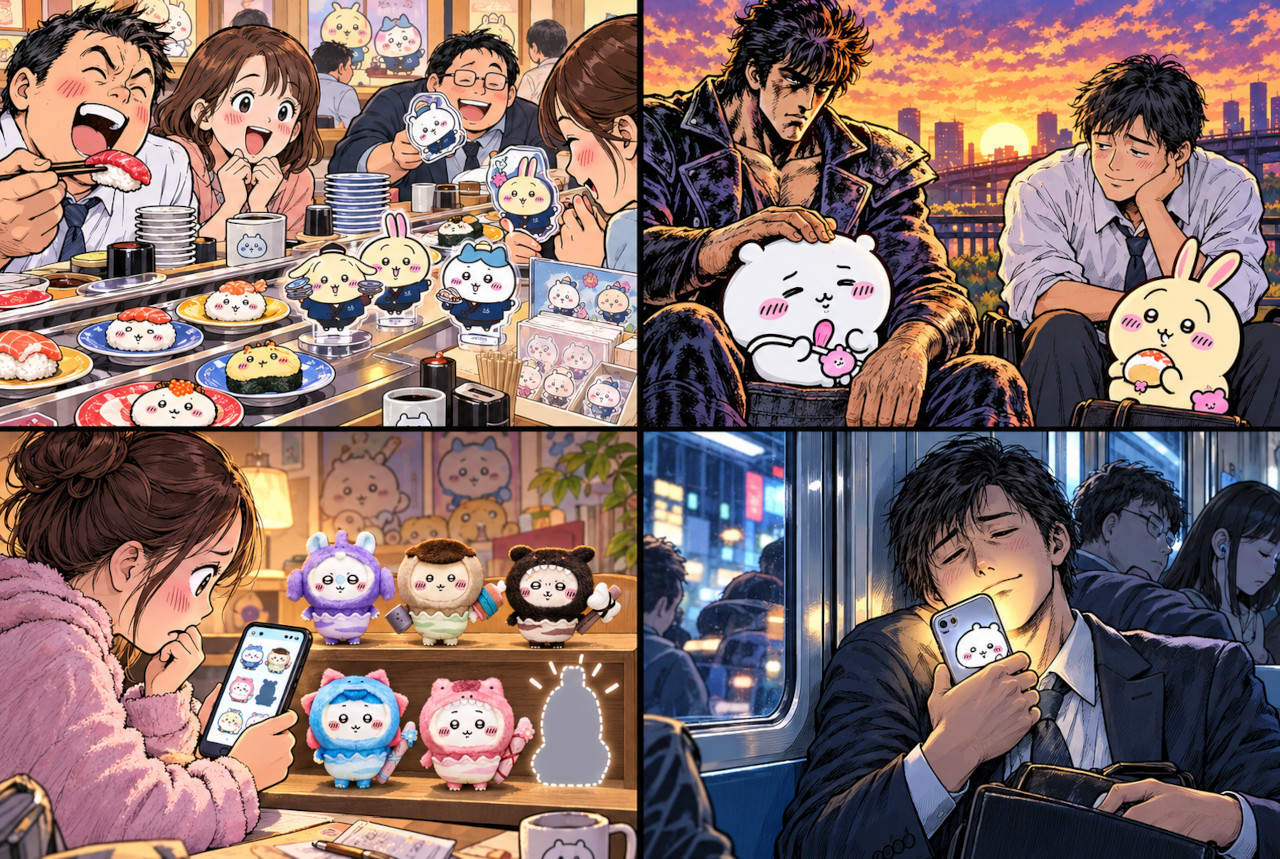
 AI-generated conceptual illustration. The small character is fictional and is not an official Chiikawa design.
Chiikawa does not tell adults that life is easy
This may be one of its smartest features.
Many “healing” characters create a safe fantasy world where almost nothing truly bad happens.
Chiikawa’s world is not entirely like that.
There are moments of genuine anxiety and danger.
There are strange creatures.
There are jobs nobody would particularly want.
There are exams with consequences.
Good intentions do not guarantee success.
Yet small pleasures remain extremely important.
A good meal matters.
A present from a friend matters.
Passing an exam matters.
Getting through the day matters.
That structure may resonate surprisingly well with adults because it does not demand that their problems disappear before happiness is allowed.
You can be tired, frightened and unsuccessful — and still enjoy dinner.
That is not a grand heroic philosophy.
It is, however, a very practical one.
Social media helped create a character that can live everywhere at once
Chiikawa also emerged in exactly the right media environment.
The manga originated on social media.
Its visual language works extremely well on a smartphone.
The drawings are simple enough to understand on a small display.
Short sequences can be consumed quickly.
An expression or scene can circulate independently as an image or reaction.
Then the same character appears again somewhere else.
On social media.
On television.
At a convenience store.
On stationery.
At a restaurant.
On a train advertisement.
Even somebody who never decided to “become a Chiikawa fan” may encounter the characters repeatedly.
Repeated exposure can turn “What is that thing?” into familiarity
Psychology has long studied the mere-exposure effect: under many conditions, repeated exposure to a stimulus can increase familiarity and liking.
A large 2017 meta-analysis examined 268 exposure curves drawn from 81 studies and confirmed an overall positive effect, although it also found an important limit: the relationship can resemble an inverted U.
In plain English:
Seeing something again and again can make it more appealing — but endlessly showing it to people does not automatically make them love it forever.
That qualification is useful when thinking about a character phenomenon.
Chiikawa had to be appealing enough for people to tolerate the repeated exposure in the first place.
But once a character reaches critical mass, popularity can create a feedback loop.
People see it because it is popular.
Brands collaborate with it because it is popular.
Those collaborations make more people see it.
More people recognize it.
Recognition makes the next collaboration easier to understand.
At a certain scale, popularity stops being merely the result. It becomes part of the distribution system.
Then liking turns into something more profitable: collecting
You can enjoy Chiikawa manga without owning anything.
But character businesses become much larger when affection becomes ownership.
A plush toy.
A keychain.
A magnet.
A cup.
A plate.
Another version of the same character wearing a slightly different costume.
And then the dangerous phrase appears:
“There are five to collect.”
One object is a souvenir.
Four objects from a five-item set create a problem.
There is now an empty fifth position.
The consumer is no longer simply buying a character.
Completing the set becomes a small game.
This is especially powerful when the merchandise is randomized, store-exclusive, time-limited or available only while supplies last.
Kura Sushi turns the meal itself into part of the collection game
This is worth explaining to readers outside Japan because Kura Sushi has built gamification directly into its restaurants.
Its Japanese Bikkura-Pon! system is connected to the plate-return slot at the table. After customers insert five finished sushi plates, a game appears on the screen. If they win, a capsule prize is dispensed.
So during a character collaboration, eating sushi is not completely separate from obtaining merchandise.
The meal itself becomes part of the mechanism.
The 2026 Chiikawa collaboration offered five figure designs, eight badge designs and eight acrylic-magnet designs through Bikkura-Pon, in addition to separate limited giveaway campaigns.
The second giveaway phase, for example, offered four cup designs while supplies lasted. A planned third phase would have offered four sushi-plate designs.
That structure matters.
You are not simply buying lunch.
You are eating, playing, randomly receiving merchandise and potentially trying to obtain a particular character or complete a set.
Restaurants discovered something toy companies have understood for decades:
food can finish in 20 minutes; a collectible can keep the visit emotionally alive for much longer.
Scarcity adds another emotion: “If I don’t get it now, I may never get it”
This is where FOMO — fear of missing out — enters the picture.
A normal product can be purchased later.
A collaboration item says:
limited time;
limited quantity;
store exclusive;
random design.
Waiting suddenly carries a cost.
Recent consumer research on collectible products has found relationships among perceived scarcity, FOMO and impulsive purchasing. One 2026 study involving 518 Chinese consumers who had purchased Pop Mart products found that perceived scarcity was positively associated with FOMO, which in turn was associated with impulsive buying.
That study was about Pop Mart, not Chiikawa, so it does not prove why any particular Chiikawa fan buys merchandise.
But it illustrates the wider psychology of modern collectible culture.
A limited object is not simply something you either want or do not want.
It also comes with a deadline.
And deadlines make otherwise silly little objects surprisingly urgent.
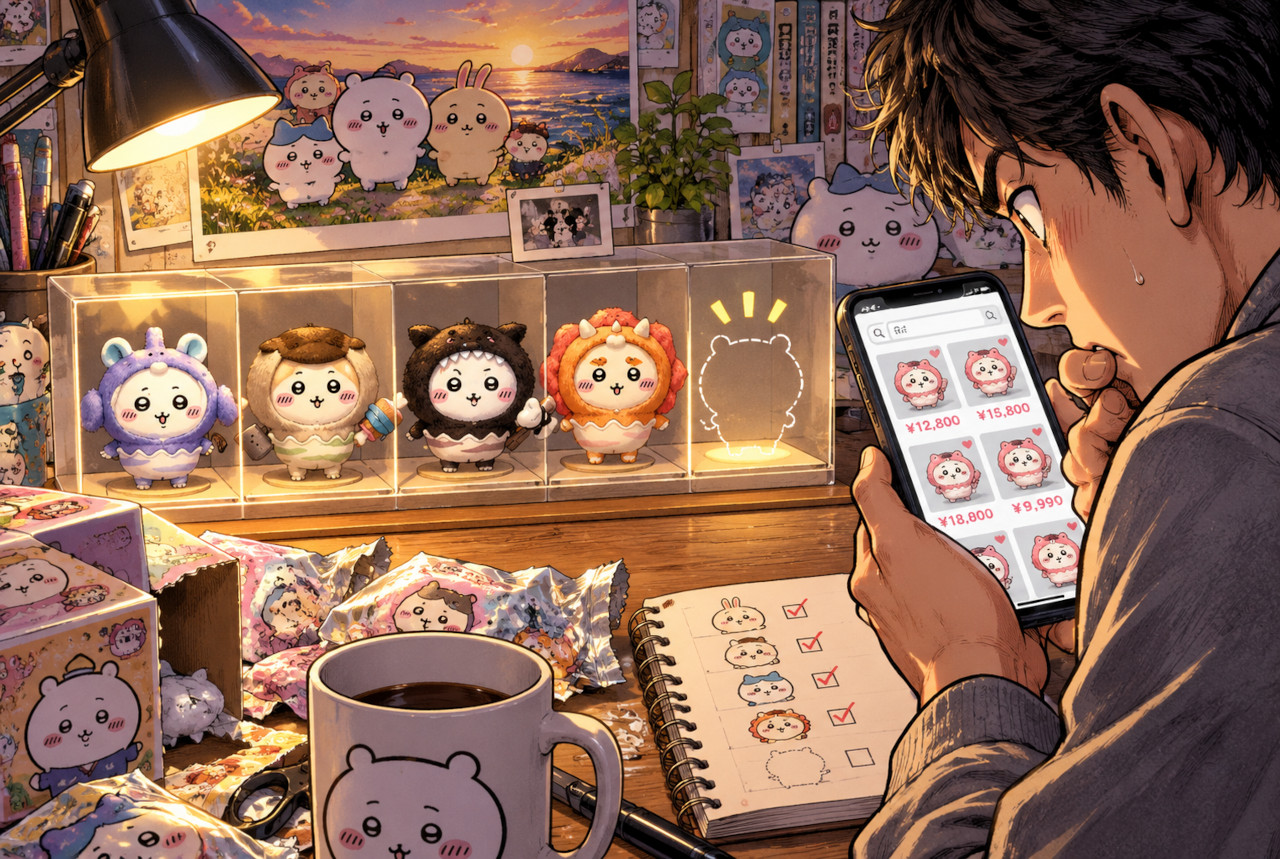 AI-generated conceptual illustration of collecting behavior and FOMO. The merchandise and resale screen are fictional and do not reproduce real Chiikawa products or prices.
The Kura Sushi incident does not prove that Chiikawa “made someone steal”
This distinction is important.
It would be sensational — and wrong — to argue that Chiikawa’s popularity somehow caused employee misconduct.
People make their own decisions.
The character is not responsible for them.
What the incident does demonstrate is that limited collaboration goods can become valuable enough to require serious inventory controls and can quickly appear in secondary markets.
Before announcing the cancellation, Kura Sushi said its prizes were normally stored in locked areas and handled under internal management procedures.
After the misconduct was confirmed, the company announced that it was consulting police.
Two days later, Kura Sushi also said it was working with Mercari to remove listings suspected of involving improperly obtained merchandise and to cooperate with investigative authorities.
This is no longer the world of a free sticker casually handed to a child.
Limited character merchandise can behave like a small asset class: scarce, tradable and emotionally valuable to the people who want it.
The popularity was not created entirely by marketing
At this point it would be tempting to say:
“So this is all manipulation. Companies manufactured the craze.”
That explanation is too easy.
Marketing can amplify demand.
It cannot reliably manufacture deep attachment to anything whatsoever.
Chiikawa already had an unusual combination:
extreme visual cuteness;
vulnerability;
friendship;
work;
failure;
small rewards;
occasional danger;
and a world that somehow feels ridiculous and familiar at the same time.
That supplied the spark.
Then social media, television, merchandise, oshikatsu, collaborations, limited editions and resale markets poured fuel onto it.
For readers unfamiliar with the Japanese term, oshikatsu broadly means activities built around actively supporting and enjoying a favorite idol, fictional character, performer or other personal “favorite” — the oshi.
That can include buying merchandise, visiting collaboration events, taking photographs, collecting different versions of an item or traveling to locations associated with the fandom.
The work created the emotional attachment. Modern consumer culture gave that attachment hundreds of things to do — and hundreds of things to buy.
Maybe Chiikawa fits an age when small happiness feels more believable than a giant dream
This may be the most interesting part.
Older entertainment often sold large fantasies.
Become stronger.
Become successful.
Defeat the enemy.
Save the world.
Chiikawa often operates at a much smaller scale.
Eat something good.
Spend time with a friend.
Pass one test.
Earn enough to buy something you wanted.
Survive an unpleasant job.
Try again tomorrow.
There is something very contemporary about that emotional scale.
For people already dealing with careers, rising costs, social expectations and constant digital noise, perhaps a character does not need to promise transformation.
Maybe it is enough for the character to say, without saying it explicitly:
“Today was difficult. But there was food. There were friends. We made it through.”
That is a surprisingly adult fantasy.
And if you still don’t understand the appeal, that is completely reasonable
Not every cultural phenomenon has to work on everybody.
If you do not project yourself onto fictional characters, do not collect merchandise and have little emotional response to “cute” design, Chiikawa fever can look genuinely strange.
You may see adults lining up for a tiny cup with a round cartoon creature printed on it and think:
“What exactly am I missing here?”
That is a perfectly legitimate reaction.
Psychology can explain some of the ingredients.
Marketing can explain how the merchandise spreads.
Consumer behavior can explain why limited sets become compelling.
But none of those explanations can scientifically force an individual to find the character charming.
You either feel some of it, or you do not.
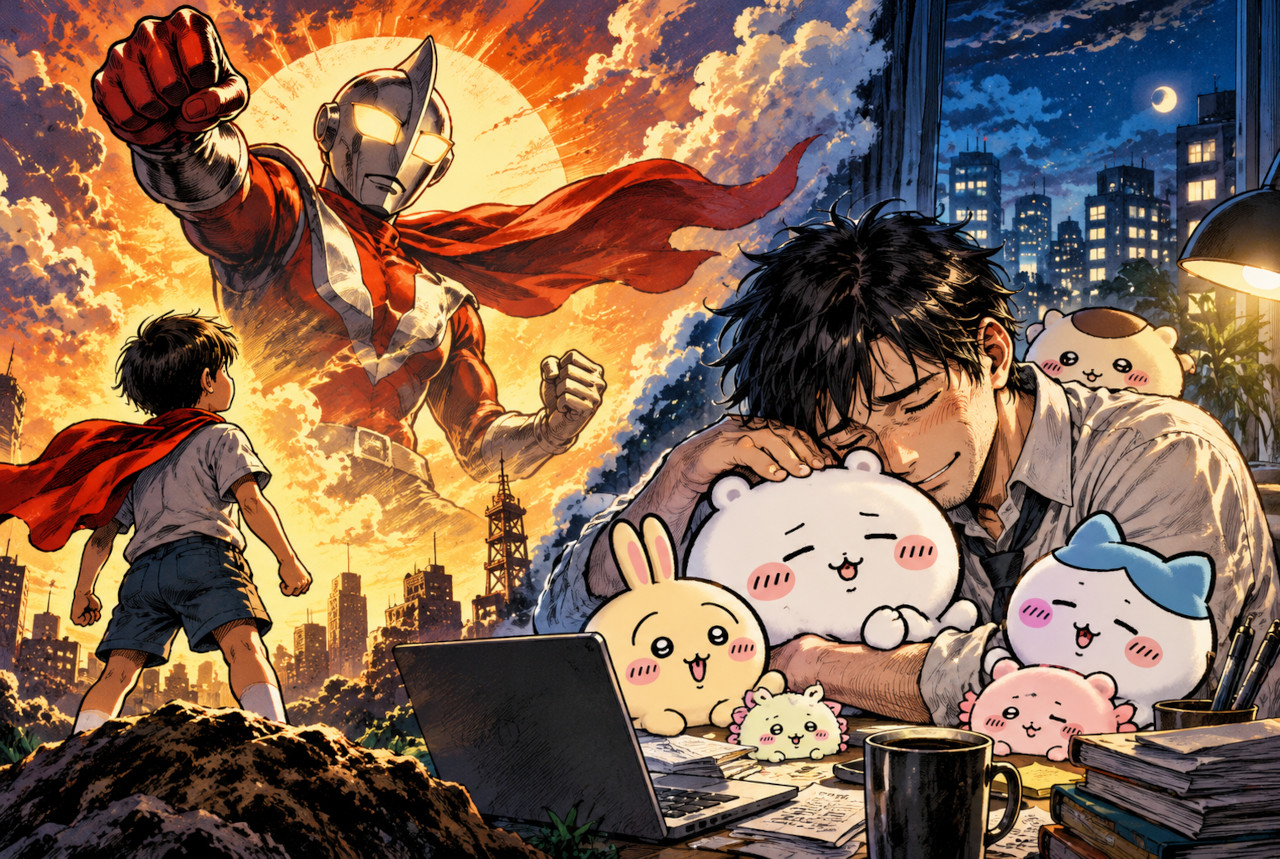
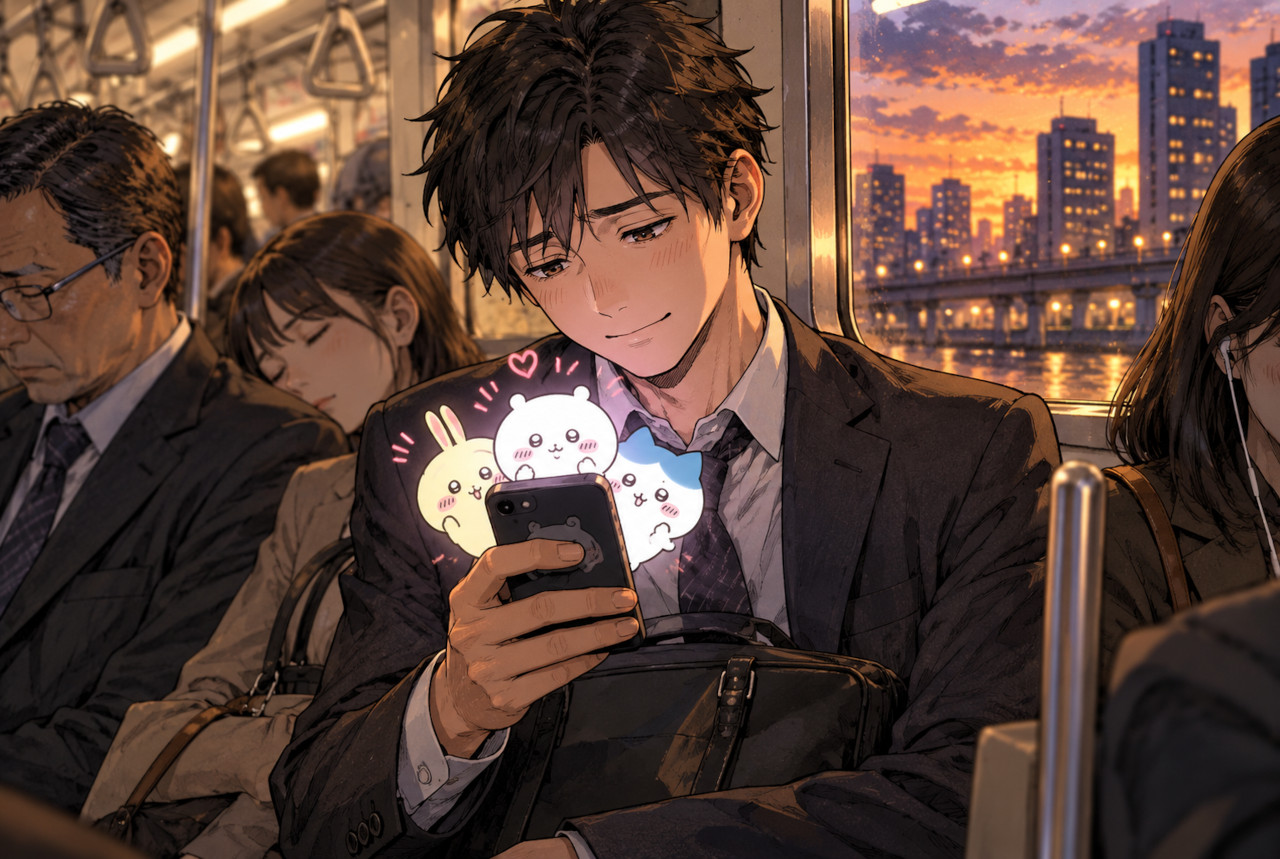 AI-generated conceptual illustration of small emotional comforts in modern daily life. The character shown is fictional and is not an official Chiikawa design.
Chiikawa may tell us more about adults than about cute characters
The obvious explanation for Chiikawa’s success is that it is cute.
That is true, but incomplete.
The more interesting explanation is the combination.
A visually vulnerable character.
A surprisingly unforgiving world.
Short stories designed for social media.
Characters that fail without becoming failures.
Small rewards that still feel meaningful.
Merchandise that converts affection into collecting.
Limited collaborations that convert collecting into urgency.
And a culture in which adults increasingly feel comfortable having an oshi of their own.
Perhaps Chiikawa did not create adults who needed this kind of character. Perhaps contemporary adult life created an unusually large audience ready for Chiikawa.
That may be why something so visually small became commercially enormous.
Editor’s Note
I can understand the explanation.
I can see why Chiikawa fits the times, why tired adults identify with characters that are weak, frightened and still somehow keep going, and why limited merchandise turns affection into a collecting game.
And I’m not interested in making fun of people just because they like it.
But if you ask whether I personally look at Chiikawa and feel that same magic?
Not really.
To my eyes, it is still a tiny, stubby little creature, and I genuinely don’t understand the level of excitement some people feel over it.
I grew up getting excited about monsters, superheroes and characters that looked larger than life. So watching adults become happy over a little round character on a cup or a plate makes me think something really has changed.
Maybe we once bought dreams of becoming stronger. Now we sometimes buy a small piece of comfort that says it’s okay just to get through the day.
I don’t necessarily want the merchandise.
But I find that change in what adults want from a character pretty fascinating.
References
- Kura Sushi — “Notice Regarding the Cancellation of the Chiikawa Collaboration Campaign” (September 5, 2026) — Official announcement confirming employee misconduct and the cancellation of the campaign from the beginning of business on September 6.
- Kura Sushi — “Cooperation with Mercari Following the Cancellation of the Collaboration Campaign” (September 7, 2026) — Official statement confirming consultation with police and cooperation with Mercari regarding listings suspected of involving improperly obtained merchandise.
- TBS NEWS DIG — Report on the Cancellation of the Kura Sushi × Chiikawa Campaign (September 5, 2026) — Reports, citing Kura Sushi, that prize merchandise had been misappropriated by an employee at one store and that the company was consulting police.
- Kura Sushi — 2026 Chiikawa Collaboration Campaign Announcement — Details the collaboration’s Bikkura-Pon figures, badges and acrylic magnets, limited giveaway cups and sushi plates, collaboration menu and campaign schedule.
- Kura Sushi — How to Enjoy Kura Sushi / Bikkura-Pon — Official explanation of the Japanese Bikkura-Pon system, in which inserting five used sushi plates starts a game with a chance to receive a capsule prize.
- Nippon Research Center — Favorite Character Survey, 2026 — Nationwide web survey of people aged 15–69. Chiikawa ranked second overall and first among both men and women aged 30–49.
- Kodansha — “Chiikawa: Nanka Chiisakute Kawaii Yatsu, Vol. 1” — Publisher’s introduction to Nagano’s manga and its combination of cute characters, friendship, work, rewards and unexpectedly difficult daily experiences.
- Official Chiikawa Anime Website — Official introduction to the television anime and its characters, based on Nagano’s manga.
- Glocker, M. L. et al. (2009), “Baby Schema in Infant Faces Induces Cuteness Perception and Motivation for Caretaking in Adults” — Experimental research showing that stronger baby-schema features in human infant faces increased perceived cuteness and reported caretaking motivation.
- Montoya, R. M. et al. (2017), “A Re-examination of the Mere Exposure Effect: The Influence of Repeated Exposure on Recognition, Familiarity, and Liking” — Meta-analysis of 81 studies examining how repeated exposure affects familiarity and liking, including limits to the effect.
- “Consumer and Market Antecedents of Repurchase Intention: Fear of Missing Out and Impulsive Buying as Serial Mediators” (2026) — Study of 518 consumers of collectible Pop Mart products examining relationships among scarcity, FOMO, impulsive buying and continued purchasing. The study concerns collectible consumer behavior rather than Chiikawa specifically.