

“You’ll never get rich working for a salary.” “Make money work for you.” “Build your own business.” Those lines still have a certain magnetic pull, especially on young people who are impatient to get ahead.
One of the books that helped turn those ideas into mainstream pop-finance wisdom was Robert Kiyosaki’s Rich Dad Poor Dad. The original book appeared in 1997, with the Japanese edition following in 2000. It came from a world before YouTube, before smartphones became everyday objects, and long before generative AI could help one person produce articles, videos, software, and digital products at remarkable speed.
So nearly three decades later, does the book still hold up? Looking at it again in 2026, the interesting answer is not simply “yes” or “no.” Some parts have aged badly. Others may matter even more now than they did in the late 1990s.
“Buy assets” is not dead advice
One of the book’s best-known ideas is simple: wealthy people do not rely only on wages. They accumulate things that generate income. Rich Dad’s own website still explains the concept in deliberately simple terms—an asset puts money into your pocket, while a liability takes money out.
Take a basic example. If someone earns ¥1,500 an hour, works eight hours a day and 20 days a month, that produces ¥240,000. To earn roughly the same amount next month, that person generally has to work again.
A book, website, software product, video library, or other piece of intellectual property works differently. None of them is guaranteed to make money, of course. But once created, they can sometimes keep producing value—or revenue—without requiring the creator to repeat the same hour of labor for every unit sold.
Read that way, the old lesson still works: try to reduce the extent to which all of your income stops the moment you stop working.

But do not take “your house is a liability” too literally
This is where the book becomes more slippery.
In Kiyosaki’s framework, an owner-occupied home may be treated as a liability because mortgages, taxes, maintenance, and other costs take money out of the household every month. That is useful as a cash-flow thought experiment. It is not, however, the same thing as formal accounting.
Under ordinary balance-sheet logic, a house with economic value and the mortgage used to finance it are separate things: the property is an asset, while the debt is a liability. The IFRS Conceptual Framework used in corporate financial reporting also defines assets and liabilities in terms of economic resources and obligations—not simply whether cash happens to come in or go out every month.
So the Rich Dad definition works better as a blunt but memorable way of forcing people to think about cash flow than as a textbook definition of accounting.
If you skip that distinction and jump straight to “Anyone who buys a house is financially stupid,” you have entered the dangerous stage where reading one business book starts to feel like earning an economics degree.
The lesson young would-be entrepreneurs often skip: get more experience
There is another Rich Dad lesson that receives less attention than the “assets” line: work to learn, not only to earn. Rich Dad’s official material still lists that idea among the book’s six core lessons.
This may be the most uncomfortable part for anyone chasing a quick escape from ordinary employment.
You have been at a company for six months. You barely understand sales, contracts, accounting, taxes, customer complaints, or how organizations actually function. But after watching 30 entrepreneurship videos, you announce that employees are being exploited and that you are going to become an investor.
Fine. Ambition is useful. But get more experience first.
The World Economic Forum’s 2025 Future of Jobs Report says employers expect 39% of workers’ core skills to change or become outdated by 2030. AI and big data matter, but so do analytical thinking, resilience, flexibility, curiosity, and lifelong learning.
You do not have to treat a company as a lifelong home. Another option is to treat it as a training ground that pays you while you learn sales, negotiation, failure, customers, organizations, and the occasionally exhausting reality of dealing with other human beings.

AI makes assets easier to create—or at least makes it look that way
This is where 2026 is radically different from 1997.
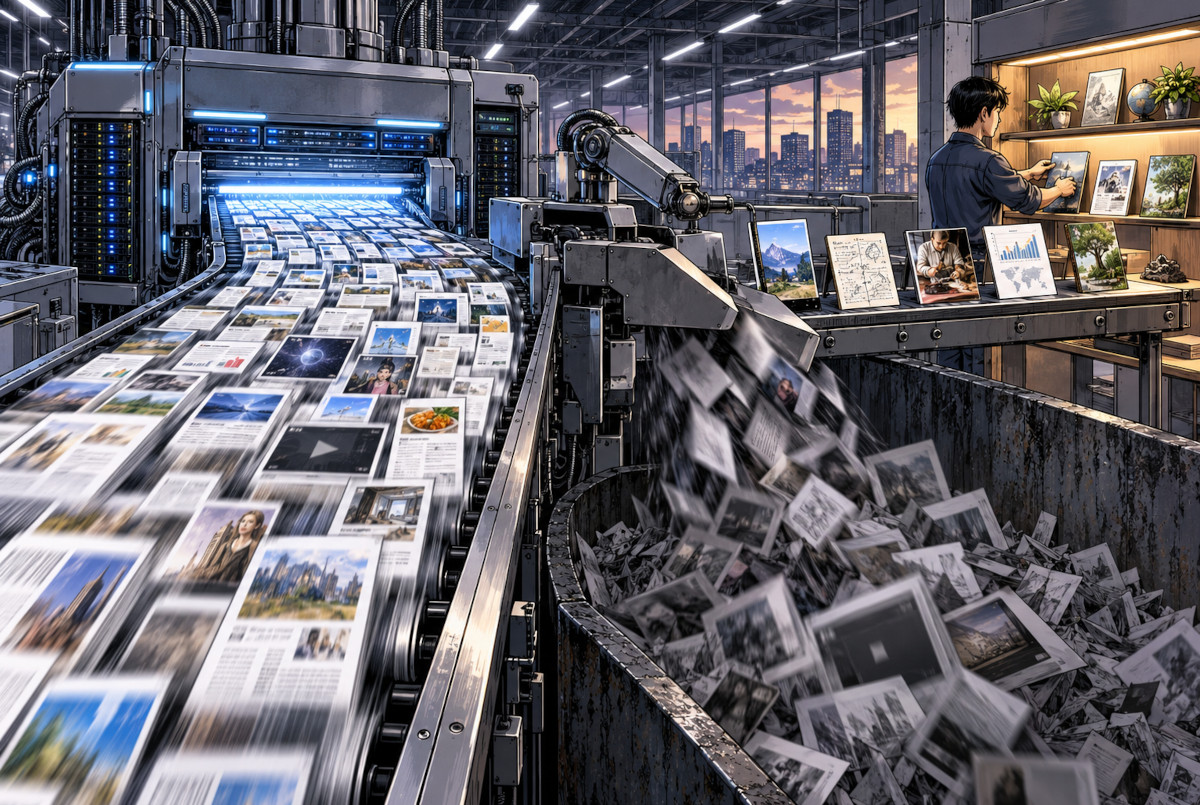
One person can now use AI tools to help produce articles, videos, e-books, code, research drafts, and other digital products at a scale that once required far more time or a small team.
But something you created is not automatically an asset.
Google’s guidance on generative AI makes that distinction fairly clear. Producing large numbers of pages with little or no added value can fall under its policies on scaled content abuse. YouTube likewise clarified its monetization policy in July 2025 to emphasize that repetitive or mass-produced “inauthentic” content is not what its monetization program is designed to reward.
AI is not a machine that magically manufactures assets. It is closer to a machine that lets you package knowledge and experience much faster.
And that creates an amusing problem: if the human using the machine has very little experience, AI can also help produce very large quantities of very inexperienced material.
Nearly 30 years later, financial literacy is still unfinished business
There is another reason the old book has not completely lost its relevance—at least from a Japanese perspective.
J-FLEC’s 2025 Financial Literacy Survey covered 30,000 people in Japan between the ages of 18 and 79. Across 25 questions measuring financial knowledge and judgment, the overall correct-answer rate was 53.8%. Only 8.7% of respondents said they had received financial and economic education.
Meanwhile, Japan’s Financial Services Agency now emphasizes basic household management together with long-term, regular, and diversified investing as core principles of personal asset building.
That matters because reading a 1990s success book does not mean the next logical step is to charge into property speculation, launch a company tomorrow, or put money into some suspiciously high-yield scheme.
Rich Dad Poor Dad is dated if you treat it as a modern investment manual. But it remains surprisingly useful if you use it to ask two uncomfortable questions:
“What do I own besides my ability to work?”
“What am I actually learning from the work I do now?”
The idea of owning assets did not become obsolete. What changed over the last three decades is the range of things an ordinary person can potentially turn into an asset.
Editor’s Note
When I was younger, I also tended to think, “Why stay at a company? I could just do this myself.” What turned out to be useful later, though, was often the unglamorous stuff: strange bosses, difficult customers, failed jobs, negotiations that went nowhere, and work that barely paid.
So when someone reads three success books and immediately announces that “employees are losers,” my reaction is usually: that is not quite the lesson. Ambition is good. Keep it. But do not let your ambition become fully grown while your experience is still in kindergarten. Get more experience. That can become an asset too.
References
- Chikuma Shobo — Rich Dad Poor Dad, Japanese edition
- Chikuma Shobo — Revised Japanese edition of Rich Dad Poor Dad
- Rich Dad — Core Rich Dad Poor Dad Concepts FAQ
- J-FLEC — Financial Literacy Survey 2025
- Financial Services Agency of Japan — Basics of Asset Building
- World Economic Forum — The Future of Jobs Report 2025
- Google Search Central — Guidance on Using Generative AI Content on Your Website
- YouTube Help — YouTube Channel Monetization Policies
- IFRS Foundation — Conceptual Framework for Financial Reporting