
Not long ago, AI-generated images usually gave themselves away. The fingers were wrong. Signs dissolved into gibberish. People in the background seemed to melt into the scenery. You could point at one detail and say, “There. That’s AI.”
By 2026, that little escape hatch is disappearing fast. Skin looks right. Metal looks right. Glass, lighting, depth of field — all increasingly convincing. And the unsettling part is not simply that AI has become better at making pretty pictures. It can now make an image look confidently real even when what it depicts is wrong.
In barely four years, the contest itself has changed
When OpenAI introduced DALL·E 2 in 2022, 88.8% of evaluators preferred it over the original DALL·E for photorealism. Even then, producing something that looked more like a real photograph was an important benchmark.
But realism is no longer the whole game. ChatGPT Images 2.5, released on September 8, 2026, improved natural lighting and texture while becoming better at preserving subjects from reference images and following editing instructions consistently across multiple rounds of revisions.
In other words, an AI image generator is gradually becoming something more than a machine that produces one impressive picture. It is turning into a production tool that can be directed, corrected, and revised much like a human photo or advertising workflow.
Then there is the sheer volume. According to OpenAI, people now create more than 3 billion images every week across ChatGPT Images and the GPT-Image models offered through its developer API.
Run the numbers: 3 billion ÷ 7 days ÷ 24 hours ÷ 3,600 seconds comes to roughly 5,000 images every second. And that is just the OpenAI ecosystem.
If this were an old-school turbo car, we might be talking about an extra 20 horsepower. Here, the machine got better while the production line also jumped to industrial scale. That combination is a little more troublesome.
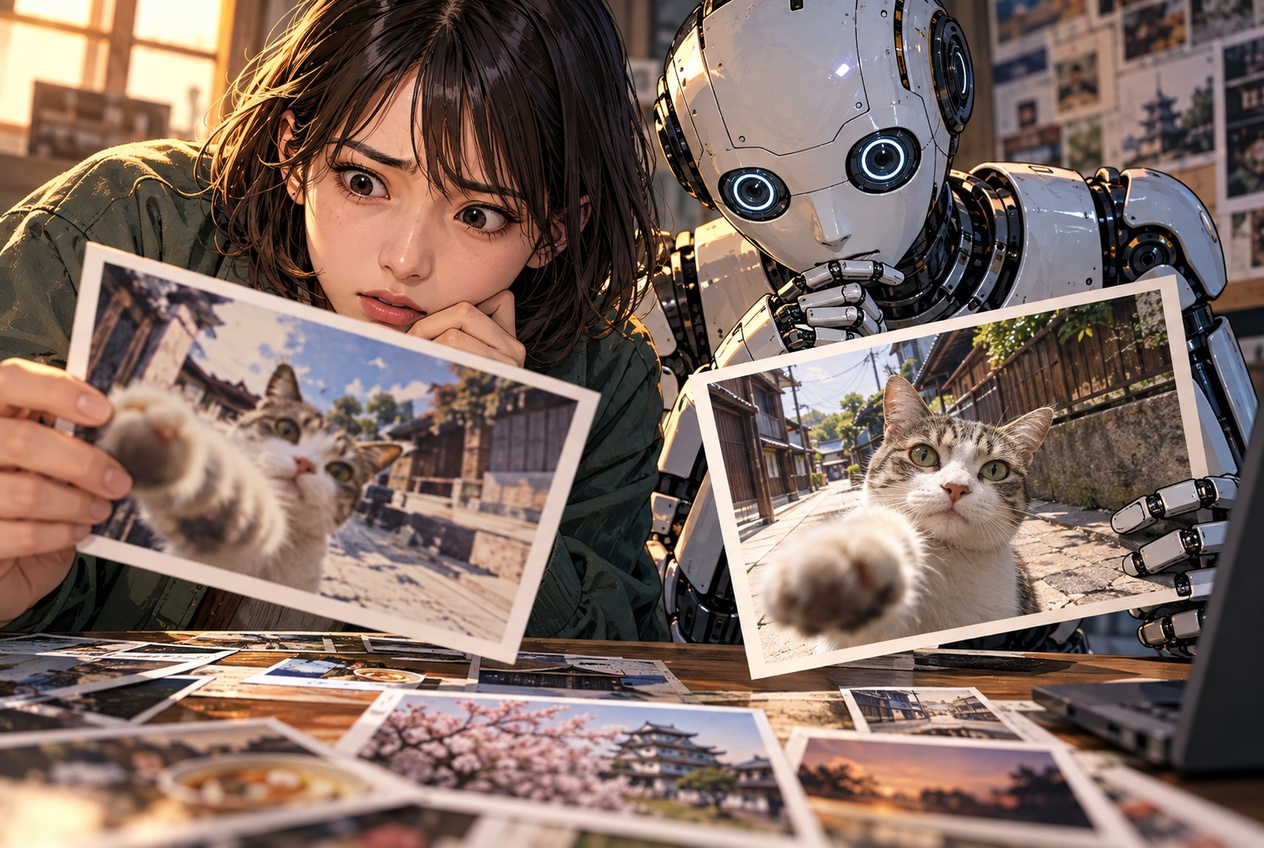
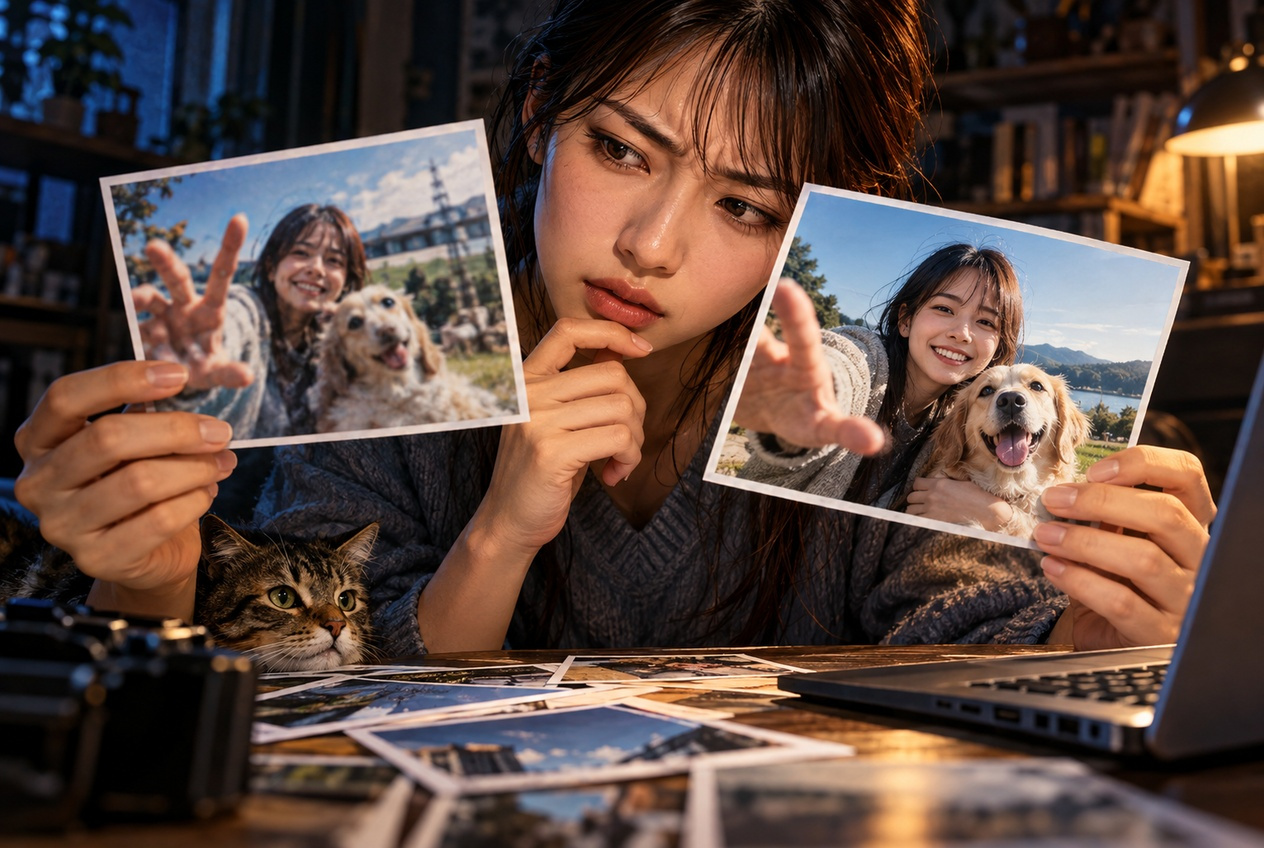 AI-generated comparison illustration. It is not a side-by-side output from specific 2022 and 2026 image models.
The stranger part is that accuracy is improving too
On October 6, 2026, Google DeepMind published the model card for its Nano Banana 2.1 image model. The evaluation categories tell us something important about where the competition has moved.
They do not measure only visual quality. They include single-character consistency, multi-character consistency, product consistency, multi-reference editing, infographic design — and factuality.
On Google’s Infographic Factuality evaluation, Gemini 3.1 Flash Image (“Nano Banana 2,” Thinking) scored 0.179. Nano Banana 2.1 in Thinking mode scored 0.521. Divide one number by the other and the evaluation score is roughly 2.9 times as high.
That does not mean the new model is literally “2.9 times more truthful.” It is a ratio between scores on a particular benchmark, not a universal measurement of truth.
Still, the improvement is hard to ignore.
And then things get strange again.
In the very same documentation, Google notes continuing limitations involving small text, long passages of text, left-right spatial relationships, 3D reasoning, world knowledge, and factuality. The model can still produce hallucinations.
“It makes fewer mistakes” and “it no longer makes mistakes” are two completely different claims.
With image generation, there is an additional problem: the mistake can now arrive with convincing lighting, texture, shadows, and photographic polish.
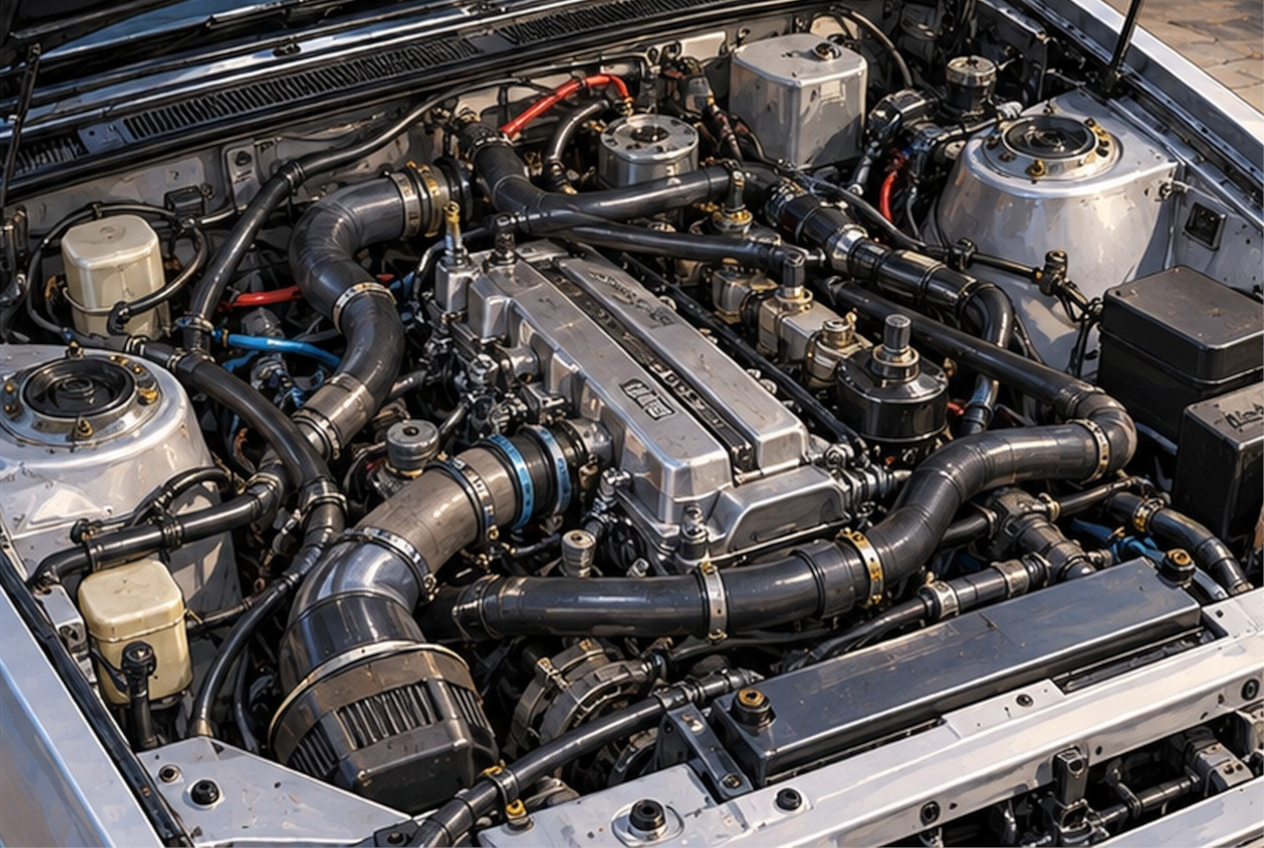 AI-generated fictional engine bay. It does not reproduce the engine layout of any real manufacturer, model, or production vehicle.
Surely the human eye can still catch it? The numbers are not comforting
There is always one final line of defense: “I can tell.”
Unfortunately, the research is not especially reassuring.
A 2025 study involving 1,276 participants tested people on authentic and synthetic images, audio, video, and audiovisual material. Average accuracy across all media was 51.2%. For images alone, it was 49.4%. Participants also became less accurate at identifying synthetic images when human faces were involved.
A separate Microsoft Research study analyzed more than 287,000 image judgments from over 12,500 participants worldwide. That experiment produced a better overall success rate of 62%.
Sixty-two percent is clearly better than flipping a coin. But turned around, it also means roughly 38% of the judgments were wrong.
The experiments used different methods and image sets, so it would be misleading to declare that “humans can only detect AI images 50% of the time.” What they do show is that visual inspection alone is no longer something we can treat as a reliable guarantee.
There is another important limitation. Both studies discussed here predate the September–October 2026 release of ChatGPT Images 2.5 and Nano Banana 2.1. We therefore cannot simply claim that humans perform even worse against the newest models. But neither can we assume those older detection rates describe the current state of the technology.
What about provenance data and invisible watermarks?
This is where C2PA-based Content Credentials and SynthID invisible watermarking come in. OpenAI currently uses both with supported generated images.
These systems are useful, but they answer a narrower question than many people assume.
OpenAI explicitly says provenance signals can help establish where content came from, but they do not guarantee that the content is accurate, unedited, legally owned, or being shown in the correct context.
C2PA metadata can also disappear through ordinary transformations such as screenshots, format conversion, uploads, downloads, or other processing. SynthID is designed to be more durable because its signal is embedded in the media itself, but a failed detection still cannot prove that an image was not AI-generated.
That leads to one of the strangest distinctions in the entire subject.
“Was this image made by AI?” and “Is what this image shows actually true?” are two different questions.
AI used to be bad at being wrong
An older AI-generated engine bay might resemble a badly modified project car the moment you looked under the hood: hoses going nowhere, components merging together, mechanical connections that made no sense. Even if you knew nothing about the model, something simply felt off.
That was useful. The error came with visible warning signs.
Now imagine a component that does not exist, rendered with convincing aluminum texture, proper reflections, believable bolts and hoses, and shadows that fall exactly where your eye expects them to fall. It can be placed where a real engineer might plausibly have put it.
The same problem can apply to a nonexistent building, an event that never happened, or a historically inaccurate scene.
The biggest change in AI imagery may therefore not be that “fake has become real.”
It is that the visible quality gap between a correct image and an incorrect one is rapidly shrinking.
That is a much more uncomfortable problem.
A Few Terms That May Need Explaining
- Photorealistic
- An image created as illustration or computer graphics but designed to look as though it was captured by a real camera.
- Benchmark
- A standardized test or evaluation used to compare the performance of AI systems. A score that is twice as high does not automatically mean the system is twice as capable in everyday use.
- Hallucination
- When a generative AI produces information or details that are incorrect or do not exist, but presents them in a plausible-looking way. In images, this can mean believable objects, structures, or relationships that are actually wrong.
- C2PA / Content Credentials
- An open standard for attaching information about the origin and history of digital media. It commonly uses metadata and cryptographic signatures to help verify where a file came from and how it has been handled.
- SynthID
- An invisible watermarking technology developed by Google DeepMind. It embeds a signal into AI-generated media that can help indicate its origin even when ordinary metadata is no longer present.
Editor’s Note
What bothers me is not that AI makes mistakes. People make mistakes too.
Older image generators at least tended to leave a loose bolt somewhere. A hand looked wrong. A sign turned into nonsense. You had something to grab onto and say, “There it is.”
Now the machine can spray new-car paint over the mistake.
And this is not a technology that waits five years for a major redesign. The capability can change noticeably within months.
I suspect we are going to have to unlearn the habit of thinking, “I saw the picture, so it must have happened.” For those of us who grew up in a world where a photograph carried a certain evidentiary weight, that is probably the most uncomfortable part.
We used to say, “Seeing is believing.” In the AI era, the thing we see may be exactly what deserves another look.
References
- OpenAI — “DALL·E 2” — Comparison with DALL·E 1, including photorealism preference results.
- OpenAI — “Introducing ChatGPT Images 2.5” (September 8, 2026) — Image quality, editing consistency, and weekly image-generation volume.
- Google DeepMind — “Nano Banana 2.1 Model Card” (October 6, 2026) — Image-generation evaluations, factuality benchmarks, and known limitations.
- Communications of the ACM — “As Good as a Coin Toss: Human Detection of AI-Generated Content” (2025) — Perceptual study involving 1,276 participants.
- Microsoft Research — “How good are humans at detecting AI-generated images? Learnings from an experiment” (2025) — More than 12,500 participants and approximately 287,000 image evaluations.
- OpenAI — “Advancing content provenance for a safer, more transparent AI ecosystem” — C2PA, SynthID, and the strengths and limitations of provenance signals.
- OpenAI Help Center — “Provenance signals in OpenAI-generated content” — What Content Credentials and SynthID can, and cannot, establish about generated media.