

In 2009, the Japanese film Colonel Kuhio, starring Masato Sakai, introduced moviegoers to one of the country’s most outrageous real-life marriage swindlers.
British royal blood, a career flying fighter jets for the U.S. military, and enormous wedding benefits. The man behind the film had reportedly used this extraordinary collection of invented credentials to deceive women.
But the story did not remain safely in the past.
In 2016, a Japanese newspaper published a five-part series titled “Twenty Days with the Legendary Swindler Colonel Kuhio.” Then, on March 9, 2022, Nikkan Gendai reported on a man involved in a relationship with a woman in Nagano Prefecture, identifying him as Colonel Kuhio once again.
After becoming famous enough to inspire a movie, was he really still telling variations of the same incredible story?
This time, the connection involved a matchmaking app. It sounded as though a fake American military officer from Japan’s Showa era had somehow entered the modern world of online dating.
But was it genuinely the same person? And did the reported encounter constitute another proven fraud case?
To find out, I separated the film, the 2016 newspaper series, and the evidence presented in the 2022 report.
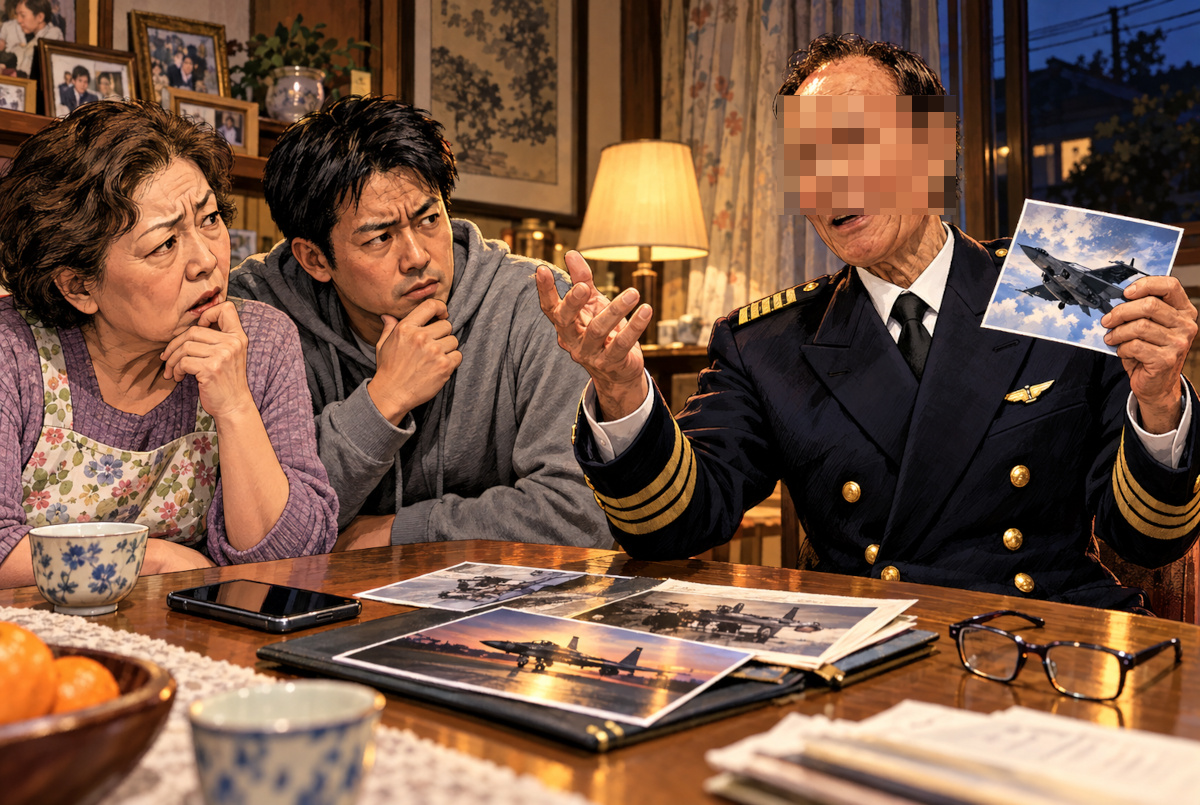
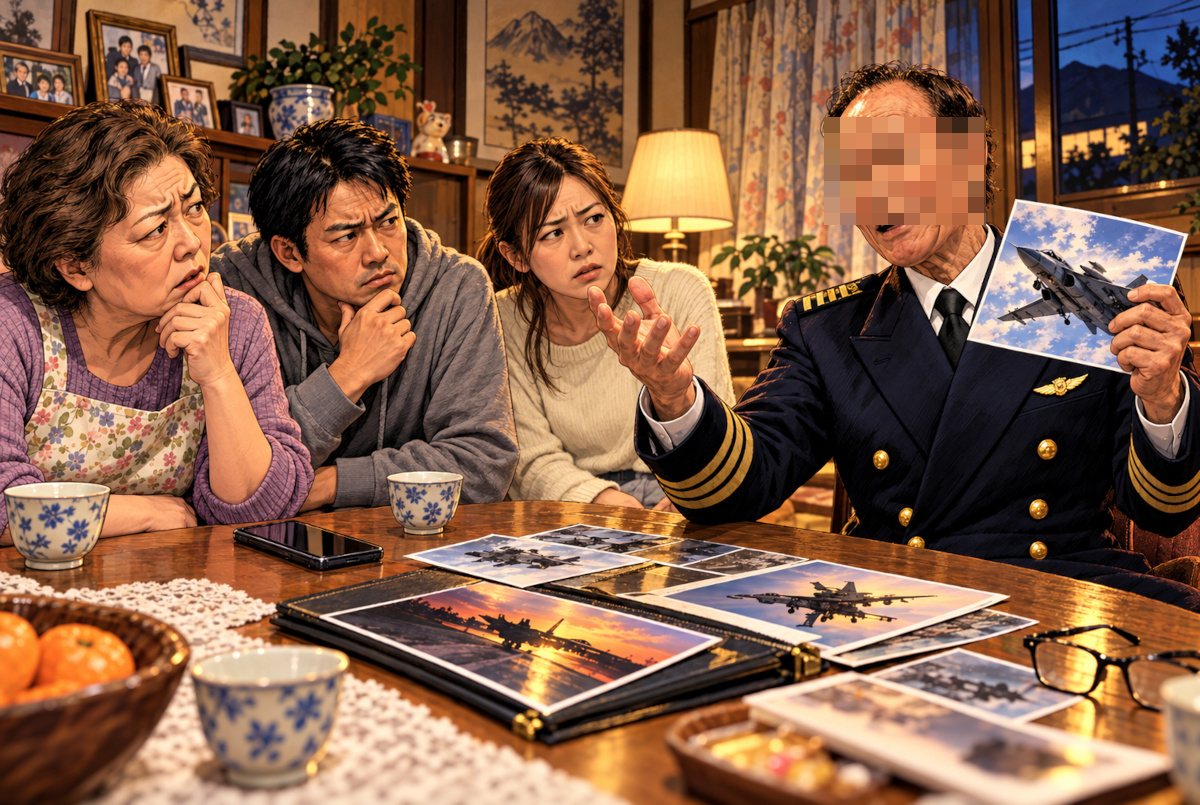 AI-generated illustration inspired by the family meeting reported in 2022. The people, military uniform, room and aircraft photographs are fictional and do not reproduce the actual meeting or materials shown.
Was It Really 13 Years After the Movie?
First, let’s straighten out the timeline.
The film Colonel Kuhio was released in Japan on October 10, 2009, according to distributor Asmik Ace’s official records.
The Nagano report appeared on March 9, 2022.
The exact interval was 12 years, four months and 27 days. The calendar years are 13 apart, but a full 13 years had not passed.
And the movie was not the only dramatic production inspired by the story.
| Date | Event | Type of evidence |
|---|---|---|
| October 2009 | Colonel Kuhio, starring Masato Sakai, was released | Official film distributor records |
| July 2016 | A five-part newspaper series, “Twenty Days with Colonel Kuhio,” was published | Accounts from women who had encountered the man and related reporting |
| May–June 2017 | The stage play Colonel Kuhio’s Wife, starring Rie Miyazawa, was performed | Official theater records |
| March 2022 | A relationship involving a woman in Nagano and a man identified as Colonel Kuhio was reported | Interviews with the woman’s family |
There is an important distinction in this timeline. The film and play are documented creative works. The 2016 and 2022 articles concern reported encounters with a real man.
A scene invented for a movie cannot be treated as something the man actually did.
Why Did the Film Director Return to Colonel Kuhio in 2017?
Daihachi Yoshida, director of the 2009 movie, returned to the subject in 2017. He wrote and directed the stage production Colonel Kuhio’s Wife (Kuhio Taisa no Tsuma), starring Rie Miyazawa.
The play ran at Tokyo Metropolitan Theatre from May 19 to June 11, 2017.
In a 2017 interview, Yoshida explained that he had mentioned to Miyazawa a story suggesting Colonel Kuhio might have a wife. Her strong interest in the idea helped set the stage production in motion.
That does not establish the identity of an actual wife or verify the man’s marriage history. The play was a work of fiction.
What caught my attention was that the subject had not exhausted its appeal after a single movie. The same director returned to explore the relationships surrounding the extraordinary impersonator.
The Colonel Kuhio legend had acquired two layers: the false identity reportedly invented by the man himself, and the character subsequently constructed by filmmakers and theater artists.
Mix them together, and the boundary between documented events and dramatic invention disappears remarkably quickly.
In 2016, a Man Calling Himself Arthur Winston Appeared
From July 4 to July 8, 2016, Nikkan Gendai published a five-part series entitled “Twenty Days with the Legendary Swindler Colonel Kuhio.”
The man featured in the series introduced himself as Arthur Winston.
A woman had met him through an acquaintance. He spoke of an impressive military career, while his explanations gradually began to raise suspicions.
According to the newspaper, he claimed to be a U.S. special-operations pilot and a relative of the British Queen.
And the performance reportedly involved more than uniforms and photographs.
The fourth installment described how growing doubts led to an internet search that turned up earlier reports about Colonel Kuhio.
The headline of the fifth installment offered another bizarre detail: when confronted with a rapid stream of English, the man reportedly produced a telephone in a wooden box.
It’s the sort of prop one might expect in a low-budget spy comedy, not a serious explanation of someone’s identity.
There is a necessary qualification, however. The series was published in July 2016; that does not mean every meeting and relationship described in it took place during 2016. Portions of the articles are also subscriber-only, so not every detail can be independently checked from the publicly accessible text.
Nevertheless, the reporting shows that the familiar claims about an American military career, British royalty and a mysterious professional background were still being attributed to the man years after the film appeared.
In 2022, the Name Became Arthur Winston Jr.
On March 9, 2022, Nikkan Gendai published an account from a man in his thirties living in Nagano Prefecture.
He said his mother, who was in her sixties, had been involved in a relationship lasting about four months with a man she had encountered through a matchmaking app. She had begun talking about remarriage and moving to Tokyo.
The prospective husband called himself Arthur Winston Jr. and said he was in his fifties.
The newspaper, however, identified him as the notorious Colonel Kuhio and described him as 81 years old at the time.
Comparing those two reported ages produces a discrepancy of more than twenty years.
And the claims were as extravagant as ever.
According to the family, the man said that marrying him would bring a ¥100 million gift from Queen Elizabeth II, additional gifts from Japan’s Imperial Family, and even a visit to Emperor Naruhito and Empress Masako to announce the marriage.
He also reportedly arrived accompanied by a man described as a secretary who acted as a driver, and claimed that his work involved classified military duties.
The family said he showed photographs of fighter jets and other items intended to suggest a military background.
At that point, we have moved well beyond an unusual résumé. The story has absorbed royalty, the military, international diplomacy and imperial ceremonies.
But the secretary’s actual position, the supposed military assignments and the royal connections were not independently established beyond the testimony reported by the family.
Were the Men in the 2016 and 2022 Reports the Same Person?
This was the question that required the most careful examination.
The 2022 report stated that a woman who had previously encountered the man identified as Colonel Kuhio was shown a photograph taken in Nagano. She said she recognized him as the same person.
There was also the striking similarity between the names: Arthur Winston in the earlier reporting and Arthur Winston Jr. in the later account.
So I placed the details of the two reports side by side.
| Point of comparison | 2016 newspaper series | 2022 Nagano report |
|---|---|---|
| Name used | Arthur Winston | Arthur Winston Jr. |
| Claimed identity | U.S. military pilot, relative of the British Queen and related claims | Classified military duties, connections to British and Japanese royalty |
| How the connection began | Introduction through an acquaintance | Contact through a matchmaking app |
| Evidence used for identification | Interviews and photographs from the earlier encounter | Family testimony and photographic recognition by a woman involved in the earlier reporting |
| Financial loss | The amount, if any, involving the particular woman could not be independently established | No financial loss was confirmed for the woman featured in the Nagano report |
The names were closely related. The stories about military authority and royal connections were familiar. And a woman who had encountered the man before reportedly recognized his photograph.
These are genuine reasons for taking the newspaper’s identification seriously.
But telling similar stories, being recognized in a photograph, and having one’s identity officially established through public records are three different levels of evidence.
The publicly available materials examined here did not include an official identity-matching record conclusively connecting all the reported encounters, nor did they establish a new criminal conviction arising from the Nagano case in 2022.
It would therefore be inaccurate to claim that the original Colonel Kuhio was arrested or convicted of marriage fraud again in Nagano.
What we can say is narrower: the newspaper reported a relationship involving a man it identified as the same person, supported in part by photographic recognition from a previous acquaintance.
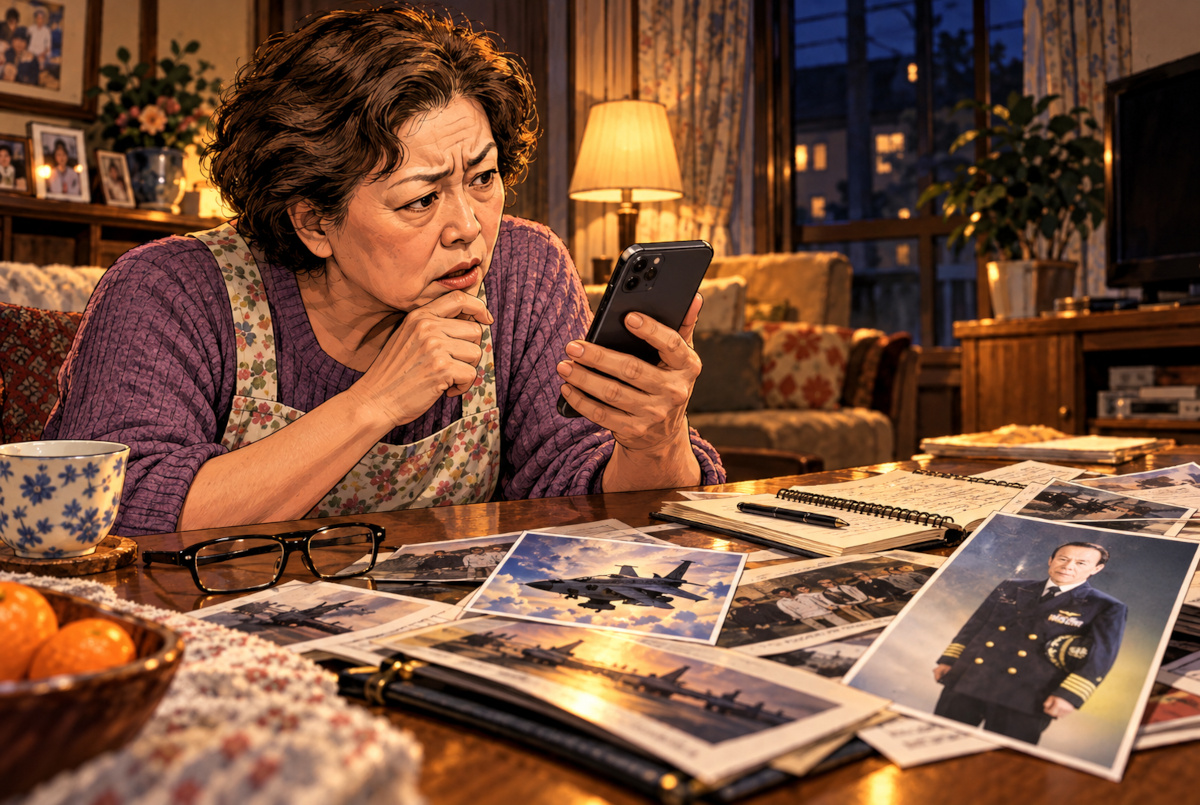 AI-generated illustration of a woman checking information received from a friend. The person, room, smartphone display and photographs are fictional; this is not a reconstruction of the actual investigation or news materials.
The Colonel Was Challenged by a Friend, Not a Military Investigator
One of the most revealing details in the 2022 report is how the woman began questioning her prospective husband.
According to her family, she mentioned Arthur to a female friend. That friend searched the internet, found articles about Colonel Kuhio and sent the information to her.
It reportedly helped the woman reconsider the relationship.
Her family had also questioned inconsistencies in his stories and the military insignia shown in photographs. Her son told the newspaper that he consulted police. No financial loss was confirmed for his mother in the published account.
This is an important difference from the older marriage fraud cases.
A person can still invent an elaborate identity. But today, old reports and photographs may be accessible to ordinary people through an internet search.
In the Nagano account, independent checking by relatives and a friend played a significant part in questioning the man’s claims.
Of course, information found online is not automatically accurate. But checking extraordinary claims against independent sources is more useful than relying entirely on the judgment of someone already emotionally involved.
Japan’s National Police Agency advises people worried about romance-related fraud to seek assistance, including through the police consultation number #9110 in Japan.
Was Colonel Kuhio a Genius, a Fool, or a Legend?
Now back to the question that started bothering me.
Was Colonel Kuhio actually clever?
His supposed credentials were hardly consistent. Similar names and royal connections continued to appear in later reports even after a film had publicized the story.
From the outside, that seems an extraordinary gamble.
But neither the reported financial losses nor the repetition of familiar claims tells us how intelligent the man was. Those facts do not provide a reliable measure of his abilities or motives.
What about the legend?
As a figure in Japanese popular culture, Colonel Kuhio undeniably became a subject for both film and theater. That does not prove he was an exceptionally sophisticated criminal.
What makes his story so peculiar is the overlap between the American officer he reportedly pretended to be, the fictional versions created for the screen and stage, and the man described in later newspaper encounters.
Those different versions can make one individual appear increasingly larger than life.
Marriage fraud and romance scams will probably continue to change their appearance as technology evolves. But romance itself is not the problem.
Falling in love with someone is one thing. Accepting extraordinary claims about their identity and promised money without verification is quite another.
Editor’s Note
When I first started looking into Colonel Kuhio, I couldn’t help wondering how anyone could believe such outrageous stories.
By the time I reached the final installment, though, something else bothered me even more: the sheer recycling of the same ridiculous material.
Royal families. Military assignments. Classified operations. Enormous wedding gifts. The story had already become a movie, yet remarkably similar claims appeared again in the 2022 reporting.
That takes an almost magnificent amount of nerve.
Still, I’m not ready to call him a genius con artist. Perhaps he became a legend not because his lies were brilliantly constructed, but because they were so wildly implausible and yet remained connected to real events and real people.
A ¥100 million gift from the Queen? A wedding announcement to the Japanese Emperor?
I’d settle for seeing one ordinary piece of verifiable identification first.
And in the end, this is what keeps nagging at me. People fall in love. They fall in love when they’re young and when they’re old. Maybe that’s just human nature—or, more broadly, the nature of living creatures.
But romance and money should not be allowed to share the same set of assumptions.
That brings our three-part Colonel Kuhio series to a close. As for what ultimately happened to the man himself, the materials examined here do not establish a definitive ending.
Colonel Kuhio: Behind the False Identity $2014 Three-Part Series
Royal bloodlines, a military career, and an enormous wedding payment. Across three articles, we examine Colonel Kuhio's claims, the money behind the marriage scams, and later reports about the man.
- Part 1: The Queen’s Twin Sister? Colonel Kuhio’s Outrageous Royal and Military Claims — Part 1
- Part 2: A ¥50 Million Wedding Promise? Why Were Women Paying Colonel Kuhio? — Part 2
- Final Part: Was “Colonel Kuhio” Back in 2022? The Nagano Encounter — Final Part
References
- Asmik Ace, Colonel Kuhio — Official Film Information — Japanese-language distributor records confirming the October 10, 2009 release, director, cast and story.
- INTRO (September 24, 2009), Interview with Director Daihachi Yoshida — Japanese-language interview discussing the real-life subject and fictional elements of the film.
- Nikkan Gendai (July 4–8, 2016), “Twenty Days with the Legendary Swindler Colonel Kuhio,” Five-Part Series — Japanese-language reporting on the encounter with a man calling himself Arthur Winston. Parts of individual articles require a subscription.
- Tokyo Metropolitan Theatre, Colonel Kuhio’s Wife — Official Production Record — May 19–June 11, 2017; written and directed by Daihachi Yoshida, starring Rie Miyazawa.
- SPICE (June 2, 2017), Interview with Daihachi Yoshida — Japanese-language interview on the inspiration and development of Colonel Kuhio’s Wife.
- Nikkan Gendai (March 9, 2022), Report on the Alleged Reappearance of Colonel Kuhio in Nagano — Interviews with family members concerning the matchmaking app, identity claims, photographic recognition and lack of confirmed financial loss.
- National Police Agency of Japan, Social-Media-Based Romance Fraud — Official public guidance on romance scams and police consultation services, including #9110.