

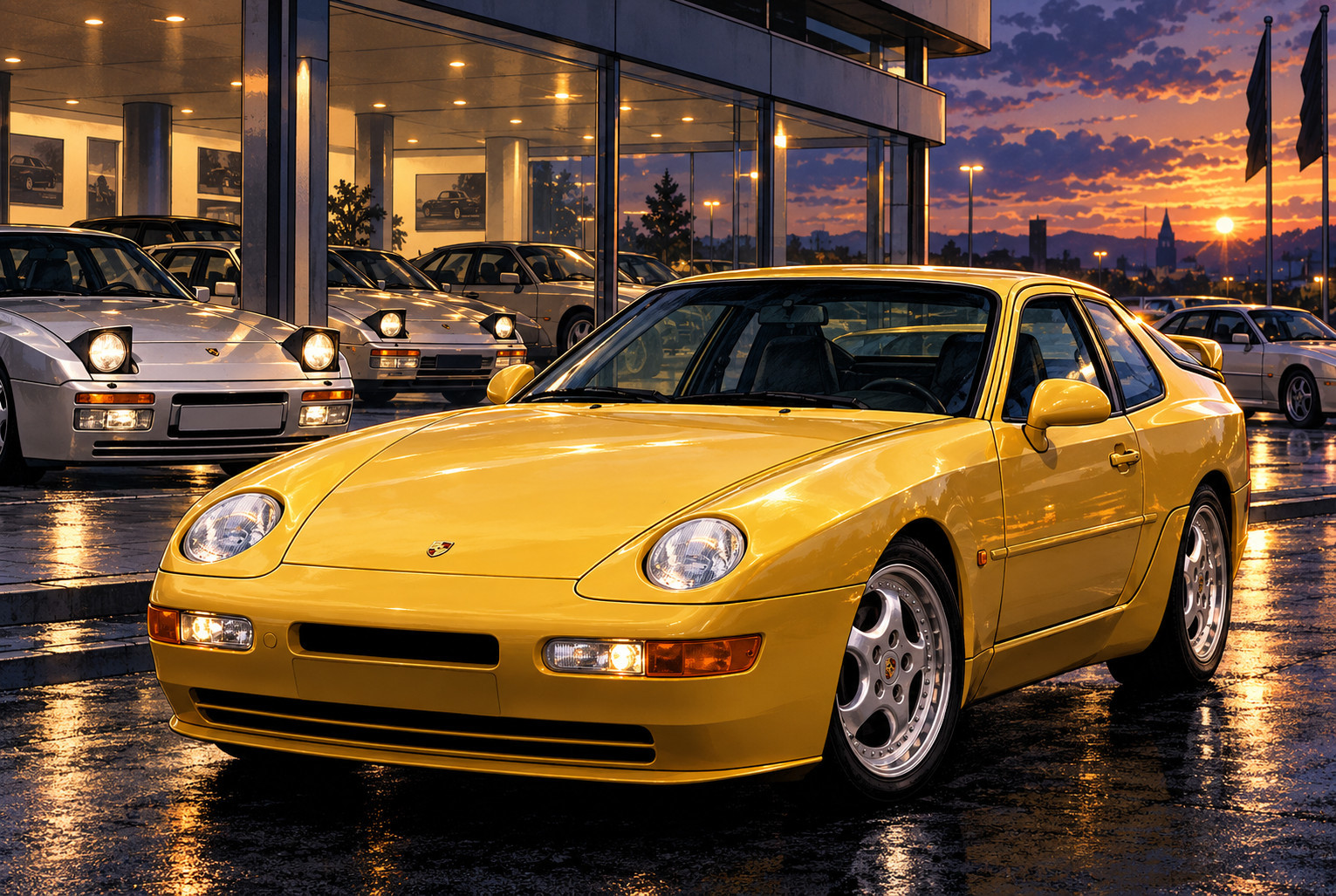
Make the 944 newer, faster and more refined, and surely it should sell even better. That would be the obvious assumption. The Porsche 968 did almost the opposite. Its 3.0-liter inline-four produced 240 PS, it gained VarioCam, a six-speed manual and even Tiptronic, and Porsche says more than 80 percent of its parts were either new or substantially revised. Yet total production stopped at only around 11,000 cars.
More strangely, Porsche itself has looked back on the 968 as a car that contemporary journalists praised as a “perfect sports car”, while also suggesting that it may have been just a little too perfect for some enthusiasts. The 968 did not disappear because it was a bad car. So why did the final evolution of the 944 formula sell in such small numbers?
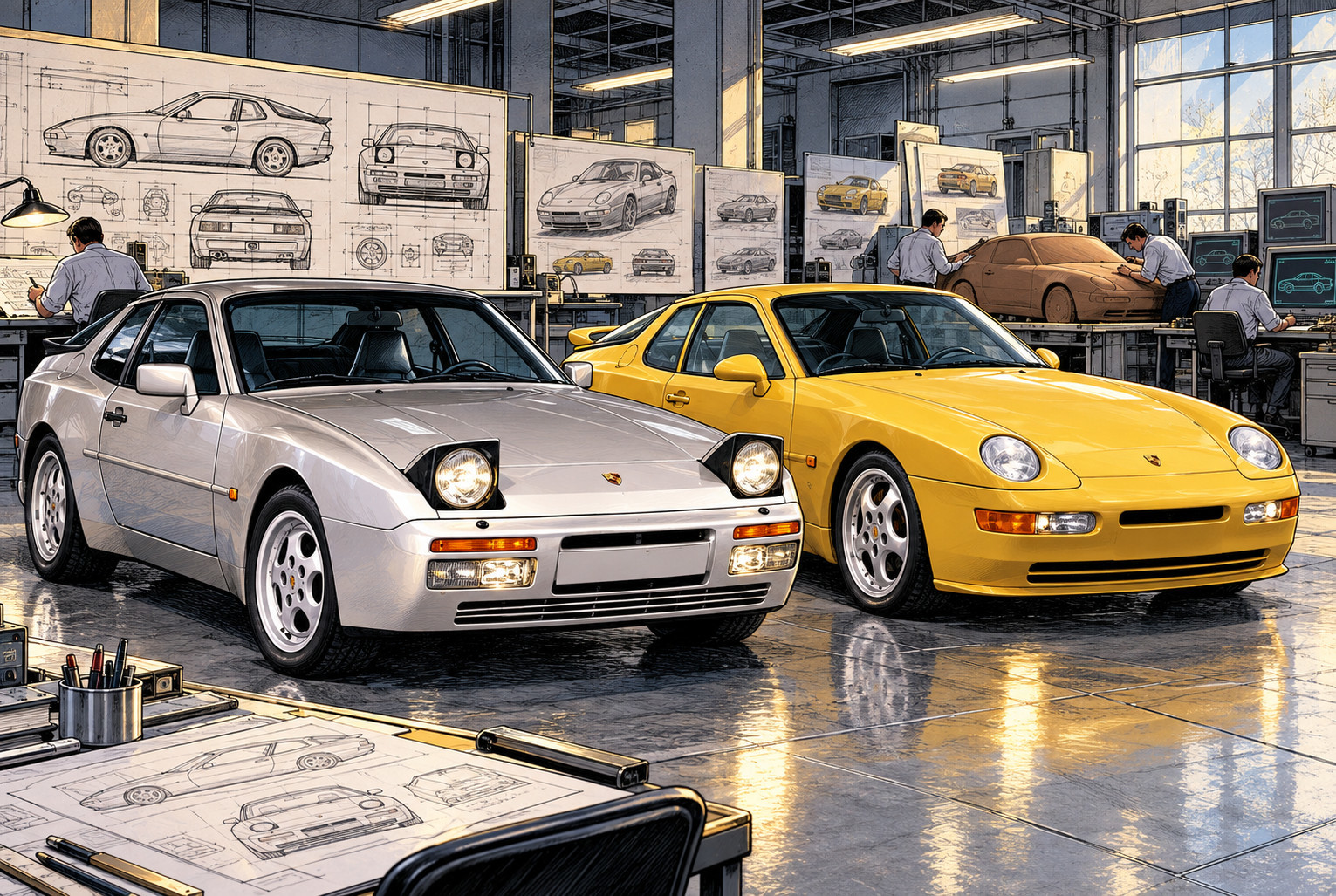 AI-generated comparison illustration. It does not reproduce an actual Porsche development facility or a specific development scene.
It Looked Like a 944, but More Than 80 Percent Was Reworked
The 968 began life as a major update to the 944. But as development progressed, the changes became so extensive that Porsche says more than 80 percent of the components were either new or significantly revised. The project therefore emerged not as another 944 derivative, but with a new model name: 968.
Its 2,990 cc inline-four was an evolution of the 944 S2 engine, producing 240 PS and 305 Nm of torque. Porsche added VarioCam variable valve timing, a six-speed manual gearbox and, for the first time on a Porsche, the option of Tiptronic. Mechanically, this was a serious attempt to refine the front-engine, rear-transaxle four-cylinder concept that had begun with the 924 nearly two decades earlier.
163,302 Porsche 944s — but Only 11,248 Porsche 968s
The production figures make the contrast hard to ignore. Porsche built 163,302 examples of the 944 series, while one of Porsche’s historical timelines gives total 968 production as 11,248 cars. On a simple total-production comparison, the 968 amounted to only about 6.9 percent of the 944 figure.
That comparison needs one important qualification. The 944 remained in production for roughly a decade, while the 968 lasted only about four years. Calling it a straight “93 percent collapse” would therefore be misleading. But even a rough annual average tells the same basic story: around 16,000 944s per year versus roughly 2,800 968s. Even after allowing for the shorter production run, the scale had shrunk dramatically.
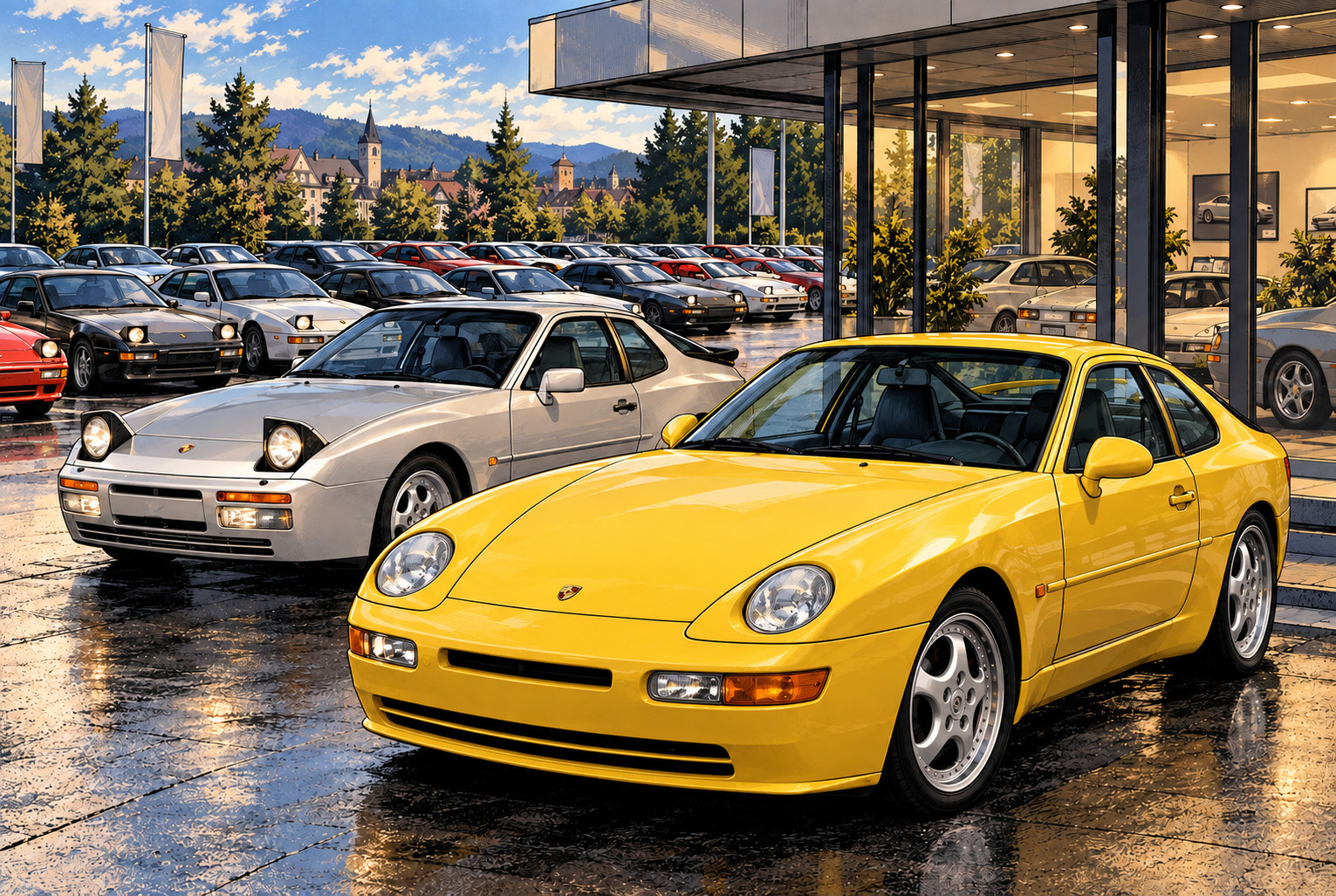 AI-generated illustration visualizing the difference in production scale between the 944 and 968. It does not reproduce an actual Porsche dealership or historical inventory.
The Problem Was Not a Lack of Performance — Price Was Part of It
Performance alone cannot explain the 968’s modest sales. In Germany, the 968 Coupé carried a base price of DM 89,900. It was still cheaper than a 911, but it was a long way from the idea of the relatively accessible Porsche that had surrounded the early 924. In the United States, a 1992 968 also started above $40,000, and Car and Driver praised the car while being noticeably less enthusiastic about its price.
That left the 968 in an awkward position. Improving the 944 formula made it more sophisticated and more expensive, while the 911 remained waiting further up the range. It was no longer the “cheap Porsche,” yet it was still the Porsche that was not a 911. From a product-positioning standpoint, that was an uncomfortable place to be.
The New Car Was Not Even Faster Than the Old 944 Turbo
There is another odd detail. The standard 968 made 240 PS and reached roughly 252 km/h. The late 944 Turbo discussed in the previous article made 250 PS and had a quoted top speed of 260 km/h. In outright figures, the new model did not outperform the fastest version of the car it replaced.
That does not mean the 968 was a step backward. Its naturally aspirated 3.0-liter engine emphasized response, usable torque, drivability and everyday refinement rather than chasing the 944 Turbo’s peak numbers. Still, by the old-school magazine logic of comparing horsepower and top speed, “the new one is slower than the old Turbo” was not exactly the sort of headline that made a new sports car look obviously superior.
If It Was Too Perfect, Porsche Tried Taking Things Away
In 1993, Porsche introduced the 968 Club Sport. The engine remained at 240 PS, but Porsche removed the rear seats and various comfort items. DIN weight dropped from 1,370 kg to 1,320 kg, a reduction of 50 kg, and the suspension lowered the car by 20 mm. Instead of adding more luxury to the 968, Porsche went the other way and stripped things out.
The Club Sport was named Performance Car magazine’s 1993 “Performance Car of the Year,” and 1,538 were produced. Seen that way, there is a certain irony to the story: the more polished regular 968 struggled to find its place, while the simpler, lighter version became an enthusiast favorite. Porsche’s later suggestion that the standard car may have been “a little too perfect” suddenly sounds rather less abstract.
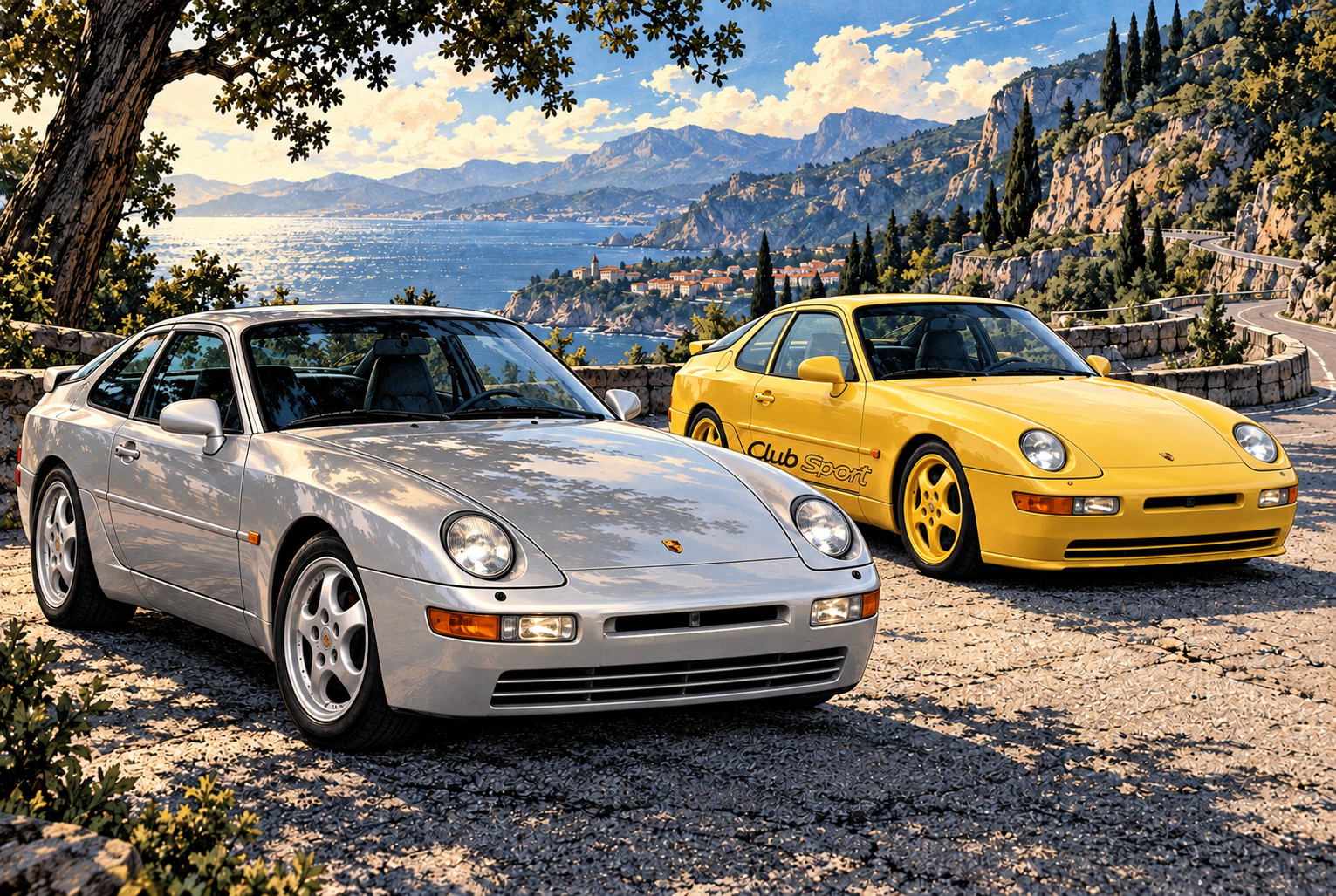 AI-generated comparison illustration showing the visual differences between a standard 968 Coupé and a 968 Club Sport. It does not reproduce specific real cars or an actual location.
By the Time the 968 Was Ending, Porsche Was Already Thinking Beyond It
The 968’s difficulties were not just about the car itself. Porsche entered the early 1990s under severe pressure from falling sales and high production costs. By the end of 1992, the company had recorded losses of DM 240 million. The 911, 928 and the 944-to-968 line had been developed with too little sharing of components and production processes, contributing to a costly manufacturing structure.
Then, in January 1993, Porsche unveiled the Boxster Concept in Detroit. A 968 Roadster had also been developed as a prototype, but it remained a one-off once production plans for the Boxster became realistic. Porsche did not suddenly invent the Boxster because the 968 had failed. While the 968 was still on sale, the company was already preparing a completely different answer to the question of an entry-level Porsche sports car.
The front-engine, rear-transaxle line that had begun with the 924 had reached a remarkably polished state in the 968. Perhaps that was also the problem: there was only so much further Porsche could push the same basic idea. Rather than a failed sports car, the 968 can be read as the final answer to the question of how far Porsche could develop the 944 formula before the company needed a different kind of car.
The Other Porsche — 6-Part Series
Not every Porsche followed the 911 formula. From the four-cylinder 912 and VW-linked 914 to the 924, 944, 968 and the later mid-engine generation, this six-part series traces the strange history of Porsche's more accessible sports cars.
- Part 1: Four-Cylinder Porsches and a VW-Powered 914 — Were the 912 and 914 Really “Fake” Porsches?
- Part 2: Porsche 924: The VW Project That Became a Porsche
- Part 3: Was the Porsche 944 Turbo Really Faster Than the 911 Carrera?
- Part 4: Why Did the Porsche 968 Sell So Poorly? The Final Transaxle Porsche
- Part 5: Did the Porsche Boxster Help Save Porsche? How the 986 Shared Parts with the 911 Coming soon
- Final Part: Why Did the Porsche Cayman Become the 718? From Four Cylinders to a 911 GT3 Engine Coming soon
Editor’s Note
Old car magazines used to make model changes wonderfully easy to understand: more horsepower, a higher top speed, therefore the new car must be better. The 968 ruins that kind of neat logic. It was newer and more sophisticated than the 944, and that giant 3.0-liter four-cylinder is wonderfully excessive in its own way. Yet the quickest 944 Turbo still had the bigger numbers, while moving the 968 upmarket only pushed it closer to the price territory of the 911.
To me, the 968 looks like a car that became so good it almost engineered itself out of a clear job. Then Porsche stripped equipment out of it, created the Club Sport, and enthusiasts loved that version. Making something more luxurious, easier to live with and more refined sounds like obvious progress for most products. Sports cars are awkward little things, though. Sometimes polishing away the rough edges also polishes away part of the reason people wanted one in the first place. That contradiction is probably what makes cars like the 968 so much fun to look back on.
References
- Porsche Newsroom — Porsche 968
- Porsche — The history of Porsche transaxle models
- Porsche Newsroom — Time lapse: Porsche’s transaxle models
- Porsche Christophorus — Forever Young: Transaxle
- Porsche Newsroom — The Boxster Concept and Porsche’s crisis years
- Car and Driver — 1992 Porsche 968: Archive Test
- Porsche — 968 CS Coupé: Lightweight four-cylinder engine with large capacity