
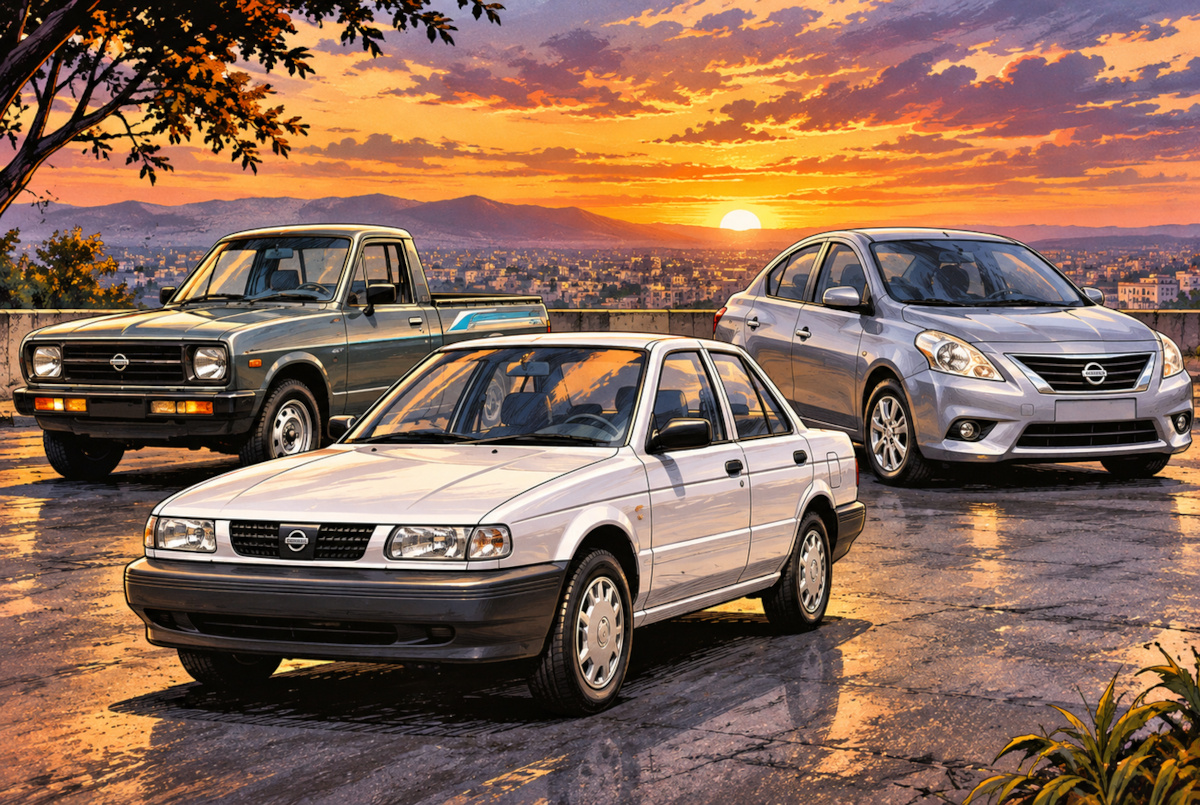
In 2004, the Nissan Sunny name disappeared from Japan’s new-car market. But the story did not end there.
In Mexico, the Nissan Tsuru—a sedan based on the B13-generation Sunny/Sentra—remained in production until 2017. In South Africa, a small pickup descended from the Sunny Truck family kept working until 2008. And as of November 2026, Nissan Egypt still lists a new car called the SUNNY on its official website.
Meanwhile, the Toyota Corolla, which made its debut in the same year as the original Sunny, celebrates its 60th anniversary in 2026. Toyota says more than 57 million Corollas have been sold worldwide.
Why did Nissan abandon the Sunny name in Japan while keeping it alive elsewhere? Was the difference between Sunny and Corolla really about which car was better—or was it about how their manufacturers treated the names themselves?
For the final installment of this eight-part series, I went back through Nissan’s records from several countries, compared them with Toyota’s official history, and followed a surprisingly complicated family tree.
A Name Chosen from 8.48 Million Entries
The Sunny name was not invented in a boardroom on a quiet afternoon.
On January 1, 1966, Nissan launched a nationwide naming competition in Japan for its upcoming 1,000cc family car. The campaign attracted approximately 8.48 million entries, containing some 380,000 different name suggestions, according to the Nissan Heritage Collection.
The winning name was Sunny. Nissan considered it a good match for the bright, cheerful and youthful image it wanted the car to convey.
The first-generation B10 Sunny arrived in April 1966. Toyota’s first Corolla followed in November that year.
The entry-level Sunny cost ¥410,000, while the Deluxe version was priced at ¥460,000. It was a small, affordable car built for Japan’s expanding market of private car owners.
Thirty-eight years later, things looked very different.
On October 29, 2004, Nissan launched the Tiida Latio in Japan, moving its compact-sedan business toward a new model and a new name. The long-running domestic Sunny name came to an end.
Nissan had gathered 8.48 million naming entries to create the Sunny. Yet in Japan, it retired that name after 38 years. Overseas, Nissan made different decisions.
Mexico Kept the B13 Alive Until 2017
In Mexico, the Nissan Tsuru became one of the country’s familiar everyday sedans.
The Tsuru name dates back to 1984, but its best-known long-running version was based on the B13-generation Sunny/Sentra, first introduced in Japan in 1990.
While Nissan’s compact sedans continued evolving in other markets, the basic B13 design remained in production in Mexico for years.
On October 26, 2016, Nissan Mexico announced that Tsuru production would end in May 2017. By that point, cumulative sales of the Tsuru nameplate had exceeded 2.4 million vehicles.
There is an important distinction here: the 2.4 million figure covers the entire Tsuru history from 1984 onward. It is not a sales total for the B13 version alone.
But another number caught my attention.
According to Nissan Mexico’s official 2016 sales announcement, the Tsuru sold 49,337 units during that calendar year.
That sent me back to the Japanese Sunny’s final years.
A Japanese annual model-sales ranking published by Car Stadium lists 49,121 Nissan Sunny sales in Japan in 2002.
The two figures are remarkably close.
| Model and market | Year | Annual sales |
|---|---|---|
| Nissan Tsuru, Mexico | 2016 | 49,337 |
| Nissan Sunny, Japan | 2002 | 49,121 |
| Difference | 14 years apart | 216 |
The calculation is simple:
49,337 − 49,121 = 216 vehicles
Using the Japanese figure as the denominator:
216 ÷ 49,121 × 100 = approximately 0.44%
Mexico’s 2016 Tsuru sales were just 216 vehicles—about 0.44%—higher than the Sunny’s reported Japanese sales in 2002, fourteen years earlier.
Of course, these figures come from different countries, years and statistical sources. The Mexican figure comes directly from Nissan, while the Japanese number is taken from a published sales ranking. The original statistical definitions have not been independently reconciled in full.
This is not a controlled comparison of market performance, profitability or customer demand.
Still, consider what those figures represent. A sedan based on a Japanese design introduced in 1990 was selling roughly as many units in Mexico in 2016 as the Sunny had sold in Japan in 2002, shortly before its name disappeared from the domestic market.
It is an oddly specific coincidence, but one that makes the Sunny’s different fortunes much easier to picture.
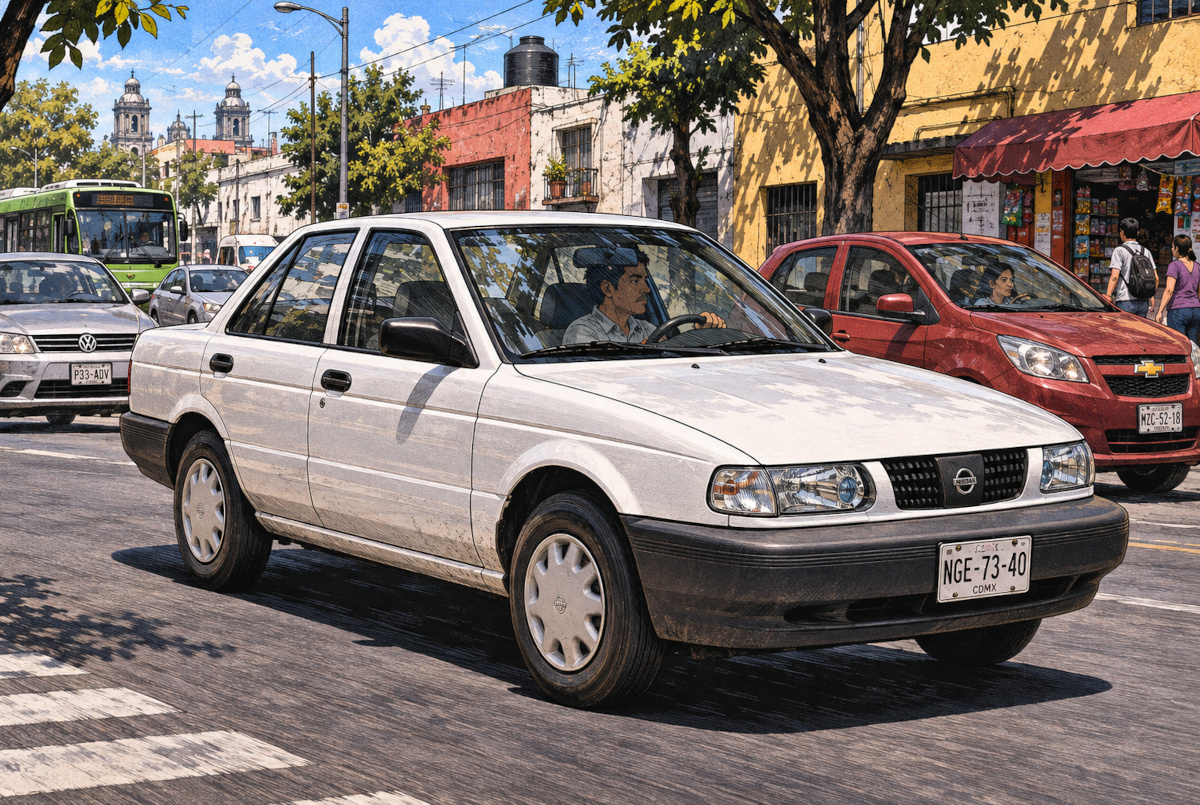 AI-generated illustration of a Nissan Tsuru (B13 series) in everyday use in Mexico around 2016. The street, license plates and vehicle details have been reconstructed; this is not a photograph of an actual location.
Did the Tsuru’s Long Life Make It a Great Car?
For an enthusiast of old Japanese cars, a model surviving for so many years sounds almost heroic.
But longevity is not the same thing as excellence in every respect.
In 2013, Latin NCAP tested a Nissan Tsuru without airbags and awarded it zero stars for adult occupant protection.
In October 2016, a car-to-car crash test compared a Mexican-market Tsuru with a US-market Nissan Versa. The results again highlighted serious problems with the older vehicle’s structure and occupant protection.
A car can be inexpensive, familiar, easy to maintain and commercially successful without meeting modern crash-safety expectations.
That distinction matters, especially when discussing older cars with a devoted following.
Nissan announced the end of Tsuru production, while Latin NCAP strongly criticized the vehicle’s safety performance. However, Nissan’s announcement alone does not establish that safety concerns were the sole reason for discontinuation.
What the evidence does show is that keeping an old design in production for decades comes with trade-offs. The Tsuru’s commercial longevity deserves attention, but it should not be mistaken for proof of superior safety.
South Africa’s Sunny Relative Worked for 37 Years
Mexico was not the only place where a Sunny-related design refused to disappear.
South Africa had an even more unusual survivor: the Nissan 1400, a small pickup truck descended from the same family as Japan’s Datsun Sunny Truck.
In South Africa, this type of pickup is commonly called a bakkie.
The vehicle’s local history began in 1971 with the Datsun 1200. Its engine capacity increased to 1,400cc in 1980, and a version leading to the later Nissan 1400 Standard bakkie appeared in 1990.
Nissan South Africa’s July 17, 2008 announcement reported cumulative sales exceeding 275,000 units and confirmed the model’s farewell after a production lineage spanning approximately 37 years.
There is a small historical complication: Nissan’s own 2008 announcement gives different dates for the Nissan 1400 name in its narrative and accompanying timeline. For that reason, the exact renaming year should not be treated as conclusively established by that document alone.
More importantly, the Nissan 1400 was not a car that continued to be sold under the Sunny name until 2008.
It was a commercial vehicle descended from the Sunny Truck family, surviving under a different name.
That distinction explains why the model belongs in this article.
While Nissan’s passenger-car range moved through new generations, a comparatively old basic pickup design remained useful to South African businesses.
A small delivery vehicle does not necessarily need the latest styling or technology to make a living. Maintenance costs, purchase price, load-carrying usefulness and familiarity can matter more to its customers.
That does not make an old vehicle universally better. It simply shows that different markets can assign very different value to the same engineering heritage.
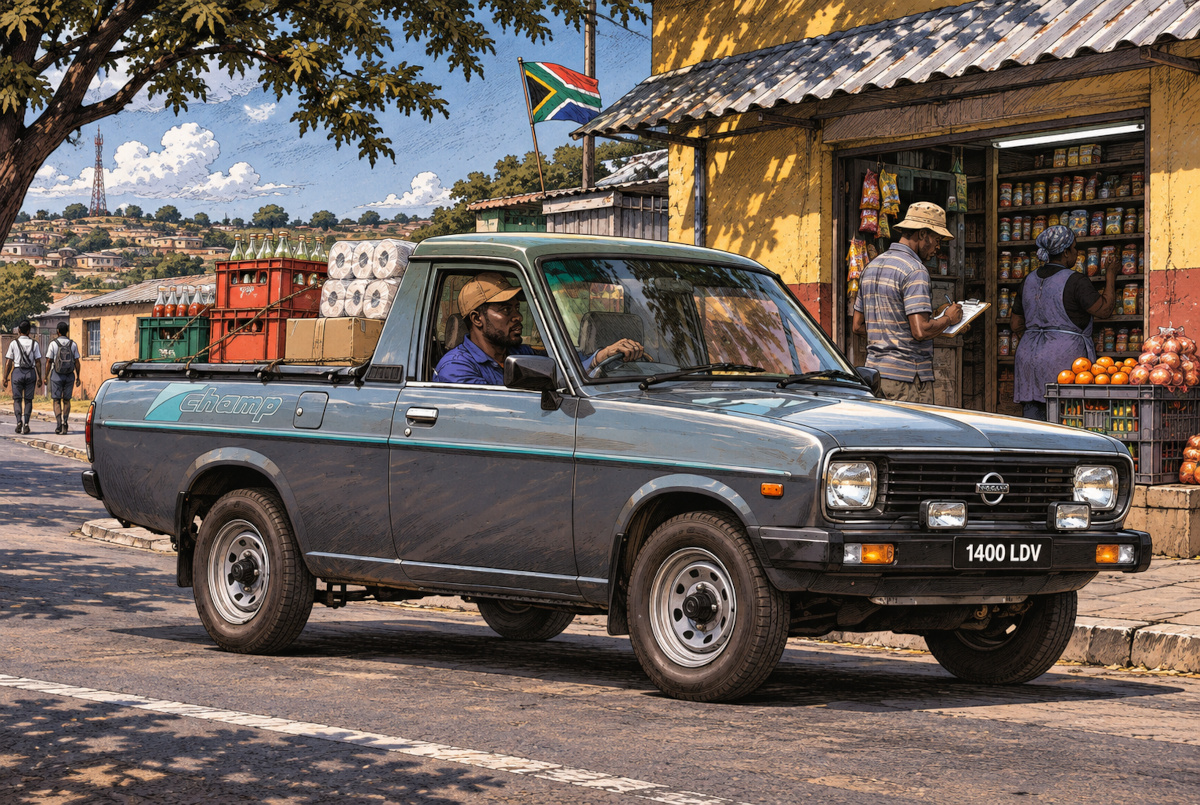 AI-generated illustration inspired by the Nissan 1400 bakkie in South Africa around 2008. The shop, people, cargo and some vehicle details are fictional reconstructions. The vehicle shares its lineage with the Japanese Sunny Truck.
In 2026, Egypt Still Has a Car Called SUNNY
So much for surviving engineering. What about the Sunny name itself?
As of November 2026, Nissan Egypt’s official new-vehicle website still lists a model called the SUNNY.
The locally advertised compact sedan uses a 1,498cc gasoline engine and front-wheel drive. Nissan also lists manual and automatic transmission versions.
It is not the original 1966 B10 or the 1990 B13 kept alive unchanged. The current Egyptian-market Sunny is a later-generation sedan that carries the historic name.
The name has also appeared on newer Nissan products elsewhere.
In December 2010, Nissan unveiled a new Sunny for China, with sales scheduled to begin in January 2011. That model was part of a broader global sedan program, with different names used in different markets.
By now, a pattern emerges.
The Sunny’s overseas survival was not one continuous production story. It took at least three distinct forms:
| Market | Model | What survived? | Reference period |
|---|---|---|---|
| Japan | Sunny B15 | The domestic Sunny name ended | 2004 |
| Mexico | Tsuru | An older Sunny/Sentra-related design | Production ended in 2017 |
| South Africa | Nissan 1400 | Sunny Truck-related engineering | Retirement announced in 2008 |
| Egypt | Sunny | The historic Sunny name on a later-generation sedan | Officially listed in 2026 |
Compiled by the editor from Nissan’s official historical, sales and product information across different markets. The entries distinguish continuity of name, vehicle family and engineering design; they do not imply that the same generation remained in production worldwide.
The Sunny did not vanish from the world on a single date. Some markets kept the name. Others kept an older design, or a vehicle descended from the same family.
That is a more complicated—and rather more interesting—ending than simply saying that Nissan discontinued the Sunny.
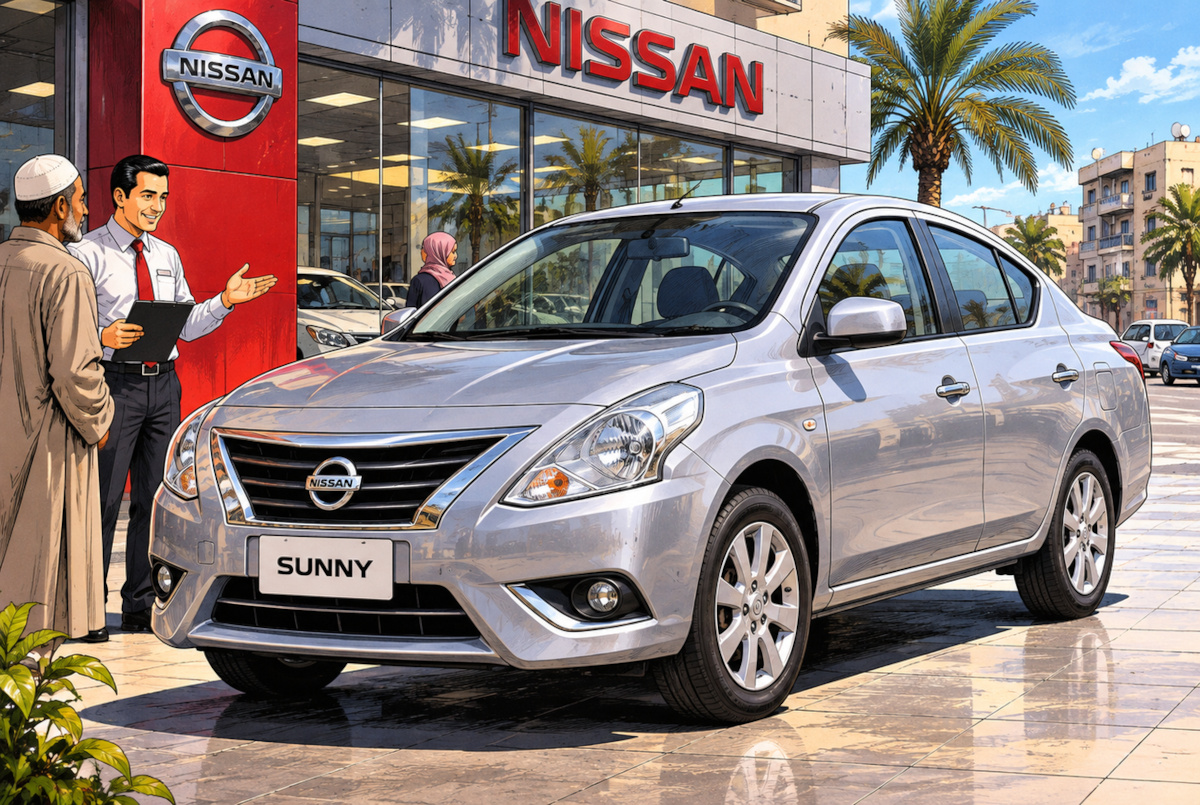 AI-generated illustration based on the N17-series Nissan Sunny listed by Nissan Egypt in 2026. The dealership and people are fictional, and some vehicle equipment and trim details have been reconstructed.
Toyota Kept the Corolla Name. Nissan Took a Different Road.
Now for the Sunny’s old rival.
Toyota’s Corolla made its debut in November 1966, just seven months after the first Sunny.
In August 2026, Toyota marked the Corolla’s 60th anniversary and reported worldwide sales of more than 57 million vehicles bearing the name.
Across 12 generations, the Corolla has evolved into multiple body styles, including sedans, hatchbacks and wagons, while retaining its identity as one of Toyota’s core global nameplates.
Those 57 million sales are not directly comparable to the Tsuru’s 2.4 million or the South African Nissan 1400’s 275,000-plus.
Toyota’s figure covers multiple generations, body styles and global markets. Nissan’s figures refer to different vehicles and periods. Using them to declare a numerical winner would be misleading.
But there is a difference worth examining: how the two companies used their model names.
Toyota continued developing products under the Corolla name across generations and markets.
Nissan took a more fragmented approach with the Sunny family. It replaced the Sunny name with Tiida Latio in Japan, while other markets used names such as Tsuru or Sunny for different products and generations.
The Corolla kept its name while the cars beneath it changed. The Sunny’s name, engineering and family connections continued in different ways, depending on the country.
That distinction does not prove Toyota’s approach was more profitable. Answering that would require comparable financial information and a much broader analysis of sales, margins and branding costs.
Still, the contrast is striking. Two Japanese family cars appeared in the same year. Sixty years later, one name remains a major global brand, while the other’s history is scattered across several regional stories.
Did the Sunny Really Disappear Because It Lost to the Corolla?
Across this eight-part series, one thing has become clear: the Sunny was not always following the Corolla.
The Sunny arrived first in 1966. Nissan also introduced front-wheel drive to its mainstream Sunny sedan range in 1981, ahead of the Corolla’s comparable transition.
Over the years, the cars competed through price, engineering, interior space, styling and motorsport.
But winning individual technical battles is not the same as maintaining a model name for generations.
In Japan, Nissan chose a new product and naming direction in 2004. Elsewhere, it retained the Sunny name or continued using Sunny-related designs where they remained commercially relevant.
The evidence does not support the simple claim that the Sunny disappeared merely because it was an inferior car. Nissan changed its domestic product and branding strategy, while its overseas operations followed different paths. That is the real distinction left at the end of this 60-year story.
Whether keeping the Sunny name in Japan would have been a better business decision is another question—and one the available sales figures cannot settle.
Editor’s Note
I’ll admit it: of everything I found for this final installment, the Mexican Tsuru fascinated me most.
Nearly 50,000 sales in 2016. For a car based on a design introduced in Japan back in 1990, that is quite a run.
And then there’s that ridiculous coincidence: just 216 vehicles separating Mexico’s 2016 Tsuru sales from the Japanese Sunny’s 2002 figure.
I know perfectly well that the two markets cannot be compared on equal terms. But when a strange numerical match like that turns up in old sales records, I can’t help enjoying it.
Then I looked at the crash-test results, and the mood changed.
I’m fond of old cars, but a car’s long production life does not automatically make it a masterpiece. There is a difference between admiring a durable design and ignoring the compromises that came with keeping it alive.
And the Sunny name itself still bothers me.
Perhaps Nissan wanted to escape the image of an aging, unexciting family sedan in Japan. That may have been part of the thinking. But the Corolla began in exactly the same year, and Toyota never abandoned its name.
Even Nissan was willing to keep using Sunny elsewhere.
So was there really no way to modernize the Japanese Sunny without throwing away the name? I can’t pretend that retaining it would have guaranteed better sales.
Still, retiring a name chosen from 8.48 million public entries seems a little wasteful to me.
Think about the journey: a modest ¥410,000 family car launched in 1966, decades of competition with the Corolla, changing technology, racing adventures, and eventually a family tree stretching into places like Mexico, South Africa and Egypt.
I’m a Sunny man rather than a Corolla man. That is my bias, and I’m not particularly interested in hiding it.
So let me finish this eight-part series with one last thought.
The Sunny disappeared from Japan’s showrooms. Its history did not disappear with it.
Terms That May Need a Quick Explanation
- Bakkie
- A South African term commonly used for a pickup truck. It includes small commercial vehicles such as the Nissan 1400, which was widely used by local businesses.
Nissan Sunny: 60 Years of History - Eight-Part Series
Born in 1966, the Nissan Sunny challenged the Toyota Corolla and helped shape Japan's mass-market car industry. Across eight articles, we examine its development, engineering, performance, sales, motorsport history, and why the Sunny name disappeared from Japan while surviving in overseas markets.
- Part 1: Did Toyota’s “Extra 100cc” Really Beat the Datsun Sunny? The 89cc Battle (Part 1)
- Part 2: Did the Datsun Sunny Really Make the Corolla Look Small? The B110 and GX-5 (Part 2)
- Part 3: Was the Datsun Sunny Really No. 2 in World Production? The B210 and B310 (Part 3)
- Part 4: The Sunny Went FWD 19 Months Before the Corolla—Was the B12 Really That Good? (Part 4)
- Part 5: The Nissan Sunny Got Better. So Why Did Sales Fall? B13, B14 and the 300-PS Race Car
- Part 6: Nissan Gave Its Last Sunny 175 PS. Why Did the Name Disappear?
- Part 7: Why Did Nissan Drop the Sunny Name—Only to Target Older Buyers Again? (Part 7)
- Final Part: The Sunny Disappeared in Japan. Why Did It Live On Abroad? (Final Part)
References
- Nissan Heritage Collection — “Sunny” Name Chosen from Among 8.48 Million Entries — Official account of the 1966 naming campaign, including the 8.48 million entries and approximately 380,000 proposed names.
- Nissan Heritage Collection — Datsun Sunny 1000 Deluxe (Japanese) — Original B10 model, April 1966 introduction, specifications and launch prices, including the ¥410,000 Standard model.
- Nissan Motor Corporation — Launch of the Tiida Latio, October 2004 (Japanese) — Official Japanese announcement documenting the new compact sedan’s October 29, 2004 launch.
- Nissan Mexico — Announcement of the End of Tsuru Production, October 26, 2016 (Spanish) — Confirms the planned May 2017 end of production and cumulative Tsuru sales exceeding 2.4 million vehicles.
- Nissan Mexico — 2016 Annual Sales Results, January 5, 2017 (Spanish) — Original Japanese article reference for the 49,337 Tsuru sales figure.
- Nissan Mexico — Record Sales Results for Calendar Year 2016 (Spanish) — Additional official release explicitly confirming 49,337 Tsuru sales in 2016.
- Car Stadium — Japan’s 2002 Annual Vehicle Sales Ranking (Japanese) — Lists the Nissan Sunny at 49,121 units. Used for the editor’s independent 216-unit comparison; the underlying statistical definitions have not been fully reconciled with the Mexican data.
- Latin NCAP — Nissan Finally Takes Zero-Star Tsuru Out of Production Following NCAP Campaign, October 27, 2016 — Explains the Tsuru’s zero-star safety rating and the 2016 car-to-car crash comparison.
- Nissan South Africa — Nissan’s 1400 Half-Ton a Champion of Africa, July 17, 2008 — Official history of the Nissan 1400, confirming more than 275,000 sales and the model’s retirement. The narrative and timeline contain differing dates for the Nissan 1400 name.
- Nissan Egypt — SUNNY Official Model Page — Confirms that the Sunny name remained on Nissan Egypt’s new-car website in November 2026.
- Nissan Egypt — Sunny Versions and Specifications — Local vehicle specifications, including the 1,498cc engine, front-wheel drive and transmission options.
- Nissan Motor Corporation — Nissan Unveils New Global Sedan at the Guangzhou Motor Show, December 2010 — Official announcement of the China-market Sunny, scheduled for sale beginning in January 2011.
- Toyota Motor Europe — Toyota Marks 60 Years of Corolla with Exclusive Special Editions, August 25, 2026 — Official announcement of the Corolla’s 60th anniversary, 12 generations and more than 57 million worldwide sales.
- Toyota Motor Corporation — Corolla Brand Website (Japanese) — Official historical overview covering the Corolla’s 1966 debut, 12 generations and global brand continuity.